What the dish is and where it came from
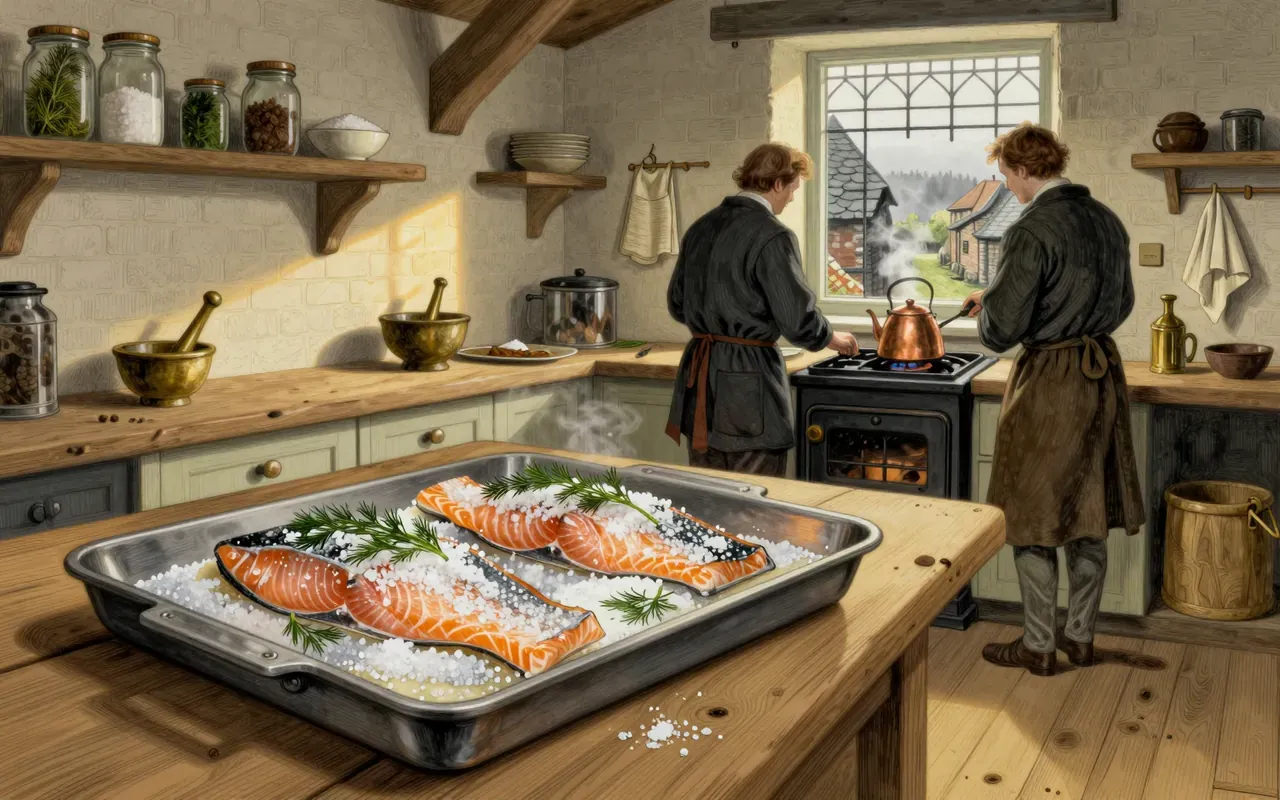
Gravlax is a Nordic dish of salmon cured with salt, sugar, and dill. It originated in the Middle Ages as fermented salmon buried in sand above the high-tide line.
How it works, in terms someone would actually use
Gravlax is made by burying salmon in a dry mix of salt, sugar, and dill for twelve hours to a few days. Osmosis draws moisture from the fish into the mix, forming a concentrated brine. That brine is usable in sauces.
What it gets right
It uses osmosis to control moisture loss and concentrate flavour. It repurposes the extracted brine as a functional ingredient. It preserves salmon without heat while delivering delicate texture and aromatic dill.
What it does not
It does not ferment. It does not require smoking. It does not rely on ambient temperature or time beyond a few days.
What it changed
It replaced Middle Ages sand-burial fermentation with dry-cure osmosis. The method shifted from microbial preservation to physical dehydration and flavour infusion.
Who it is for, and who it is not
It is for cooks who value precision over tradition, and eaters who prefer clean, cool, herbaceous fish. It is not for those seeking deep umami, smoke, or microbial complexity.
Is it worth your time
Yes—if you want clean, bright salmon with controlled texture and no cooking. It demands precise timing and attention to the brine’s strength, but delivers consistent results without heat or fermentation.