What the dish is and where it came from
Rakfisk is a traditional Norwegian dish of raw, salted, cold-stored trout or char, first named in 1348, rooted in northern preservation necessity.
How it works, in terms someone would actually use
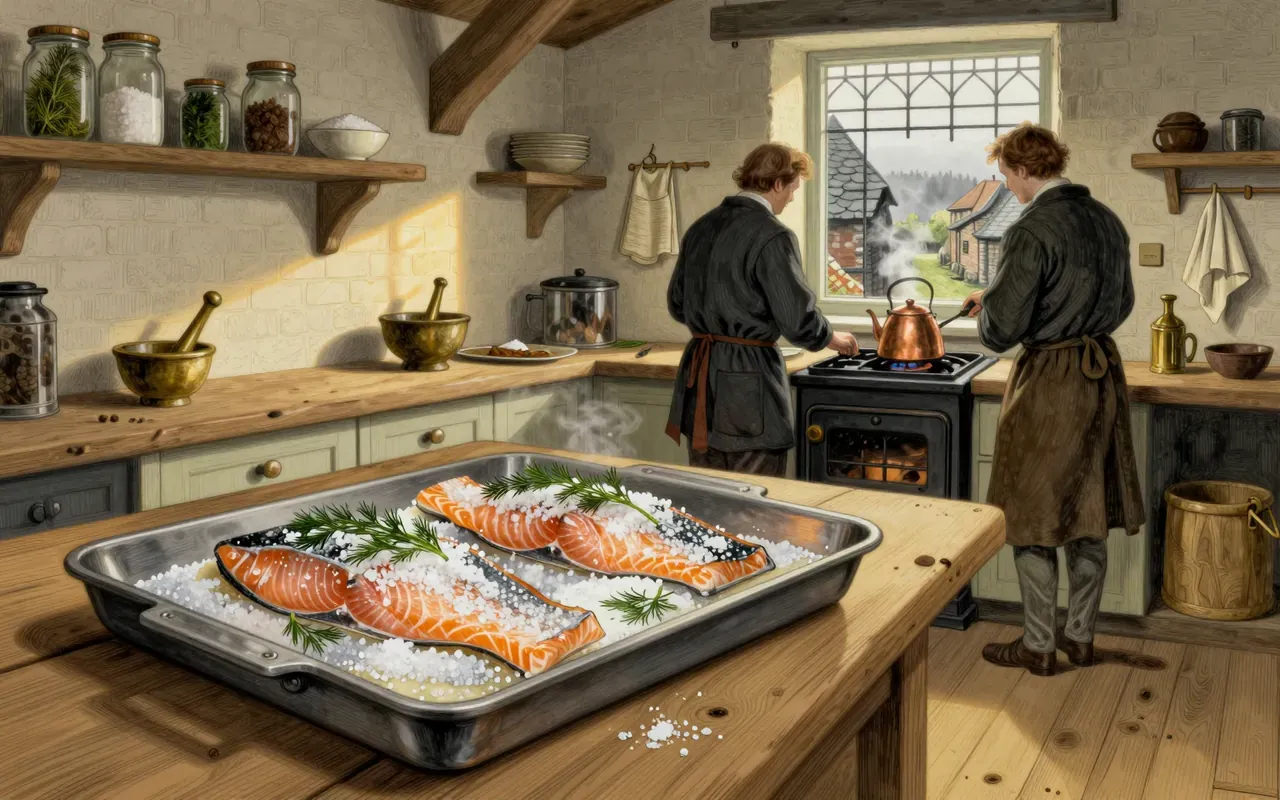
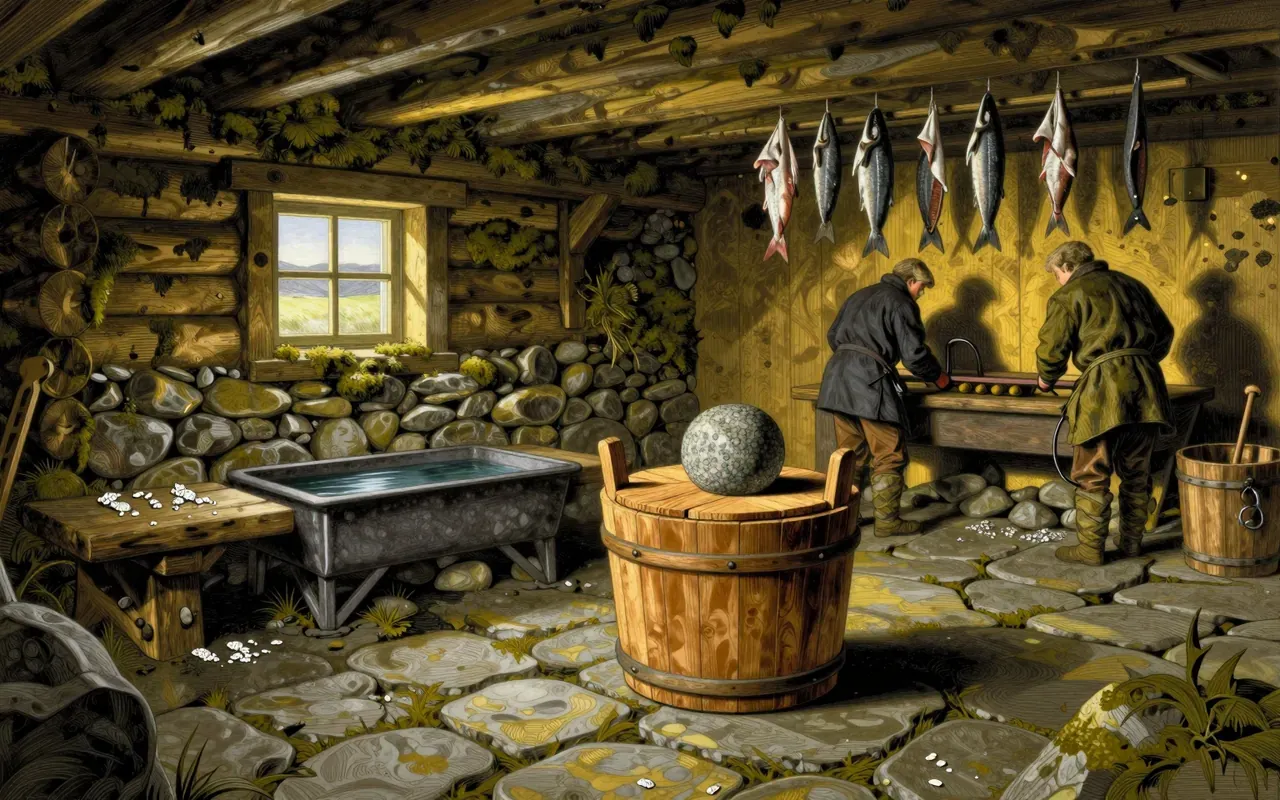
Rakfisk is made by gutting and rinsing fresh trout or char, salting them in a bucket, then pressing them under a lid and weight before storing at under 5°C for one to three months. Autolysis — not fermentation — breaks down the fish’s proteins, yielding raw flesh with intense aroma and saltiness.
What it gets right
It preserves delicate freshwater fish without heat or smoke, using only salt, pressure, and cold — turning seasonal abundance into winter sustenance through enzymatic breakdown.
What it does not
It does not ferment. It does not involve bacteria-driven acidification or alcohol production. It does not require cooking, nor does it permit it without negating its defining character.
What it changed
It codified cold-storage autolysis as a preservation method for freshwater fish in northern Norway, where freezing was historically unreliable and drying impractical for fatty species.
Who it is for, and who it is not
It is for people accustomed to strong-smelling, uncooked fish, familiar with Scandinavian preservation logic, and comfortable with enzymatic ripening as edible intent. It is not for those who associate food safety with heat treatment or expect mildness in raw fish.
Is it worth your time
Only if you seek a direct encounter with controlled decomposition as food. It demands tolerance for pungency, access to properly stored fish, and willingness to eat raw, aged freshwater fish without heat treatment.