0:54in productionCh. 1 · What the dish is and where it came from/ 0:54 · ceiling 15 min
Technique · Food historyChazuke
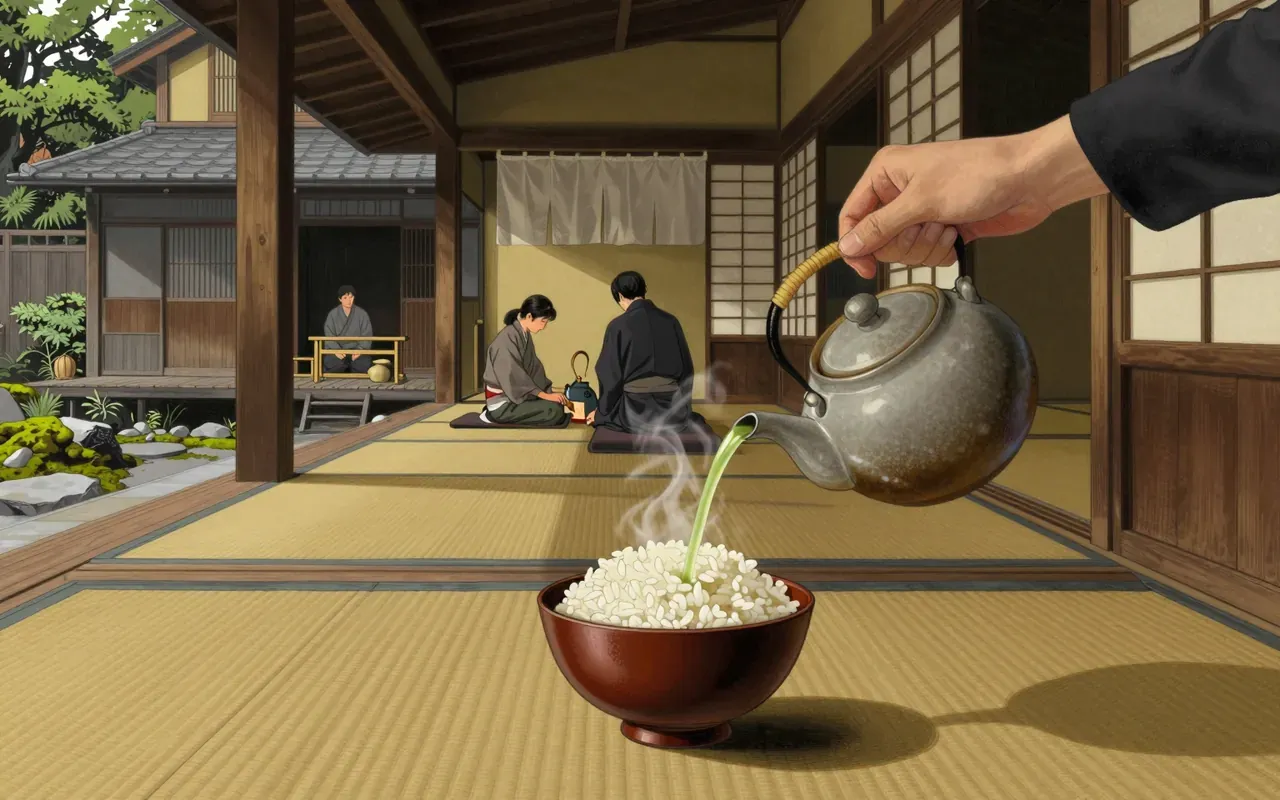
Chazuke is a Japanese dish of cooked rice topped with green tea, dashi, or hot water.
Chazuke is a simple Japanese dish made by pouring green tea, dashi, or hot water over cooked rice. Its name means 'tea-submerged'.
Chapters & takeaways7
- 0:00
What the dish is and where it came from
Chazuke is a simple Japanese dish made by pouring green tea, dashi, or hot water over cooked rice.
- 0:09
How it works, in terms someone would actually use
Green tea, dashi or hot water is poured over cooked rice.
- 0:13
What it gets right
It gets the aroma and mild umami flavor of green tea, especially bancha and sencha, which became popular in the Edo period.
- 0:22
What it does not
It is a simple rice-and-liquid preparation, so it may be less appealing if you want a substantial dish with several separately prepared components.
- 0:31
What it changed
From the Genroku period, chazuke restaurants ('chazukeya') appeared and were widely popular as fast food for common people.
- 0:38
Who it is for, and who it is not
It suits someone looking for a simple snack that makes use of cooked rice.
- 0:44
Is it worth your time
It is worth your time if you want a simple, fast way to use cold cooked rice.
Worth your time?
Selectively. Start with the brief, then cook the parts we point at.
What works- It gets the aroma and mild umami flavor of green tea, especially bancha and sencha, which became popular in the Edo period.
What does not- It is a simple rice-and-liquid preparation, so it may be less appealing if you want a substantial dish with several separately prepared components.
The written brief1 min read
What the dish is and where it came from
Chazuke is a simple Japanese dish made by pouring green tea, dashi, or hot water over cooked rice. Its name means ‘tea-submerged’.
How it works, in terms someone would actually use
Green tea, dashi or hot water is poured over cooked rice.
What it gets right
It gets the aroma and mild umami flavor of green tea, especially bancha and sencha, which became popular in the Edo period.
What it does not
It is a simple rice-and-liquid preparation, so it may be less appealing if you want a substantial dish with several separately prepared components.
What it changed
From the Genroku period, chazuke restaurants (‘chazukeya’) appeared and were widely popular as fast food for common people.
Who it is for, and who it is not
It suits someone looking for a simple snack that makes use of cooked rice.
Is it worth your time
It is worth your time if you want a simple, fast way to use cold cooked rice. Its ease and speed are explicitly noted.
Same course · Technique4 of 119
8:39
12:48
1:05

1:09