Saved
Dishes · Culture

Curry

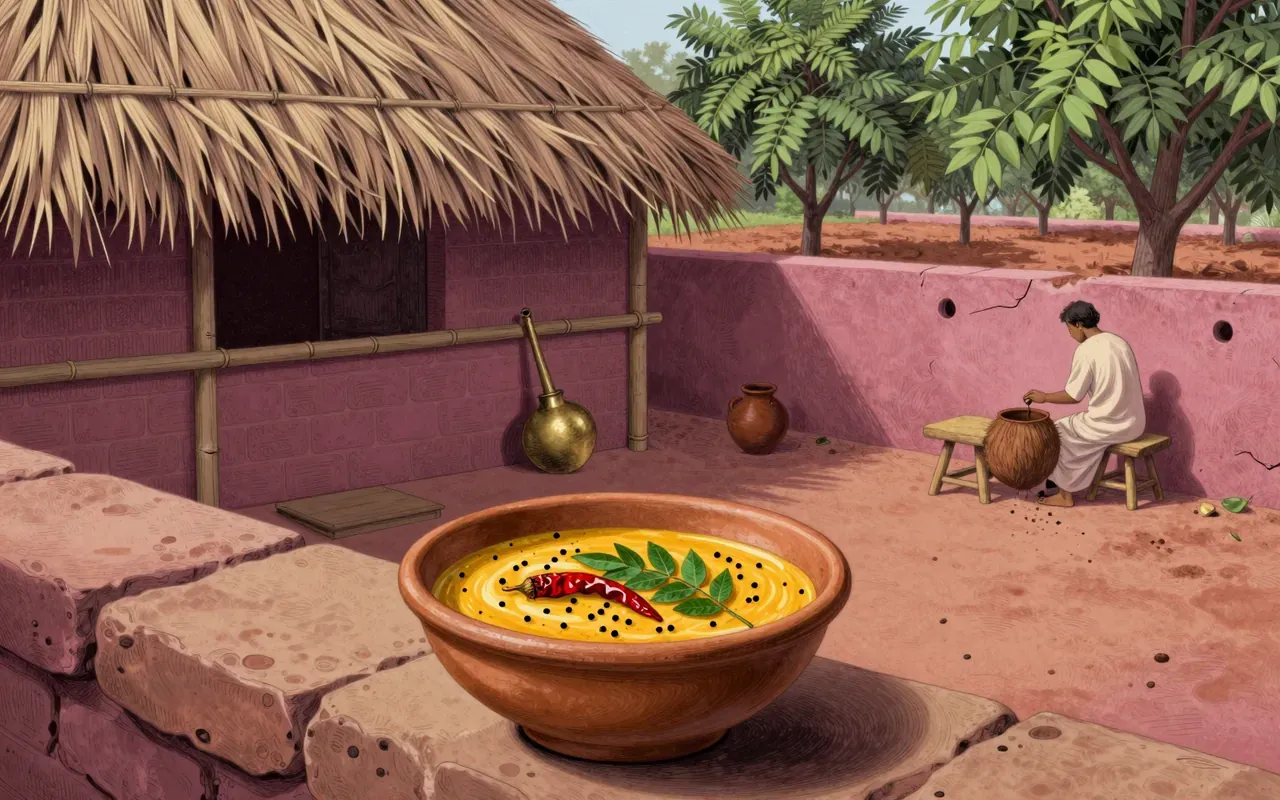
‘Curry’ is a British fiction—a label imposed on India’s named dishes, not a real cuisine.

Worth your time?3.5/5Yes.Cook the whole thing.What works, what does not, who it is for ↓
9:47in productionCh. 1 · A Name, Not a Dish/ 9:47 · ceiling 15 min
4 chapters · 9:47Ceiling 15:00

The brief is written and checked. The video joins this page when it is cut.4 chapters · 1 min read · 9:47 planned

Read the brief

Curry is a colonial construct—not a dish, but a British-imposed category that flattened India’s named, regional preparations into a single, exportable idea. Its method relies on frying spices in fat to build flavour; its history begins with medieval Indian broths seasoned with black pepper, then pivots decisively with the arrival of chilies, tomatoes, and potatoes. It gets right the centrality of spiced, saucy cooking—but fails as a descriptor, because Indians never called their food ‘curry’. It changed how the world talks about food: turning rogan josh into ‘a curry’, sambar into ‘a curry’, and vindaloo into ‘a curry’. It is for readers who want to question labels, not follow recipes. Worth your time only if you treat it as a case study in cultural translation—not a cooking guide.

Chapters & takeaways4
  1. 1:04
    A Name, Not a Dish

    Curry is not Indian—it’s a British term imposed on Indian dishes that already had their own names.

  2. 2:38
    Heat Arrived Later

    Medieval Indian spiced broths used black pepper; modern heat came from chilies introduced after the Columbian Exchange.

  3. 4:26
    The Paste Is the Engine

    Frying spices in oil or ghee is the essential step—it transforms dry aromatics into a cohesive, savoury base.

  4. 5:42
    Exported by Empire

    Anglo-Indian cooking created Hannah Glasse’s 18th-century ‘currey’; indentured workers carried it to the Caribbean, traders to Japan.

1 more chapterFewer chapters
Worth your time?

Yes. Cook the whole thing.

3.5/ 5
What works
  • exposes the fiction of ‘curry’ as a category
  • grounds change in verifiable events (Columbian Exchange, British Raj)
  • names the core technique—spice-frying in fat
What does not
  • offers a unified recipe
  • identifies a single region of origin
  • describes a stable ingredient list
Cook it if
  • historians of food globalisation
  • cooks interrogating culinary labels
  • readers tracing colonial language in everyday terms
Skip it if
  • beginners seeking a first curry recipe
  • anyone assuming ‘curry’ refers to a technique or place
Who should cook it, and who should skipHide who it is for
The written brief1 min read

What the dish is and where it came from

Curry is not a dish but a colonial category. It originated as a European abstraction applied to diverse Indian preparations, beginning with medieval spiced broths using black pepper, then evolving after Portuguese and British contact.

How it works, in terms someone would actually use

Curry works by frying spices in oil or ghee to form a paste, then combining it with broth, milk, or coconut milk. The heat unlocks volatile oils; the fat carries flavour; the liquid builds depth and texture.

What it gets right

It captures the centrality of spiced, saucy preparations in Indian cooking—and how those preparations adapt when ingredients like chili peppers, tomatoes, and potatoes arrive via the Columbian Exchange.

What it does not

It does not name a technique, region, or ingredient set. It does not exist as a dish in Indian culinary practice—only as a foreign label applied after the fact.

What it changed

It changed how the world names food: ‘curry’ is not an Indian word for a dish type but a British-imposed umbrella term that erased rogan josh, sambar, and vindaloo as distinct entities.

Who it is for, and who it is not

It is for cooks who want to interrogate labels, historians tracking food globalisation, and eaters curious about why ‘curry powder’ bears no relation to any Indian spice blend. It is not for anyone seeking a definitive recipe or regional origin story.

Is it worth your time

Yes—if you want to understand how colonial categorisation reshaped a continent’s cooking into a global shorthand. No—if you expect a single recipe, origin point, or authentic version.
Same course · Dishes4 of 496
10:55
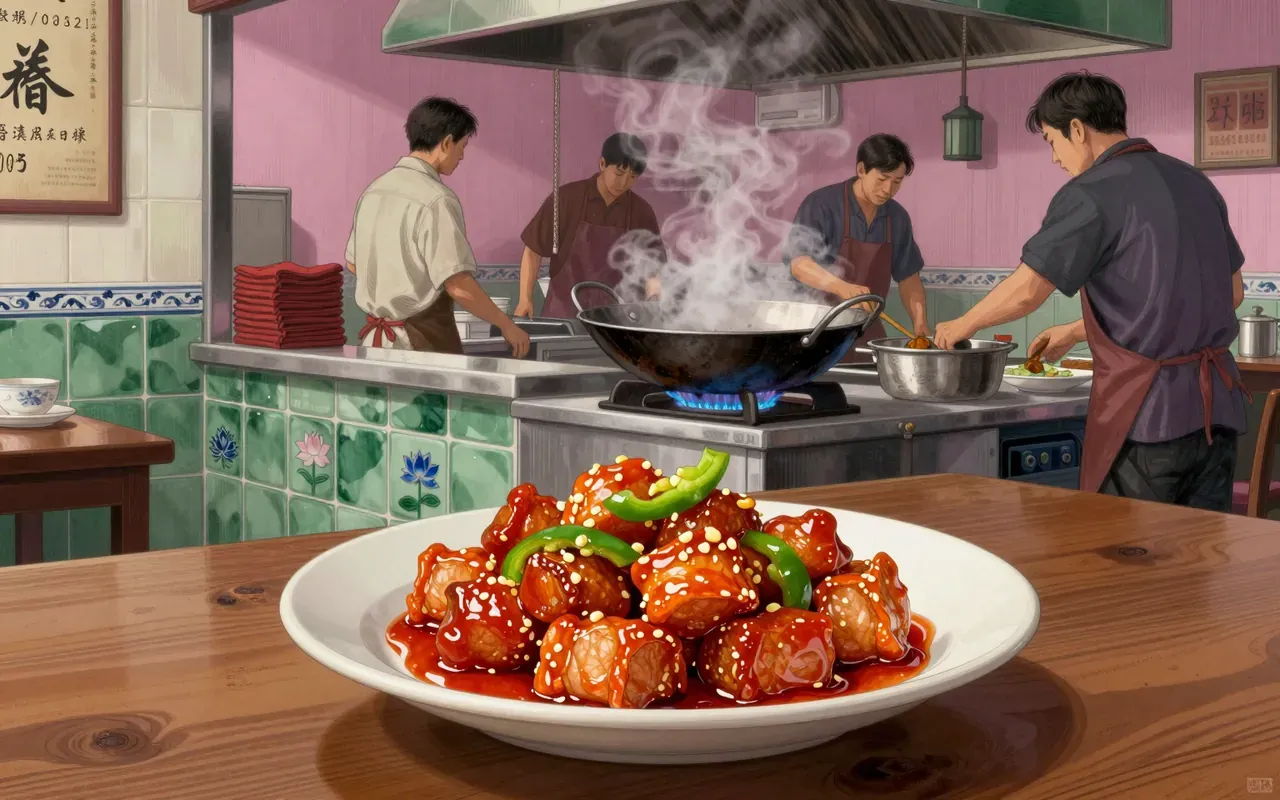
Sweet and sour porkSweet and sour pork is a Cantonese dish adapted for foreigners in 18th-century Guangdong, then carried to the US by Chinese migrants during the Gold Rush and railroad era. It uses double-frying—a genuine Cantonese technique—to deliver crispness, and its sauce balances sweetness and acidity to suit Western palates. It succeeds as functional diplomacy on a plate, but fails as cultural shorthand: it stands in for all Chinese food while erasing its Cantonese specificity and diasporic labour. Its endurance proves adaptation isn’t betrayal—it’s strategy.
10:34
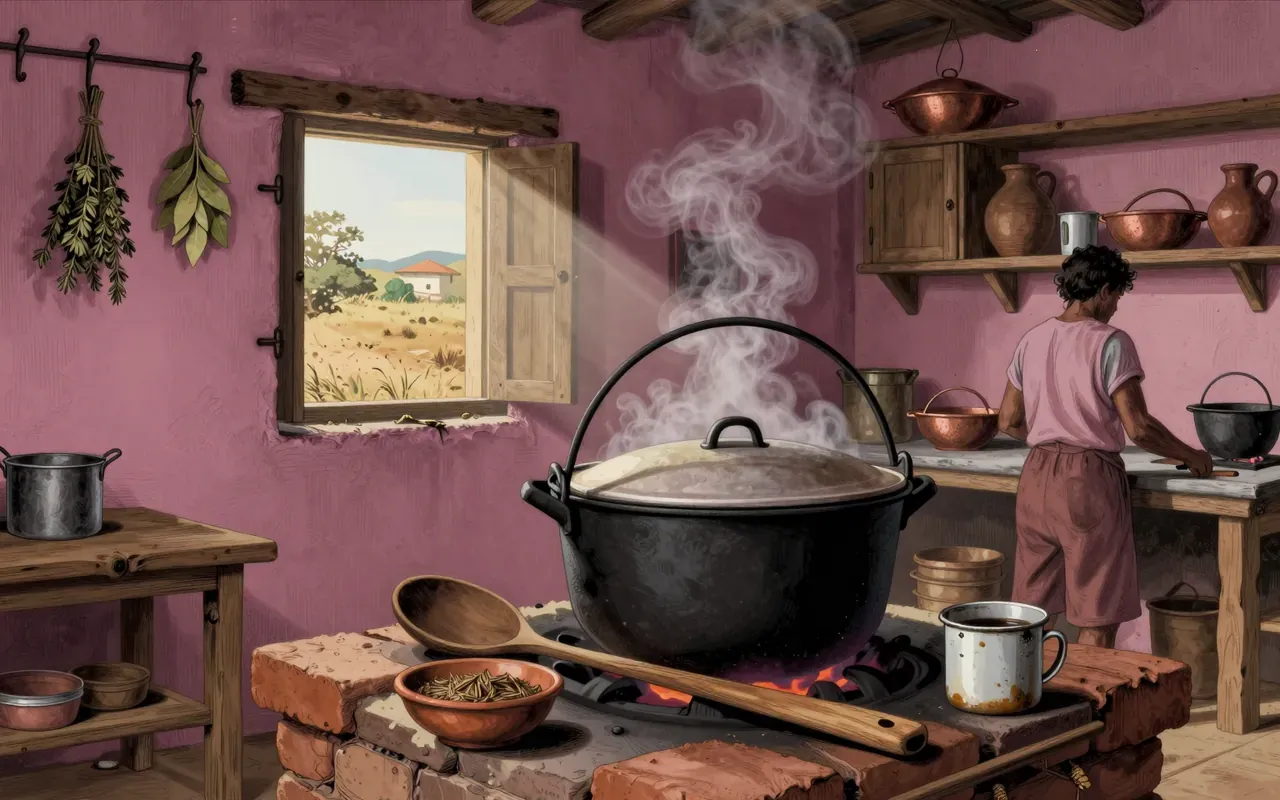
Ropa viejaRopa vieja is a stewed beef dish with regional variations across Spain, Latin America, and the Philippines. It originated as 'handrajos', a Sephardic Jewish Shabbat stew in the Iberian Peninsula. It spread to North Africa and the Canary Islands before arriving in Cuba via Canary Island immigrants—first reported there in 1857. Its name likely refers to either leftover ingredients or the tattered appearance of the shredded meat. Though now considered a Cuban national dish, that designation obscures its deeper origins and transmission path.
0:56
ShakshoukaShakshouka is a Maghrebi dish of eggs poached in a sauce of tomatoes, olive oil, peppers, onion, and garlic, commonly spiced with cumin, paprika, and cayenne pepper.
1:19
PastillaPastilla is a layered pie from Morocco, also found in Algeria and Tunisia (as malsouka). Its name derives from the Spanish word pastilla, though theories attribute its arrival to Andalusi Muslims, Sephardic Jews, or Ottoman-era Algerian migrants. It is not definitively tied to one origin.
Up next in Food

Dongpo pork

· 8:20

Dongpo pork proves cheap pork becomes luxurious only when skin, fat, and slow heat are treated as equal partners.

8:20