8:20in productionCh. 1 · Origin: Hangzhou, not the palace/ 8:20 · ceiling 15 min
Dishes
Dongpo pork
Dongpo pork proves cheap pork becomes luxurious only when skin, fat, and slow heat are treated as equal partners.
Dongpo pork is a Hangzhou dish from the Song Dynasty. It uses thick, skin-on pork belly squares, marinated in huangjiu, rock sugar, and soy sauce, then slow-simmered. It delivers tenderness, fragrance, and non-greasy richness. It fails if the cut is uneven, the skin is removed, or the simmer is rushed. It redefined affordability — turning humble pork into both survival food and delicacy. It is for cooks who respect fat, skin, and time. It is not for those avoiding alcohol or seeking lean meat. It is worth your time if you want to master red-cooking’s balance of sweet, savoury, and aromatic depth.
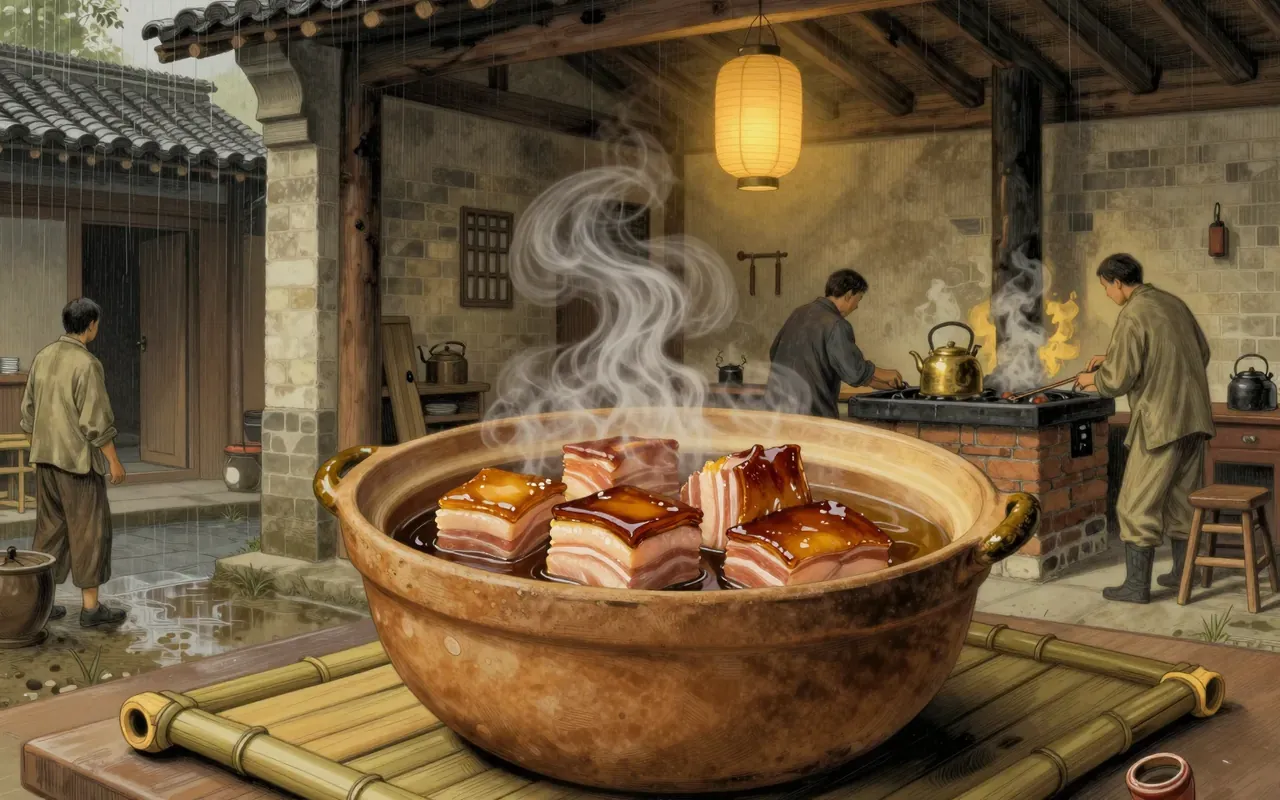
Hangzhou is where Dongpo pork began — not as court cuisine, but as resourceful exile cooking.
2:05
Cut: 5cm skin-on squares
Thick, skin-on squares — not cubes, not strips — define the structure and mouthfeel.
3:51
Marinade: three ingredients, no substitutions
Huangjiu, rock sugar, and soy sauce aren't optional extras — they’re the triad that builds fragrance, gloss, and depth.
5:25
Result: delicacy and survival, same pot
Slow simmering doesn’t just cook — it converts scarcity into sustenance and status at once.
Worth your time?
Yes. Cook the whole thing.
4.5/ 5
What works
It gets the texture right: tender but intact, fragrant but not cloying, rich but non-greasy.
It gets the method right: red-cooking via low, slow simmer after marination.
What does not
It does not work without skin-on squares of even fat-and-lean distribution.
It does not succeed if rushed or stripped of huangjiu, rock sugar, or soy sauce.
Cook it if
It is for cooks who value control over fat rendering and aroma development.
It is not for those seeking speed, lean-only meat, or no alcohol in the marinade.
Skip it if
It is not for those seeking speed, lean-only meat, or no alcohol in the marinade.
The written brief1 min read
What the dish is and where it came from
Dongpo pork is a Hangzhou dish from the Song Dynasty. It is red-cooked pork belly, cut into thick, skin-on squares.
How it works, in terms someone would actually use
Pork belly is cut into thick, skin-on squares. It is marinated in huangjiu, rock sugar, and soy sauce. Then it is slow-simmered until tender.
What it gets right
It gets the texture right: tender but intact, fragrant but not cloying, rich but non-greasy. It gets the method right: red-cooking via low, slow simmer after marination.
What it does not
It does not work without skin-on squares of even fat-and-lean distribution. It does not succeed if rushed or stripped of huangjiu, rock sugar, or soy sauce.
What it changed
It changed how affordable pork was used: transforming cheap cuts into both survival food and delicacy through slow cooking.
Who it is for, and who it is not
It is for cooks who value control over fat rendering and aroma development. It is not for those seeking speed, lean-only meat, or no alcohol in the marinade.
Is it worth your time
Yes — if you want a rich, fragrant, non-greasy pork dish that rewards patience and precise fat-skin-lean balance.