1:27in productionCh. 1 · What the dish is and where it came from/ 1:27 · ceiling 15 min
Dishes · Food history
Daifuku
A small round Japanese confection of mochi wrapped around sweet red bean paste, dusted with starch, and traditionally associated with good luck.
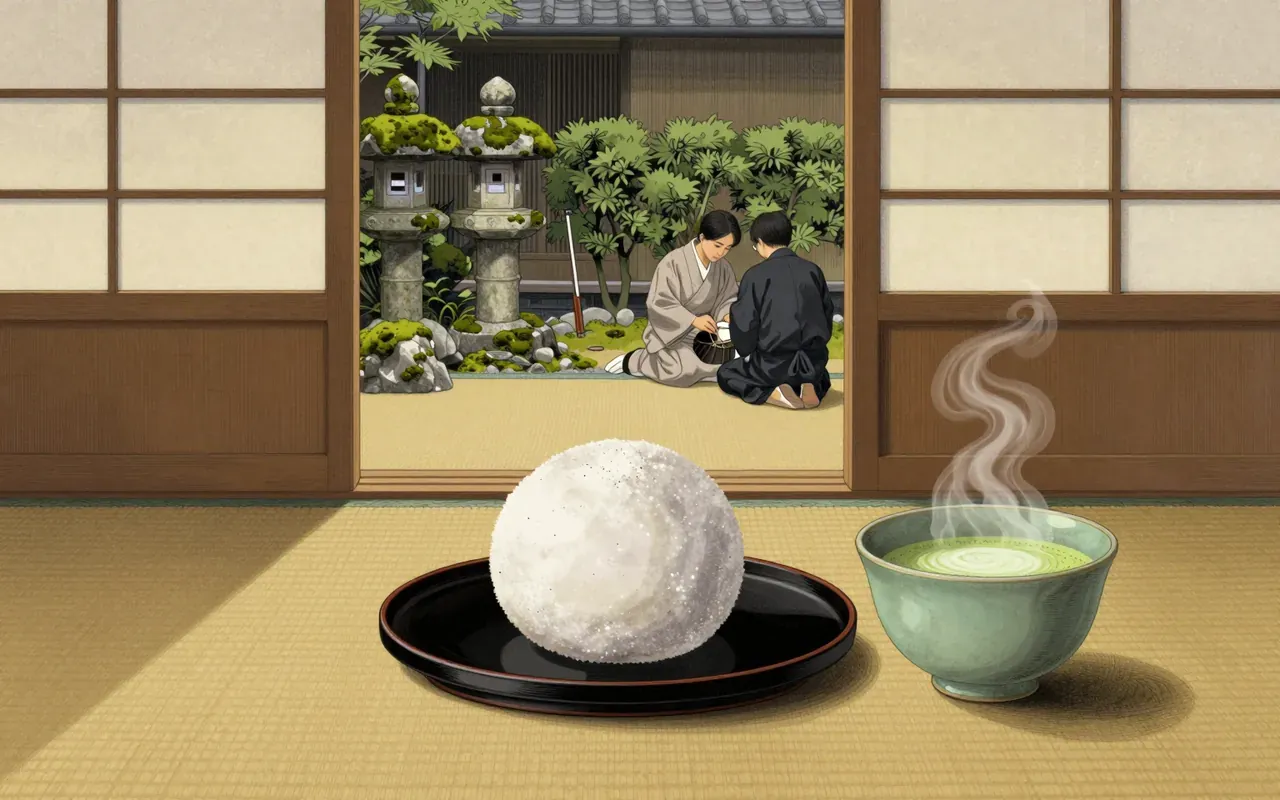
Daifuku is a Japanese wagashi: a small round mochi cake stuffed with sweet filling, most commonly anko (sweetened red bean paste from azuki beans). It originated as uzura mochi or harabuto mochi, names referencing its shape and stuffed nature. The name later shifted to daifuku mochi—'great luck rice cake'—due to the shared pronunciation of 'belly' (fuku) and 'luck' (fuku).
Daifuku is a Japanese wagashi: a small round mochi cake stuffed with sweet filling, most commonly anko (sweetened red bean paste from azuki beans).
0:24
How it works, in terms someone would actually use
Daifuku is made using mochitsuki—the traditional pounding of steamed glutinous rice—or, alternatively, cooked in a microwave.
0:33
What it gets right
It gets right a compact, handheld format: approximately 4 cm in diameter, dusted with rice flour, corn starch, or potato starch to prevent sticking.
0:48
What it does not
It does not avoid starch dusting—every version described is covered in rice flour, corn starch, or potato starch.
0:55
What it changed
By the end of the 18th century, daifuku gained popularity and began to be eaten toasted—a documented shift in serving style.
1:03
Who it is for, and who it is not
It is for people seeking a small, sweet, mochi-based confection, often paired with green tea.
1:14
Is it worth your time
It is worth your time if you enjoy compact, mildly chewy sweets with a traditional Japanese profile.
Worth your time?
Selectively. Start with the brief, then cook the parts we point at.
What works
It gets right a compact, handheld format: approximately 4 cm in diameter, dusted with rice flour, corn starch, or potato starch to prevent sticking. The combination of soft mochi and sweet anko delivers a simple, culturally resonant contrast.
What does not
It does not avoid starch dusting—every version described is covered in rice flour, corn starch, or potato starch.
Cook it if
Skip it if
The written brief1 min read
What the dish is and where it came from
Daifuku is a Japanese wagashi: a small round mochi cake stuffed with sweet filling, most commonly anko (sweetened red bean paste from azuki beans). It originated as uzura mochi or harabuto mochi, names referencing its shape and stuffed nature. The name later shifted to daifuku mochi—‘great luck rice cake’—due to the shared pronunciation of ‘belly’ (fuku) and ‘luck’ (fuku).
How it works, in terms someone would actually use
Daifuku is made using mochitsuki—the traditional pounding of steamed glutinous rice—or, alternatively, cooked in a microwave. No other preparation methods are described.
What it gets right
It gets right a compact, handheld format: approximately 4 cm in diameter, dusted with rice flour, corn starch, or potato starch to prevent sticking. The combination of soft mochi and sweet anko delivers a simple, culturally resonant contrast.
What it does not
It does not avoid starch dusting—every version described is covered in rice flour, corn starch, or potato starch.
What it changed
By the end of the 18th century, daifuku gained popularity and began to be eaten toasted—a documented shift in serving style.
Who it is for, and who it is not
It is for people seeking a small, sweet, mochi-based confection, often paired with green tea. It is not for those avoiding sweetened red bean paste or starch-dusted foods.
Is it worth your time
It is worth your time if you enjoy compact, mildly chewy sweets with a traditional Japanese profile. Its size (≈4 cm), portability, and standard starch coating make it easy to serve and eat.