foodbriefs
8:52in productionCh. 1 · What it is/ 8:52 · ceiling 15 min
Dishes

Cong you bing

Scallions don’t just season this pancake—they hold its layers together and define its bite.

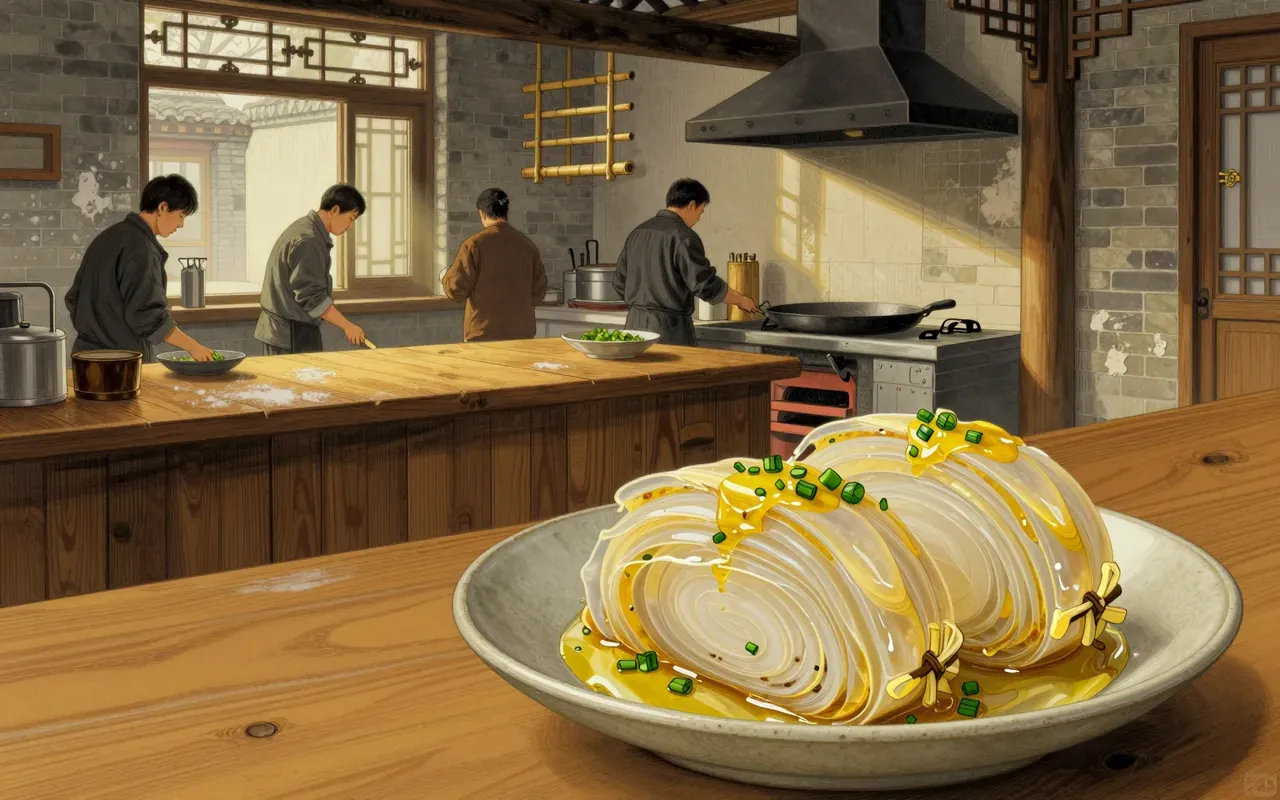
Cong you bing is a Chinese savoury flatbread made from wheat dough and minced scallions. It is folded repeatedly with oil and scallions between layers, then pan-fried to yield crisp edges and a chewy, layered interior. It functions as street food, restaurant dish, and commercial product.

Chapters & takeaways4
  1. 1:03
    What it is

    It is a Chinese flatbread defined by scallions folded into wheat dough—not a pancake in the Western sense.

  2. 2:30
    How it’s built

    Folding unleavened dough with oil and scallions between layers creates structure before pan-frying.

  3. 3:53
    Why it chews

    Many thin layers produce chewiness—not flakiness—and keep scallions raw-tasting in the core.

  4. 5:18
    Where it lives

    It moves freely between street stalls, restaurant menus, and frozen packages in supermarkets.

Worth your time?

Yes. Cook the whole thing.

4/ 5
What works
  • layered texture through folding, not laminating
  • scallions stay bright and pungent, not muted by long cooking or deep frying
What does not
  • deliver uniform crispness across the whole surface—edges brown and shatter while the centre stays dense and soft.
Cook it if
  • people who enjoy hands-on dough work and savoury, aromatic street food
Skip it if
  • those seeking light, airy, or uniformly crisp breads
The written brief1 min read

What the dish is and where it came from

Cong you bing is a Chinese savoury flatbread made from wheat dough and minced scallions.

How it works, in terms someone would actually use

It works by folding unleavened wheat dough repeatedly, brushing each layer with oil and scattering minced scallions between them, then pan-frying until crisp at the edges and chewy inside.

What it gets right

It delivers layered texture through folding, not laminating; scallions stay bright and pungent, not muted by long cooking or deep frying.

What it does not

It does not deliver uniform crispness across the whole surface—edges brown and shatter while the centre stays dense and soft.

What it changed

It expanded the role of scallions from garnish to structural flavour agent, embedding them within layers rather than topping them.

Who it is for, and who it is not

It is for people who enjoy hands-on dough work and savoury, aromatic street food. It is not for those seeking light, airy, or uniformly crisp breads.

Is it worth your time

Yes—if you want a savoury, layered flatbread with crisp edges and chewy depth, and are willing to manage multiple folds and pan-fry carefully.

Same course · Dishes4 of 485
Up next in Food

Schweinshaxe

· 8:14

Schweinshaxe doesn’t hide the hock — it celebrates every tendon, blister, and bone.

8:14