foodbriefs
9:05in productionCh. 1 · Where it lives/ 9:05 · ceiling 15 min
Dishes · Street food

Ló͘-bah-pn̄g

Ló͘-bah-pn̄g proves that minced pork only matters when it’s swimming in its own soy-simmered fat.

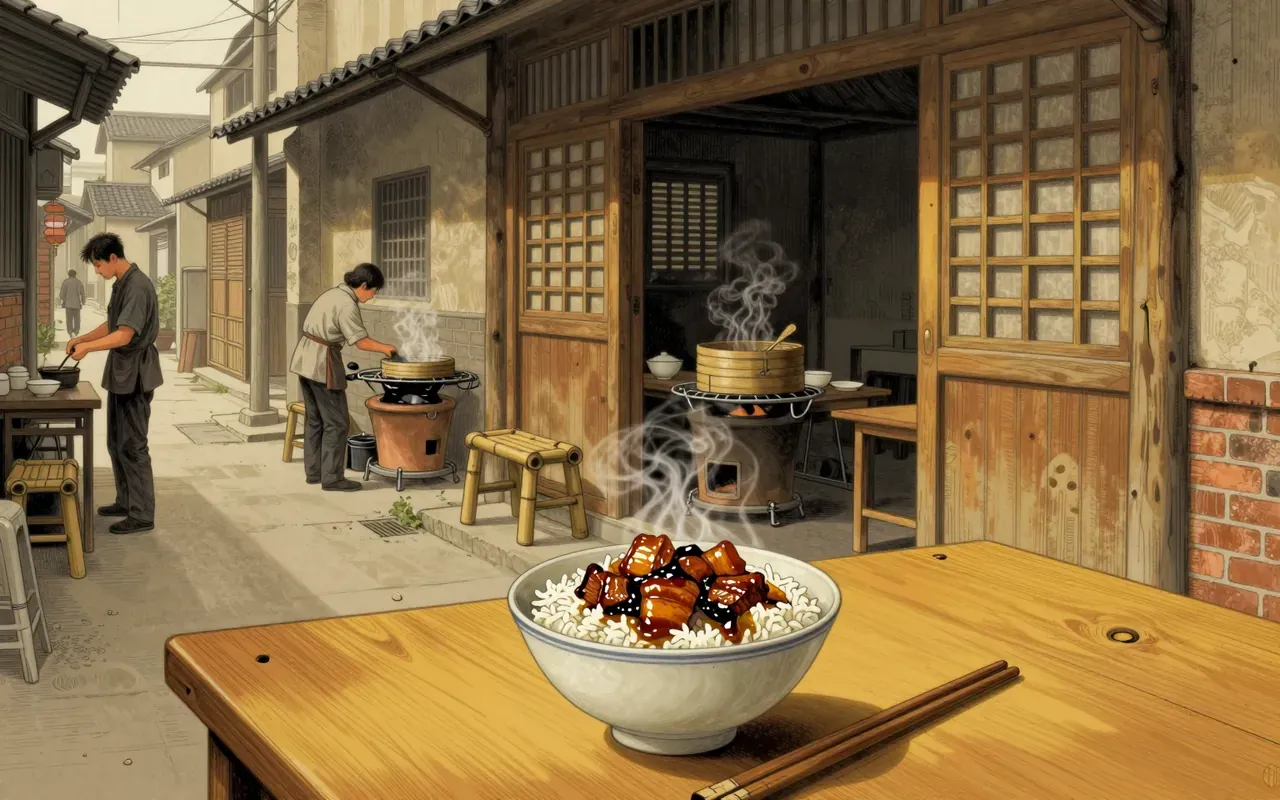
Ló͘-bah-pn̄g is a Taiwanese and Southern Fujian rice dish of soy-braised pork belly served over steamed rice.

Chapters & takeaways4
  1. 1:04
    Where it lives

    It belongs to Taiwan and Southern Fujian — not as a relic, but as daily food.

  2. 2:20
    How it cooks

    Stir-fry first, then boil: the shallot and pork belly must hit oil before soy.

  3. 4:23
    Why the sauce decides

    The sauce isn’t an accent — it’s the architecture.

  4. 6:03
    What cut makes it work

    Pork belly, not lean mince, gives the right fat-to-meat ratio for cling and gloss.

Worth your time?

Yes. Cook the whole thing.

4.5/ 5
What works
  • The sauce is the dish.
  • Its depth comes from stir-frying shallot and pork belly before boiling — caramelising fat and aromatics first, then building umami through soy reduction.
What does not
  • It does not rely on spice, acidity or freshness for balance.
  • It does not use ground meat alone — texture comes from diced or finely chopped pork belly.
Cook it if
  • It is for eaters who prioritise savoury intensity and sauce-to-rice ratio over lightness or contrast.
  • It is not for those seeking lean protein, heat, or bright finish.
Skip it if
  • It is not for those seeking lean protein, heat, or bright finish.
The written brief1 min read

What the dish is and where it came from

Ló͘-bah-pn̄g is a Taiwanese and Southern Fujian rice dish of soy-braised pork belly served over steamed rice.

How it works, in terms someone would actually use

Stir-fry pork belly with shallot in oil. Boil the mixture in soy sauce until tender and rich. Spoon the lu rou pork and its sauce over steamed rice.

What it gets right

The sauce is the dish. Its depth comes from stir-frying shallot and pork belly before boiling — caramelising fat and aromatics first, then building umami through soy reduction.

What it does not

It does not rely on spice, acidity or freshness for balance. It does not use ground meat alone — texture comes from diced or finely chopped pork belly.

What it changed

It shifted minced pork from filler to focal point by anchoring it in a concentrated, simmered soy sauce.

Who it is for, and who it is not

It is for eaters who prioritise savoury intensity and sauce-to-rice ratio over lightness or contrast. It is not for those seeking lean protein, heat, or bright finish.

Is it worth your time

Yes — if you want a deeply savoury, texturally layered rice dish built around a slow-cooked soy-braised pork sauce.

Same course · Dishes4 of 485
Up next in Food

Manchurian (dish)

· 12:20

A Mumbai invention that swapped garam masala for soy sauce—and changed Indian-Chinese food forever.

12:20