1:15in productionCh. 1 · What the dish is and where it came from/ 1:15 · ceiling 15 min
Dishes · Food history
Wonton
A Chinese-origin dumpling with a thin square wrapper, filled with pork, chicken, or shrimp, and typically served in soup.
Wontons originated in China. The earliest textual reference is from the Western Han dynasty, where Yang Xiong used the term 'bing wei zhi tun', meaning 'wontons are a type of bread'. By the Tang dynasty, they were distinguished from jiaozi. Dumplings resembling wontons date to the 7th–8th centuries CE in Turpan.
A square wrapper—made of flour, egg, water, and salt—is spread flat in the hand.
0:35
What it gets right
It delivers savory protein via common fillings like ground pork, chicken, or shrimp.
0:49
What it does not
The meat-and-seafood filling makes it less suitable if you seek a vegetarian or seafood-free dish.
0:55
What it changed
It expanded beyond China to become popular across East and Southeast Asian cuisines.
1:00
Who it is for, and who it is not
It is for people who enjoy small, handheld, protein-rich dumplings served in soup.
1:10
Is it worth your time
Yes—if you like soup-based dumplings with savory fillings and a tender, translucent wrapper.
Worth your time?
Selectively. Start with the brief, then cook the parts we point at.
What works
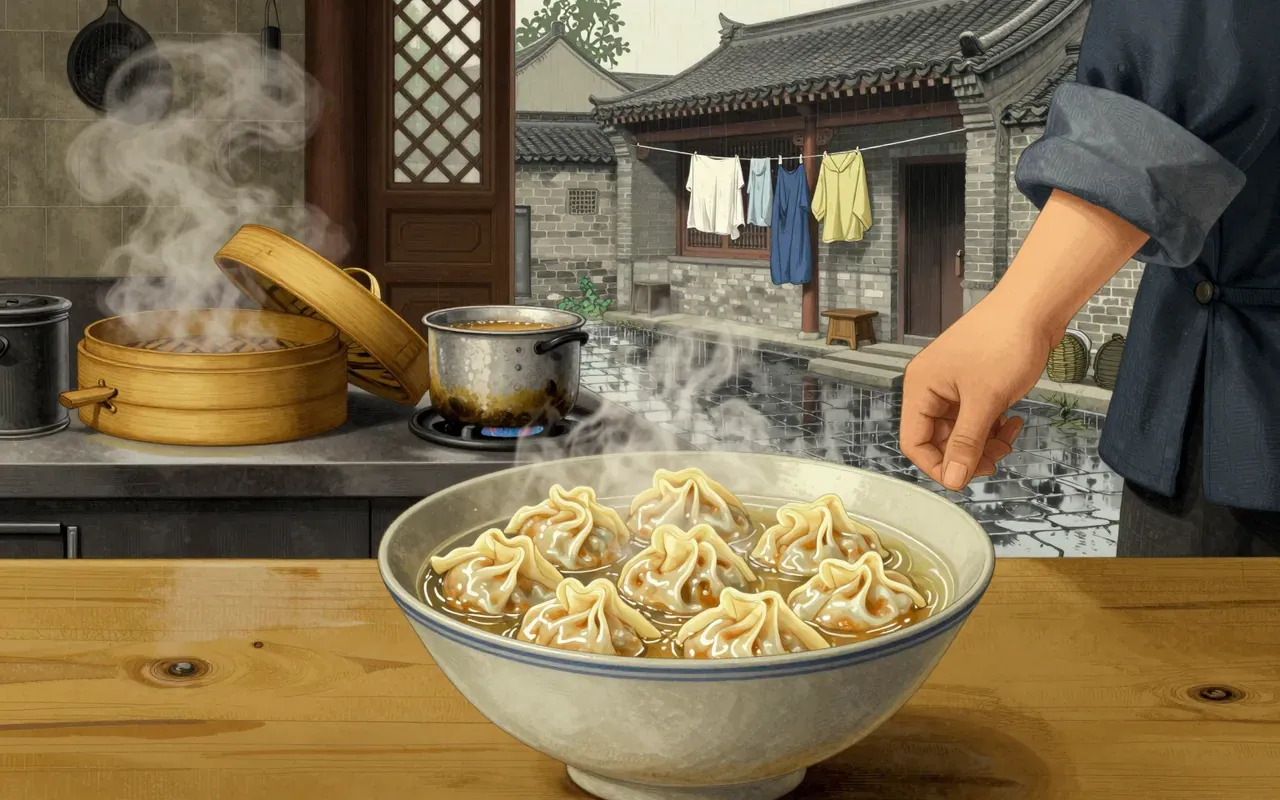
It delivers savory protein via common fillings like ground pork, chicken, or shrimp. The wrapper becomes transparent when boiled, offering visual contrast. Serving in soup aligns with traditional expectations and provides broth-based warmth and balance.
What does not
The meat-and-seafood filling makes it less suitable if you seek a vegetarian or seafood-free dish.
Cook it if
Skip it if
The written brief1 min read
What the dish is and where it came from
Wontons originated in China. The earliest textual reference is from the Western Han dynasty, where Yang Xiong used the term ‘bing wei zhi tun’, meaning ‘wontons are a type of bread’. By the Tang dynasty, they were distinguished from jiaozi. Dumplings resembling wontons date to the 7th–8th centuries CE in Turpan.
How it works, in terms someone would actually use
A square wrapper—made of flour, egg, water, and salt—is spread flat in the hand. A small amount of filling is placed in the center. The edges are compressed together with the fingers to seal it into shape.
What it gets right
It delivers savory protein via common fillings like ground pork, chicken, or shrimp. The wrapper becomes transparent when boiled, offering visual contrast. Serving in soup aligns with traditional expectations and provides broth-based warmth and balance.
What it does not
The meat-and-seafood filling makes it less suitable if you seek a vegetarian or seafood-free dish.
What it changed
It expanded beyond China to become popular across East and Southeast Asian cuisines.
Who it is for, and who it is not
It is for people who enjoy small, handheld, protein-rich dumplings served in soup. It is not for those avoiding pork, chicken, shrimp, egg, or gluten.
Is it worth your time
Yes—if you like soup-based dumplings with savory fillings and a tender, translucent wrapper.