What the dish is and where it came from
Meat hanging is not a dish. It is a preservation and maturation technique rooted in pre-refrigeration practice, later formalised for beef and game. Its origins lie in field-based game handling, where carcasses were hung until ‘high’ — approaching decomposition — to intensify aroma and soften flesh.
How it works, in terms someone would actually use
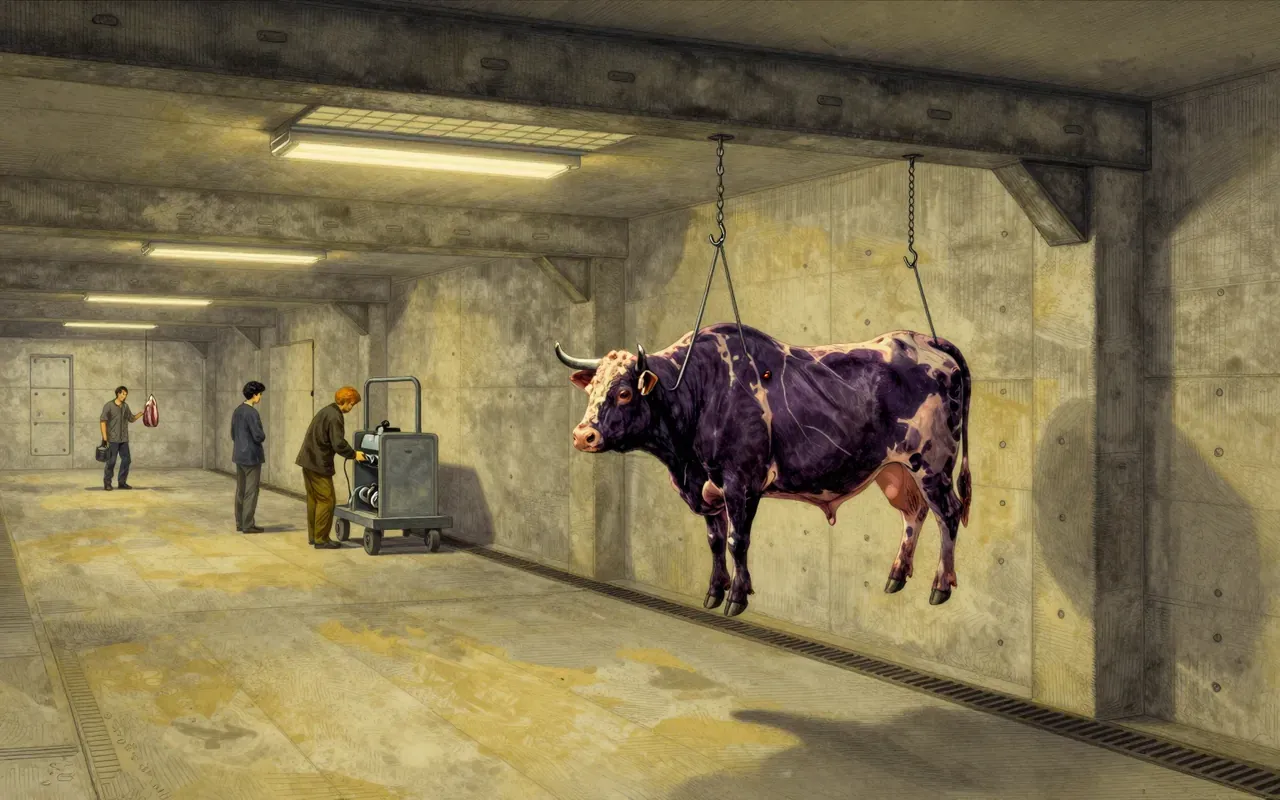
Meat hanging is a controlled dry-aging process. Beef or game is suspended in a room at 33–37°F and ~85% humidity, with steady ventilation. The environment keeps biological activity alive — muscles metabolise hemoglobin, producing lactic acid — which tenderises tissue and deepens flavour. Too hot, and spoilage occurs; too cold, and freezing halts the process.
What it gets right
It leverages natural post-mortem biochemistry — specifically hemoglobin metabolism and lactic acid production — to tenderise muscle and connective tissue. It uses ventilation to suppress bacteria while allowing enzymatic and microbial activity to develop complexity. It respects the difference between beef and game by permitting both, but with distinct endpoints: decomposition-adjacent ‘gaminess’ for game, and controlled umami depth for beef.
What it does not
It does not apply to poultry, pork, or lamb in the source material. It does not eliminate trimming — the dried outer layer must be cut away. It does not guarantee safety without strict humidity and airflow control. It does not accelerate tenderness beyond 30 days under these conditions.
What it changed
It shifted meat preparation from immediate butchery to a deliberate, time-bound intervention that treats post-mortem biology as an ingredient. It replaced variable, weather-dependent field hanging with replicable, climate-controlled aging — making ‘high’ game and rich beef reproducible on demand.
Who it is for, and who it is not
It is for butchers, chefs, and producers who control aging environments and serve customers willing to pay for intensified flavour and texture. It is not for home cooks without climate-stable storage, nor for anyone seeking consistency without weight loss, trimming, or risk.
Is it worth your time
It is worth your time only if you are sourcing whole cuts of beef or game and have access to precise environmental control. It demands space, monitoring, and tolerance for weight loss (10–15%) and surface dehydration. It does not scale for home kitchens without dedicated infrastructure.