foodbriefs
0:51in productionCh. 1 · What the dish is and where it came from/ 0:51 · ceiling 15 min
Dishes · Food history

Fesenjān

A sweet-and-sour Iranian stew made with pomegranate paste and ground walnuts, traditionally served on Yaldā Night.

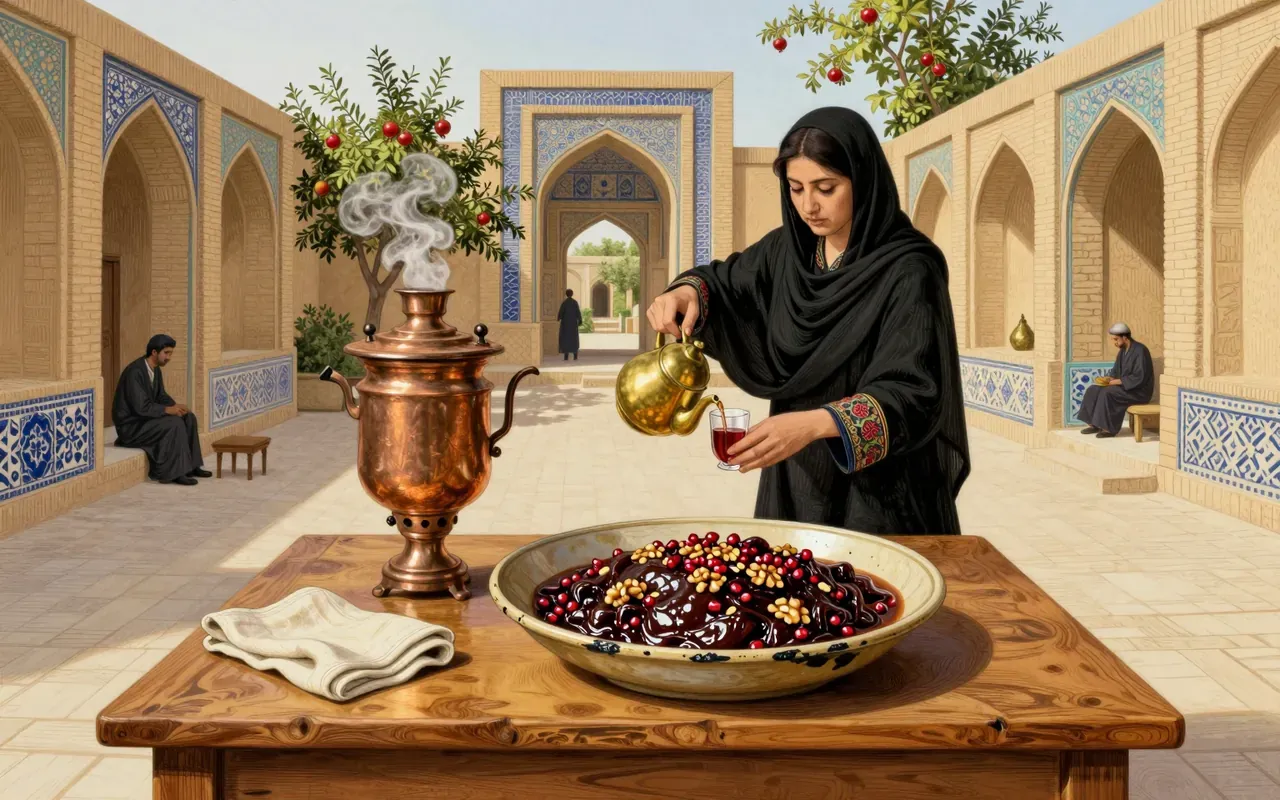
Fesenjān is a sweet-and-sour Iranian stew (a khoresh), also called fesenjoon in the Tehrani dialect.

Chapters & takeaways7
  1. 0:00
    What the dish is and where it came from

    Fesenjān is a sweet-and-sour Iranian stew (a khoresh), also called fesenjoon in the Tehrani dialect.

  2. 0:06
    How it works, in terms someone would actually use

    It is made with pomegranate paste (narsharab), ground walnuts (bazhe), turmeric, cinnamon, orange peel, cardamom, and rosebud.

  3. 0:13
    What it gets right

    Its balance of sweet and sour flavors, plus aromatic spices and rich nut-paste base, gives it distinctive depth and complexity.

  4. 0:21
    What it does not

    It is not a vegetable-forward dish—the walnut and pomegranate paste dominate its composition.

  5. 0:26
    What it changed

    The 1881 Sofra-ye at'ema lists ten varieties, including almond, eggplant, fish, and yogurt—though walnut is now the most common.

  6. 0:34
    Who it is for, and who it is not

    It is for people seeking a ceremonial or special-occasion dish, especially during Yaldā Night.

  7. 0:44
    Is it worth your time

    Yes—it is worth your time if you want an elaborate, culturally significant stew reserved for meaningful gatherings.
Worth your time?

Selectively. Start with the brief, then cook the parts we point at.

What works
  • Its balance of sweet and sour flavors, plus aromatic spices and rich nut-paste base, gives it distinctive depth and complexity.
What does not
  • It is not a vegetable-forward dish—the walnut and pomegranate paste dominate its composition.
Cook it if
    Skip it if
      The written brief1 min read

      What the dish is and where it came from

      Fesenjān is a sweet-and-sour Iranian stew (a khoresh), also called fesenjoon in the Tehrani dialect.

      How it works, in terms someone would actually use

      It is made with pomegranate paste (narsharab), ground walnuts (bazhe), turmeric, cinnamon, orange peel, cardamom, and rosebud.

      What it gets right

      Its balance of sweet and sour flavors, plus aromatic spices and rich nut-paste base, gives it distinctive depth and complexity.

      What it does not

      It is not a vegetable-forward dish—the walnut and pomegranate paste dominate its composition.

      What it changed

      The 1881 Sofra-ye at’ema lists ten varieties, including almond, eggplant, fish, and yogurt—though walnut is now the most common.

      Who it is for, and who it is not

      It is for people seeking a ceremonial or special-occasion dish, especially during Yaldā Night. It is not for those seeking everyday, quick, or minimally spiced meals.

      Is it worth your time

      Yes—it is worth your time if you want an elaborate, culturally significant stew reserved for meaningful gatherings.
      Same course · Dishes4 of 327
      Up next in Food

      Financier (cake)

      · 1:07

      A small French almond cake with disputed origins in Lorraine and 17th-century nunneries, later associated with Paris financiers.

      1:07