1:08in productionCh. 1 · What the dish is and where it came from/ 1:08 · ceiling 15 min
Dishes · Technique
Foie gras
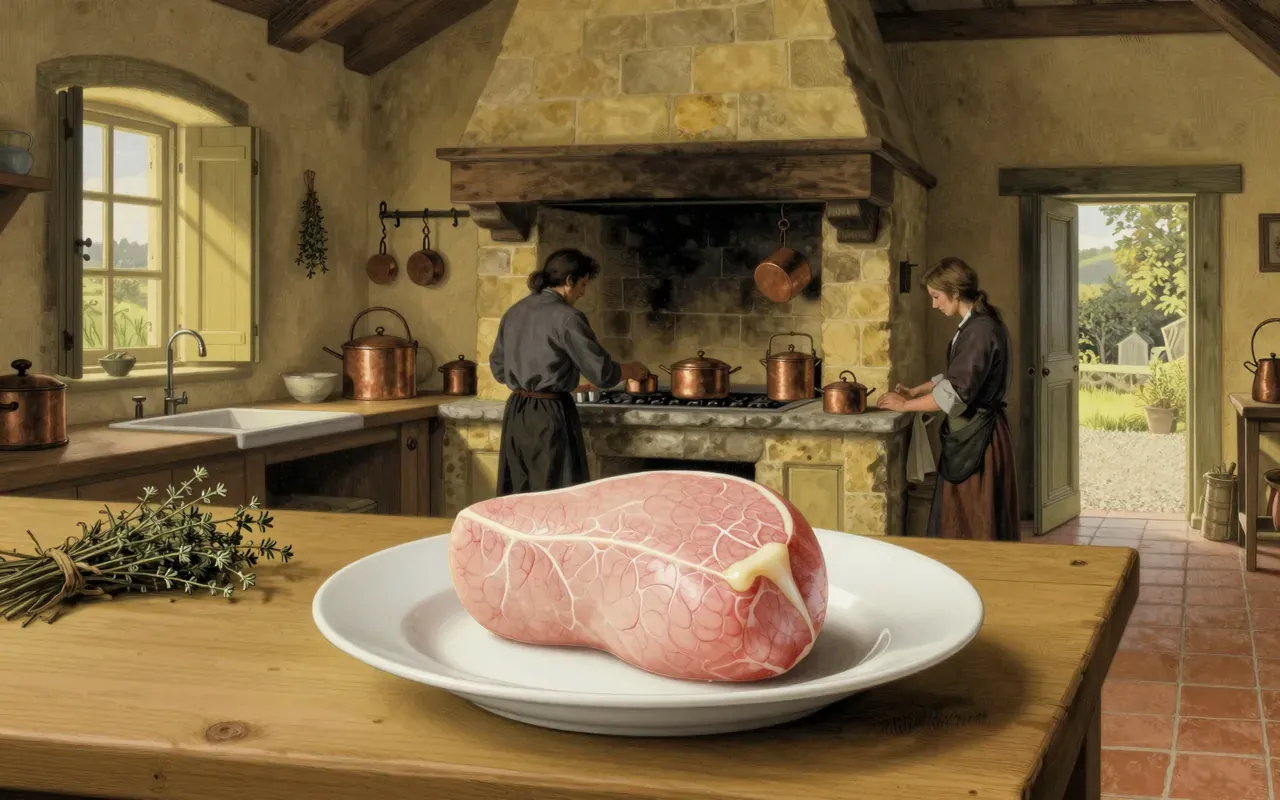
Foie gras is the enlarged liver of a duck or goose fattened by force-feeding.
Foie gras is the liver of a duck or goose fattened by gavage (force feeding), as defined by French law. Its origins trace to ancient Egypt around 2500 BC, where anatid birds were confined and force-fed for fattening.
Foie gras is the liver of a duck or goose fattened by gavage (force feeding), as defined by French law.
0:15
How it works, in terms someone would actually use
It works by force-feeding ducks or geese to enlarge their livers—typically to 6–10 times normal size—before harvest.
0:22
What it gets right
It gets right a rich, buttery, delicate flavor distinct from ordinary duck or goose liver, and holds protected status as part of France’s cultural and gastronomical heritage.
0:33
What it does not
It does not avoid controversy: gavage-based production raises animal welfare concerns due to force-feeding, intensive housing, and liver enlargement up to tenfold.
0:42
What it changed
It changed food practices by spreading goose fattening from ancient Egypt across the Mediterranean.
0:48
Who it is for, and who it is not
It is for people seeking a legally protected French delicacy with rich, buttery flavor.
1:00
Is it worth your time
It is worth your time if you value culturally protected French delicacies with distinctive richness—and accept the method of production.
Worth your time?
Selectively. Start with the brief, then cook the parts we point at.
What works
It gets right a rich, buttery, delicate flavor distinct from ordinary duck or goose liver, and holds protected status as part of France’s cultural and gastronomical heritage.
What does not
It does not avoid controversy: gavage-based production raises animal welfare concerns due to force-feeding, intensive housing, and liver enlargement up to tenfold.
Cook it if
Skip it if
The written brief1 min read
What the dish is and where it came from
Foie gras is the liver of a duck or goose fattened by gavage (force feeding), as defined by French law. Its origins trace to ancient Egypt around 2500 BC, where anatid birds were confined and force-fed for fattening.
How it works, in terms someone would actually use
It works by force-feeding ducks or geese to enlarge their livers—typically to 6–10 times normal size—before harvest.
What it gets right
It gets right a rich, buttery, delicate flavor distinct from ordinary duck or goose liver, and holds protected status as part of France’s cultural and gastronomical heritage.
What it does not
It does not avoid controversy: gavage-based production raises animal welfare concerns due to force-feeding, intensive housing, and liver enlargement up to tenfold.
What it changed
It changed food practices by spreading goose fattening from ancient Egypt across the Mediterranean.
Who it is for, and who it is not
It is for people seeking a legally protected French delicacy with rich, buttery flavor. It is not for those avoiding foods produced by gavage or concerned about associated welfare issues.
Is it worth your time
It is worth your time if you value culturally protected French delicacies with distinctive richness—and accept the method of production.