1:35in productionCh. 1 · What the dish is and where it came from/ 1:35 · ceiling 15 min
Dishes · Technique
Fufu
A pounded starchy staple from West Africa, made from boiled tubers like cassava, plantain, or cocoyam.
Fufu is a pounded meal from West African cuisine, originally made from boiled cocoyam, plantain, and yams. It is believed to originate with Akan peoples—Asante, Akuapem, Akyem, Bono, and Fante—in what is now Ghana. The Twi word 'fufu' comes from the Akans and has since spread across at least 14 African countries.
Fufu is a pounded meal from West African cuisine, originally made from boiled cocoyam, plantain, and yams.
0:21
How it works, in terms someone would actually use
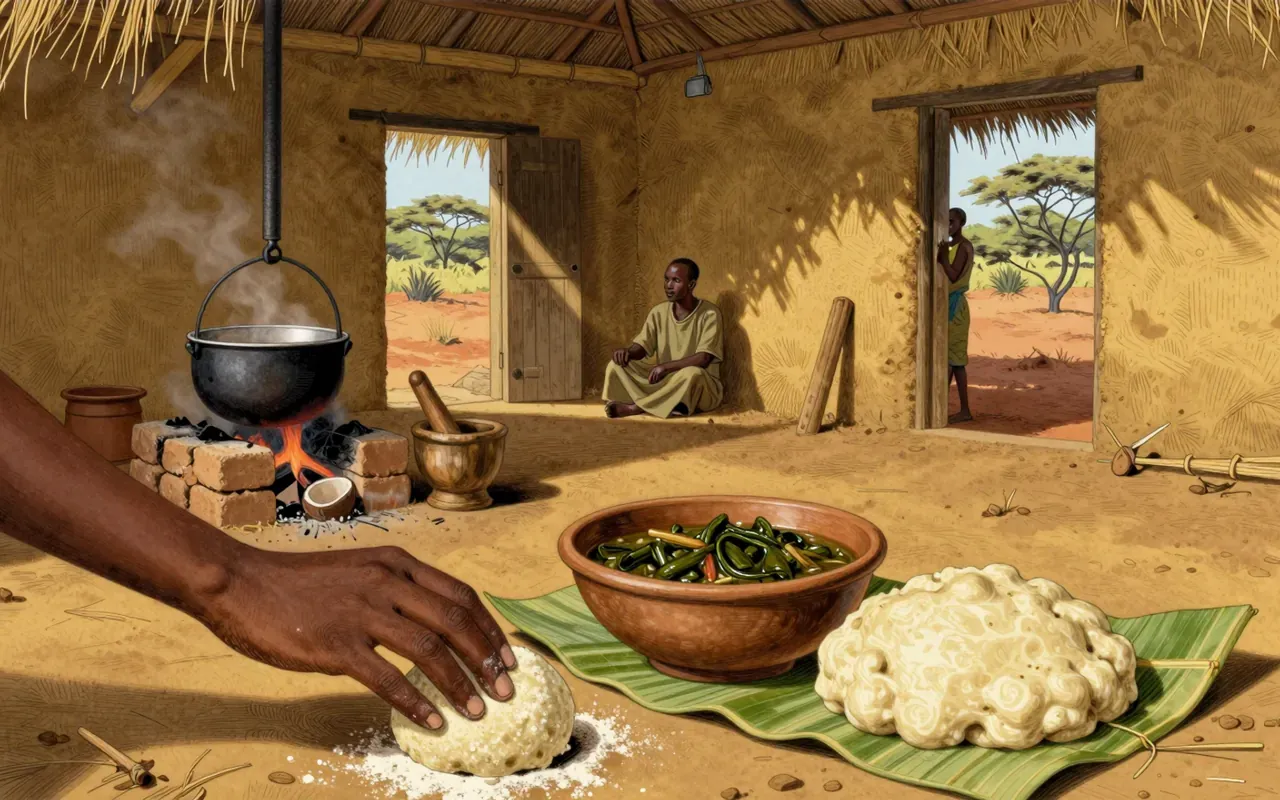
In Ghana, it is made by boiling cassava and/or plantain or cocoyam, then pounding the pieces in a wooden mortar with a wooden pestle.
0:38
What it gets right
It gets right a cohesive, pliable texture achieved through pounding and controlled water addition.
0:51
What it does not
It does not offer uniform composition: Nigerian fufu uses only fermented cassava, yielding greater thickness than Ghanaian versions made from boiled tubers or flour mixtures.
1:01
What it changed
Before the 16th century, fufu was made without cassava; Portuguese traders introduced it from Brazil, shifting the base ingredient in many regions.
1:10
Who it is for, and who it is not
It is for people who eat starchy staples prepared by pounding or stirring, across West and Central Africa.
1:25
Is it worth your time
It is worth your time if you seek a traditional pounded starch with documented regional variation in ingredients and method, especially within West African culinary contexts.
Worth your time?
Selectively. Start with the brief, then cook the parts we point at.
What works
It gets right a cohesive, pliable texture achieved through pounding and controlled water addition. Its flexibility—made with cassava alone, or mixed with plantain or cocoyam—supports regional adaptation and shared preparation across communities.
What does not
It does not offer uniform composition: Nigerian fufu uses only fermented cassava, yielding greater thickness than Ghanaian versions made from boiled tubers or flour mixtures.
Cook it if
Skip it if
The written brief1 min read
What the dish is and where it came from
Fufu is a pounded meal from West African cuisine, originally made from boiled cocoyam, plantain, and yams. It is believed to originate with Akan peoples—Asante, Akuapem, Akyem, Bono, and Fante—in what is now Ghana. The Twi word ‘fufu’ comes from the Akans and has since spread across at least 14 African countries.
How it works, in terms someone would actually use
In Ghana, it is made by boiling cassava and/or plantain or cocoyam, then pounding the pieces in a wooden mortar with a wooden pestle. Between blows, the mixture is turned by hand and water added gradually until it forms a soft, sticky dough.
What it gets right
It gets right a cohesive, pliable texture achieved through pounding and controlled water addition. Its flexibility—made with cassava alone, or mixed with plantain or cocoyam—supports regional adaptation and shared preparation across communities.
What it does not
It does not offer uniform composition: Nigerian fufu uses only fermented cassava, yielding greater thickness than Ghanaian versions made from boiled tubers or flour mixtures.
What it changed
Before the 16th century, fufu was made without cassava; Portuguese traders introduced it from Brazil, shifting the base ingredient in many regions.
Who it is for, and who it is not
It is for people who eat starchy staples prepared by pounding or stirring, across West and Central Africa. It is not for those avoiding cassava, plantain, or cocoyam—or seeking a dish made from grains, legumes, or non-tuber starches.
Is it worth your time
It is worth your time if you seek a traditional pounded starch with documented regional variation in ingredients and method, especially within West African culinary contexts.