8:51in productionCh. 1 · Origin/ 8:51 · ceiling 15 min
Culture · Ingredients
Sesame
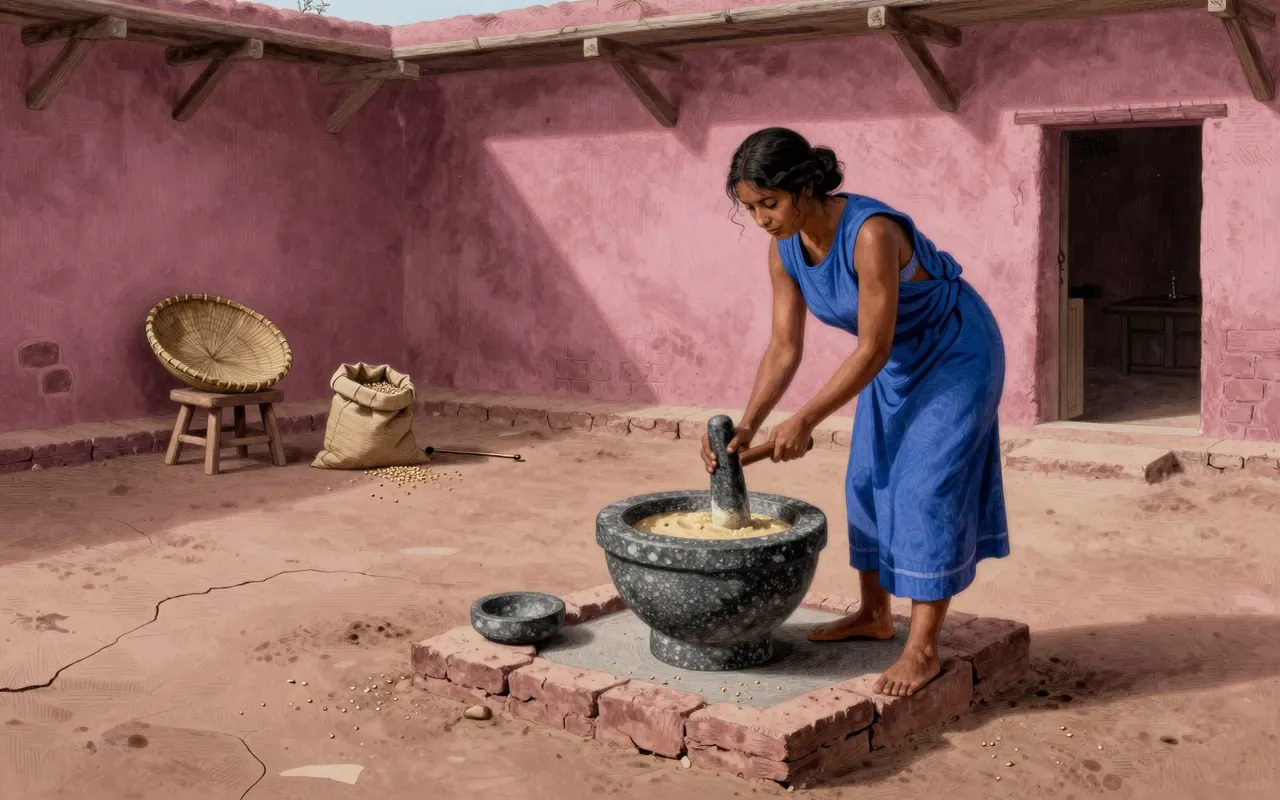
Sesame is not a spice—it’s a 5,500-year-old survival strategy encoded in a 3-mm seed.
Sesame is a foundational oilseed crop with origins in India over 5,500 years ago. It spread to Egypt and Urartu, where it was used medicinally and pressed for oil. Its physical traits—size, weight—are precisely documented. But the record says nothing about its current fragility or invisibility in food policy. It matters because it shows what human civilisation chose to sustain—and what we’ve since forgotten how to value.
Sesame was domesticated in India over 5,500 years ago—the oldest confirmed oilseed crop.
2:20
Egypt
It was medicinal in Egypt by 1550 BC and buried with pharaohs by 1350 BC.
3:40
Oil Economy
By 750 BC, Urartu was pressing sesame for oil—not just eating it.
5:08
Measurements
Seed size is consistent (3–4 mm), but weight varies: 100 seeds from Ibadan weigh just 0.203 g.
Worth your time?
Yes. Cook the whole thing.
4.5/ 5
What works
human-history
plants
trade
prehistory
What does not
culture/arts
culture/literature
culture/movements-and-scenes
culture/subcultures
Cook it if
food historians
agricultural researchers
policy makers in food security
Skip it if
casual cooks
gourmet trend followers
pop-culture audiences
The written brief1 min read
What the thing is
Sesame is an oilseed crop. Its seeds are small—typically 3–4 mm—and yield oil when pressed.
Where it came from
Sesamum indicum originated in India. It was domesticated in the Indian subcontinent by 3500–3050 BC. It reached ancient Egypt by 1350 BC and was cultivated there by c. 1550 BC. It was grown for oil in Urartu by at least 750 BC.
What it gets right
It establishes sesame as one of the oldest domesticated oilseeds—older than written records in many regions—and confirms its early, widespread use across South Asia, North Africa, and the Near East.
What it gets wrong
It says nothing about modern cultivation challenges, genetic erosion, or climate vulnerability—so it gives no insight into why sesame is now marginalised in global food policy despite its resilience.
Why it matters now
Sesame’s deep history reveals how prehistoric agriculture prioritised oil-rich, drought-tolerant plants—yet today, it remains under-researched and under-supported compared to newer commodity crops.
Is it worth your time
Yes—if you care about how deeply ancient crops shape global food systems, trade, and human survival strategies.