foodbriefs
1:01in productionCh. 1 · What the dish is and where it came from/ 1:01 · ceiling 15 min
Street food · Food history

Hotteok

A sweet Korean street pancake with a yeasted wheat dough and brown sugar–nut filling, pressed flat on a griddle.

Hotteok is a filled Korean street pancake. It originated in Qing dynasty China and was brought to Joseon Korea in the 19th century.

Chapters & takeaways7
  1. 0:00
    What the dish is and where it came from

    Hotteok is a filled Korean street pancake.

  2. 0:09
    How it works, in terms someone would actually use

    Dough made from wheat flour, water, milk, sugar, and yeast rises for several hours.

  3. 0:24
    What it gets right

    Its sweet filling—brown sugar, honey, peanuts, walnuts, cinnamon—aligns with Korean culinary preferences, distinguishing it from savory Korean pancakes.

  4. 0:31
    What it does not

    Because it usually has sweet fillings, it is less suited for those seeking savory or vegetable-based street food.

  5. 0:38
    What it changed

    It became associated with winter consumption, likely due to its high sugar content and warming appeal.

  6. 0:44
    Who it is for, and who it is not

    It is for people who enjoy sweet, portable, high-calorie snacks—up to 230 calories per piece.

  7. 0:55
    Is it worth your time

    Yes—it remains a popular street food in South Korea, widely available and culturally embedded.

Worth your time?

Selectively. Start with the brief, then cook the parts we point at.

What works
  • Its sweet filling—brown sugar, honey, peanuts, walnuts, cinnamon—aligns with Korean culinary preferences, distinguishing it from savory Korean pancakes.
What does not
  • Because it usually has sweet fillings, it is less suited for those seeking savory or vegetable-based street food.
Cook it if
    Skip it if
      The written brief1 min read

      What the dish is and where it came from

      Hotteok is a filled Korean street pancake. It originated in Qing dynasty China and was brought to Joseon Korea in the 19th century.

      How it works, in terms someone would actually use

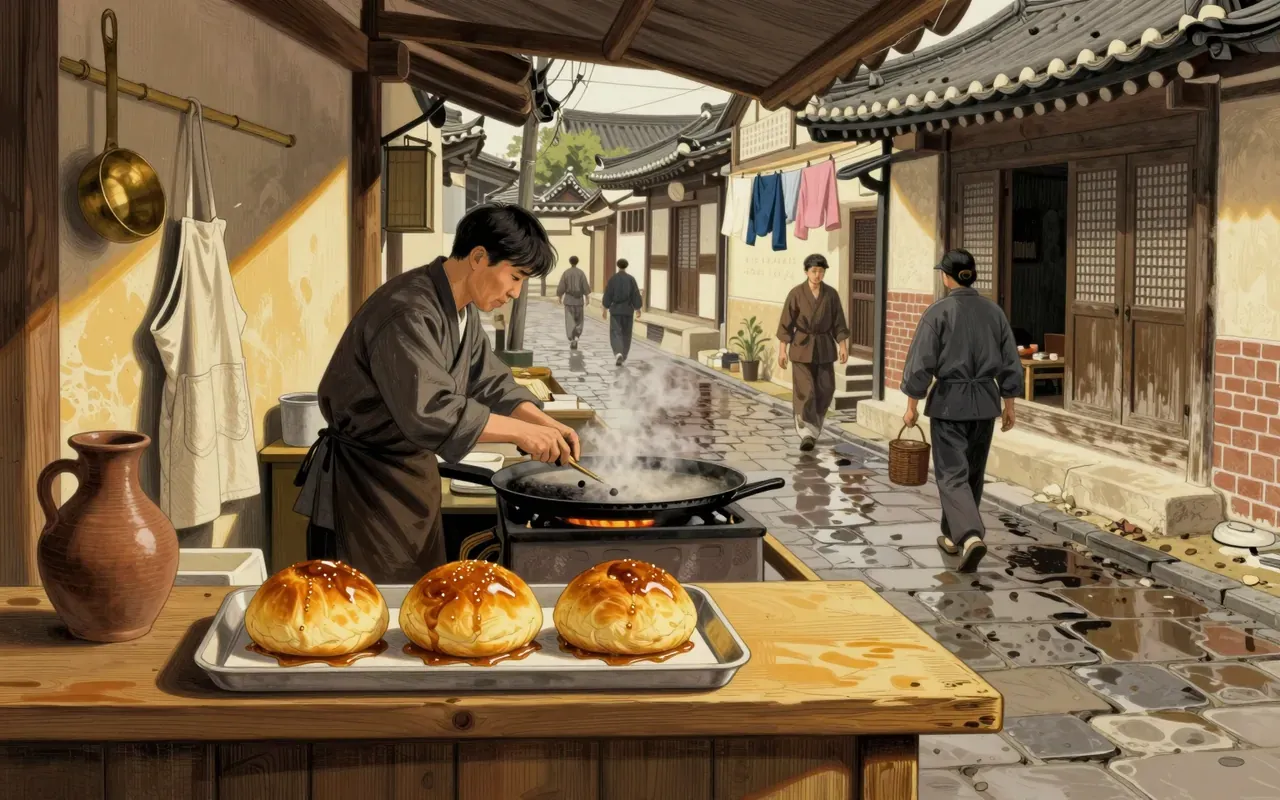
      Dough made from wheat flour, water, milk, sugar, and yeast rises for several hours. A ball is filled, placed on a greased griddle, and pressed flat into a circle using a stainless steel tool with a wooden handle.

      What it gets right

      Its sweet filling—brown sugar, honey, peanuts, walnuts, cinnamon—aligns with Korean culinary preferences, distinguishing it from savory Korean pancakes.

      What it does not

      Because it usually has sweet fillings, it is less suited for those seeking savory or vegetable-based street food.

      What it changed

      It became associated with winter consumption, likely due to its high sugar content and warming appeal.

      Who it is for, and who it is not

      It is for people who enjoy sweet, portable, high-calorie snacks—up to 230 calories per piece. It is not for those avoiding added sugar or seeking low-calorie options.

      Is it worth your time

      Yes—it remains a popular street food in South Korea, widely available and culturally embedded.
      Same course · Street food4 of 38
      Up next in Food

      Hummus

      · 0:57

      A chickpea-based dip with lemon, sesame, and olive oil, documented since the 13th century in Syria.

      0:57