foodbriefs
1:12in productionCh. 1 · What the dish is and where it came from/ 1:12 · ceiling 15 min
Street food · Dishes

Kottu

A Sri Lankan street dish of chopped roti pounded with meat curry, egg, onions, and chilies.

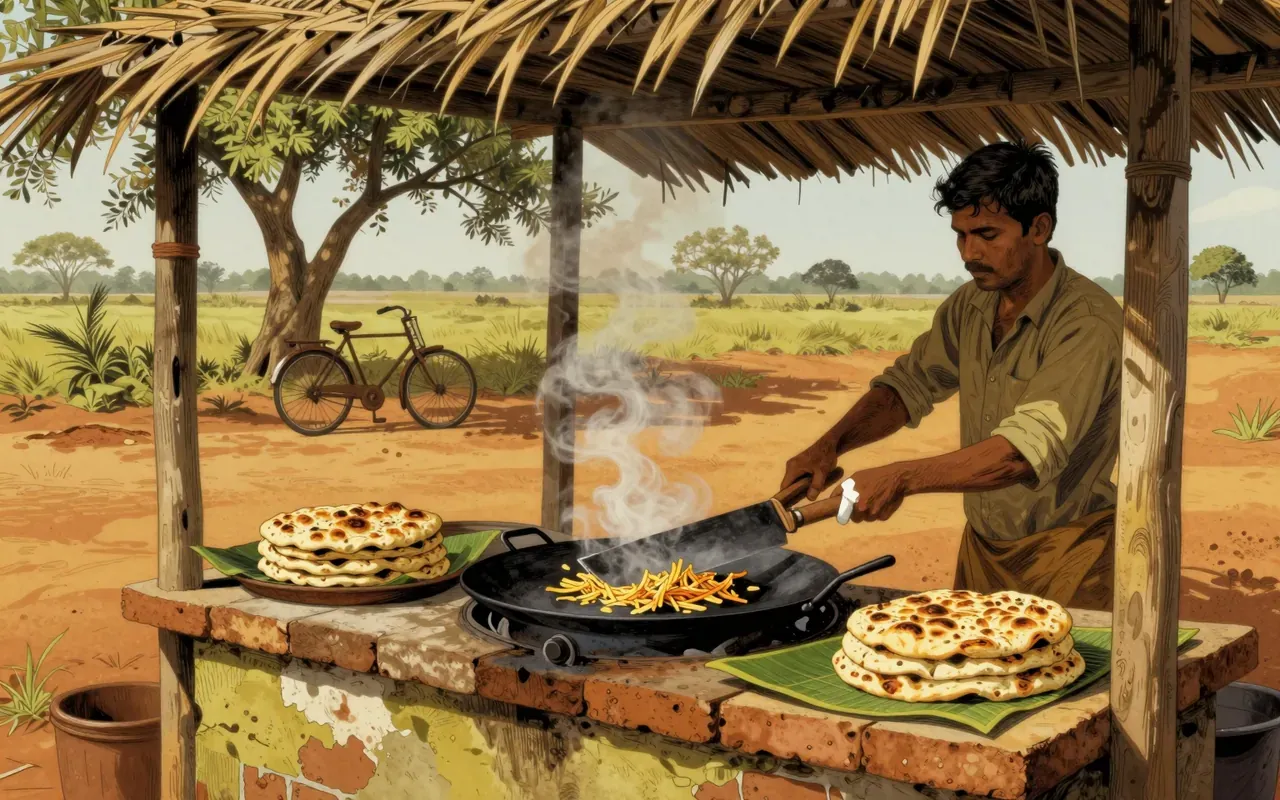
Kottu roti is a Sri Lankan dish of chopped roti mixed with meat curry (beef, mutton, seafood, or chicken), scrambled egg, onions, and chillies. It originated in eastern Sri Lanka—Batticaloa and Trincomalee—among the Sri Lankan Moor community.

Chapters & takeaways7
  1. 0:00
    What the dish is and where it came from

    Kottu roti is a Sri Lankan dish of chopped roti mixed with meat curry (beef, mutton, seafood, or chicken), scrambled egg, onions, and chillies.

  2. 0:15
    How it works, in terms someone would actually use

    It is made by chopping day-old godamba roti into strips, then pounding and mixing it repeatedly with heavy iron blades or spatulas alongside curry, egg, onions, and chillies.

  3. 0:29
    What it gets right

    It gets right a hearty, customizable combination: chewy roti strips, savory curry, rich egg, sharp onion, and heat from chillies—all unified by vigorous mixing.

  4. 0:39
    What it does not

    It does not offer a vegetarian or egg-free version in its standard form, since meat curry and scrambled egg are core components.

  5. 0:48
    What it changed

    It changed how leftover roti was used—transforming unsold baker’s castoffs into a distinct street food for lower socio-economic classes in the 1960s/1970s.

  6. 0:57
    Who it is for, and who it is not

    It is for people seeking a filling, spiced, protein-rich street meal.

  7. 1:06
    Is it worth your time

    Yes—it delivers a textured, flavorful, and culturally grounded meal built around accessible ingredients and bold contrasts.
Worth your time?

Selectively. Start with the brief, then cook the parts we point at.

What works
  • It gets right a hearty, customizable combination: chewy roti strips, savory curry, rich egg, sharp onion, and heat from chillies—all unified by vigorous mixing.
What does not
  • It does not offer a vegetarian or egg-free version in its standard form, since meat curry and scrambled egg are core components.
Cook it if
    Skip it if
      The written brief1 min read

      What the dish is and where it came from

      Kottu roti is a Sri Lankan dish of chopped roti mixed with meat curry (beef, mutton, seafood, or chicken), scrambled egg, onions, and chillies. It originated in eastern Sri Lanka—Batticaloa and Trincomalee—among the Sri Lankan Moor community.

      How it works, in terms someone would actually use

      It is made by chopping day-old godamba roti into strips, then pounding and mixing it repeatedly with heavy iron blades or spatulas alongside curry, egg, onions, and chillies. The rhythmic pounding creates a distinctive, far-traveling sound.

      What it gets right

      It gets right a hearty, customizable combination: chewy roti strips, savory curry, rich egg, sharp onion, and heat from chillies—all unified by vigorous mixing.

      What it does not

      It does not offer a vegetarian or egg-free version in its standard form, since meat curry and scrambled egg are core components.

      What it changed

      It changed how leftover roti was used—transforming unsold baker’s castoffs into a distinct street food for lower socio-economic classes in the 1960s/1970s.

      Who it is for, and who it is not

      It is for people seeking a filling, spiced, protein-rich street meal. It is not for those avoiding meat, egg, or chili heat.

      Is it worth your time

      Yes—it delivers a textured, flavorful, and culturally grounded meal built around accessible ingredients and bold contrasts.
      Same course · Street food4 of 49
      10:19
      Jamaican pattyA Jamaican patty is a semicircular, flaky, golden-yellow baked turnover formed by folding a circular dough cutout over spiced ground beef. It originated in Jamaica as a Creole dish shaped by British, Spanish, African, Chinese, Indian and Indigenous Arawak traditions—not as a copy of the Cornish pasty or Spanish empanada, but as a local response to available ingredients and techniques. Its folded structure works: it contains juicy, spiced filling without leakage. It falls short as a vehicle for delicate or vegetarian preparations—the method demands robustness. It changed how street food functions in Jamaica and abroad, becoming affordable daily fuel first, then a branded export. It is for eaters who value portability, spice and cultural specificity—not for those seeking lightness, purity or neutrality. It is worth your time if you want to taste a dish whose form and history are inseparable.
      1:14
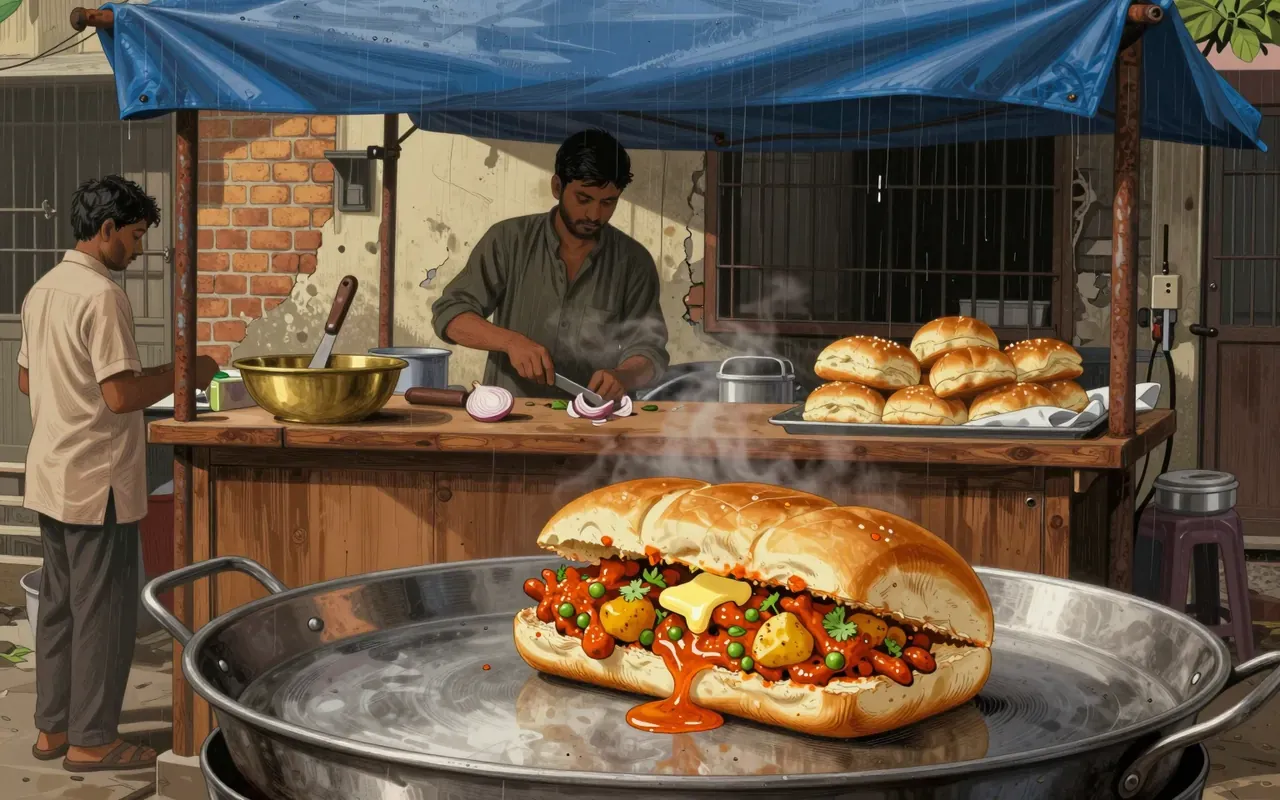
      Pav bhajiPav bhaji is a staple food of Maharashtra, consisting of a thick spicy vegetable curry (bhaji) served with a soft, buttered bread roll (pav). It originated as a fast lunchtime dish for textile mill workers in Mumbai.
      1:01
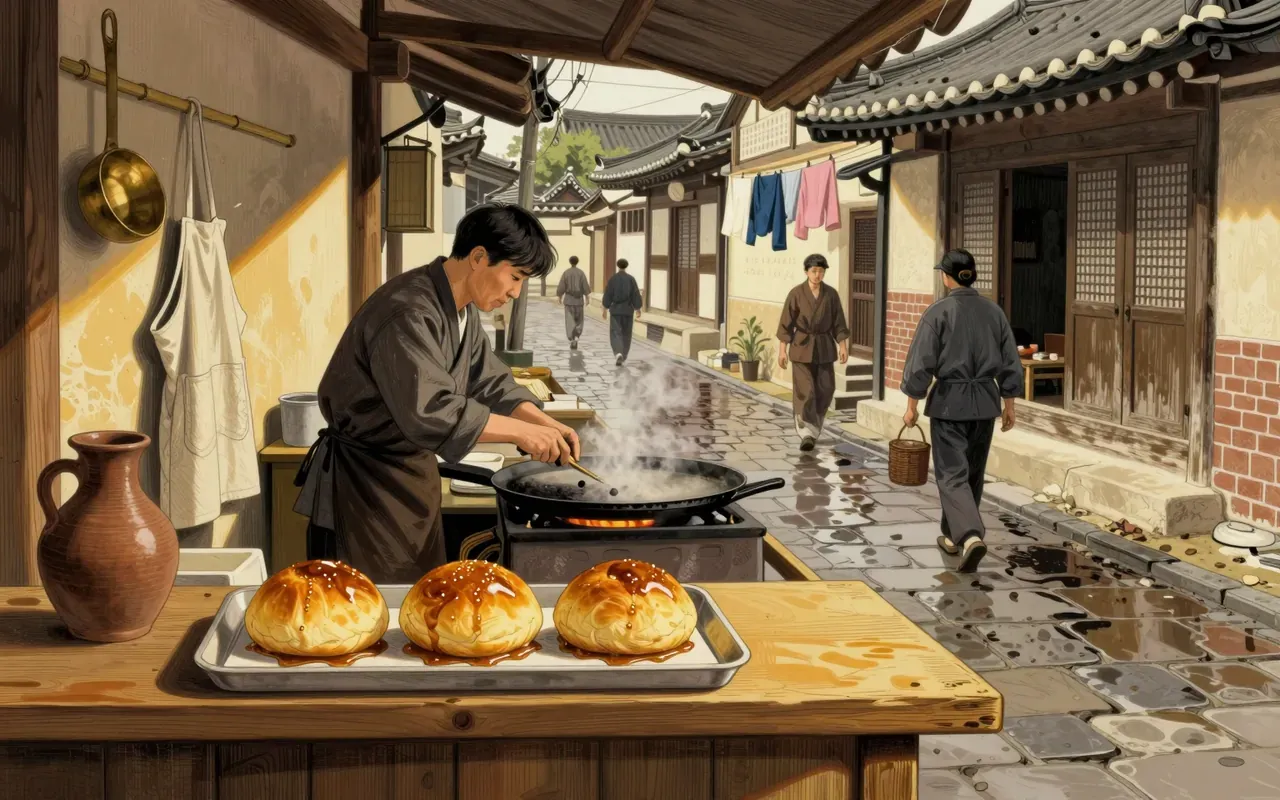
      HotteokHotteok is a filled Korean street pancake. It originated in Qing dynasty China and was brought to Joseon Korea in the 19th century.
      9:36
      Doubles (food)Doubles is a Trinidadian street food of Indo-Trinidadian origin, created in Princes Town in 1936 by Emamool 'Mamoodeen' Deen and his wife Raheeman Rasulan Deen. It consists of curried chickpeas served on two fried flatbreads called bara. The name 'doubles' came from customers asking to double the bara. It is culturally significant as a symbol of Trinidadian identity, especially among the diaspora, and is credited with defining and maintaining symbolic boundaries of identification in Trinidad's diverse society. Doubles is a comfort food for displaced Trinidadians in major cities across the globe.
      Up next in Food

      Kouign-amann

      · 0:56

      A round Breton pastry with laminated dough, butter, and sugar, baked until caramelized.

      0:56