foodbriefs
1:05in productionCh. 1 · What the dish is and where it came from/ 1:05 · ceiling 15 min
Street food · Dishes

Currywurst

A German fast food dish of grilled pork sausage topped with curry ketchup.

Currywurst is a fast food dish of German origin consisting of sausage—usually pork—with curry ketchup. It was invented in 1949 by Herta Heuwer, who began selling it at a food stand in West Berlin.

Chapters & takeaways7
  1. 0:00
    What the dish is and where it came from

    Currywurst is a fast food dish of German origin consisting of sausage—usually pork—with curry ketchup.

  2. 0:14
    How it works, in terms someone would actually use

    It works by mixing ketchup (or possibly Worcestershire sauce), curry powder, and other spices into a sauce, then pouring it over grilled pork sausage.

  3. 0:24
    What it gets right

    It gets right a simple, portable format: hot grilled sausage paired with a spiced, tangy sauce.

  4. 0:35
    What it does not

    The sausage makes the version described here a poor match for someone seeking a meat-free snack.

  5. 0:41
    What it changed

    It changed street food culture in postwar Germany: Heuwer patented her sauce as Chillup in 1951, formalizing a new condiment category.

  6. 0:49
    Who it is for, and who it is not

    It is for people seeking a quick, meat-based street food with bold seasoning.

  7. 0:59
    Is it worth your time

    Yes—it remains widely consumed: an estimated 800 million servings are eaten annually in Germany.
Worth your time?

Selectively. Start with the brief, then cook the parts we point at.

What works
  • It gets right a simple, portable format: hot grilled sausage paired with a spiced, tangy sauce. The combination delivers savory, sweet, and aromatic notes in one serving.
What does not
  • The sausage makes the version described here a poor match for someone seeking a meat-free snack.
Cook it if
    Skip it if
      The written brief1 min read

      What the dish is and where it came from

      Currywurst is a fast food dish of German origin consisting of sausage—usually pork—with curry ketchup. It was invented in 1949 by Herta Heuwer, who began selling it at a food stand in West Berlin.

      How it works, in terms someone would actually use

      It works by mixing ketchup (or possibly Worcestershire sauce), curry powder, and other spices into a sauce, then pouring it over grilled pork sausage.

      What it gets right

      It gets right a simple, portable format: hot grilled sausage paired with a spiced, tangy sauce. The combination delivers savory, sweet, and aromatic notes in one serving.

      What it does not

      The sausage makes the version described here a poor match for someone seeking a meat-free snack.

      What it changed

      It changed street food culture in postwar Germany: Heuwer patented her sauce as Chillup in 1951, formalizing a new condiment category.

      Who it is for, and who it is not

      It is for people seeking a quick, meat-based street food with bold seasoning. It is not for those avoiding pork or seeking plant-based options.

      Is it worth your time

      Yes—it remains widely consumed: an estimated 800 million servings are eaten annually in Germany.
      Same course · Street food4 of 49
      9:36
      Doubles (food)Doubles is a Trinidadian street food of Indo-Trinidadian origin, created in Princes Town in 1936 by Emamool 'Mamoodeen' Deen and his wife Raheeman Rasulan Deen. It consists of curried chickpeas served on two fried flatbreads called bara. The name 'doubles' came from customers asking to double the bara. It is culturally significant as a symbol of Trinidadian identity, especially among the diaspora, and is credited with defining and maintaining symbolic boundaries of identification in Trinidad's diverse society. Doubles is a comfort food for displaced Trinidadians in major cities across the globe.
      1:14
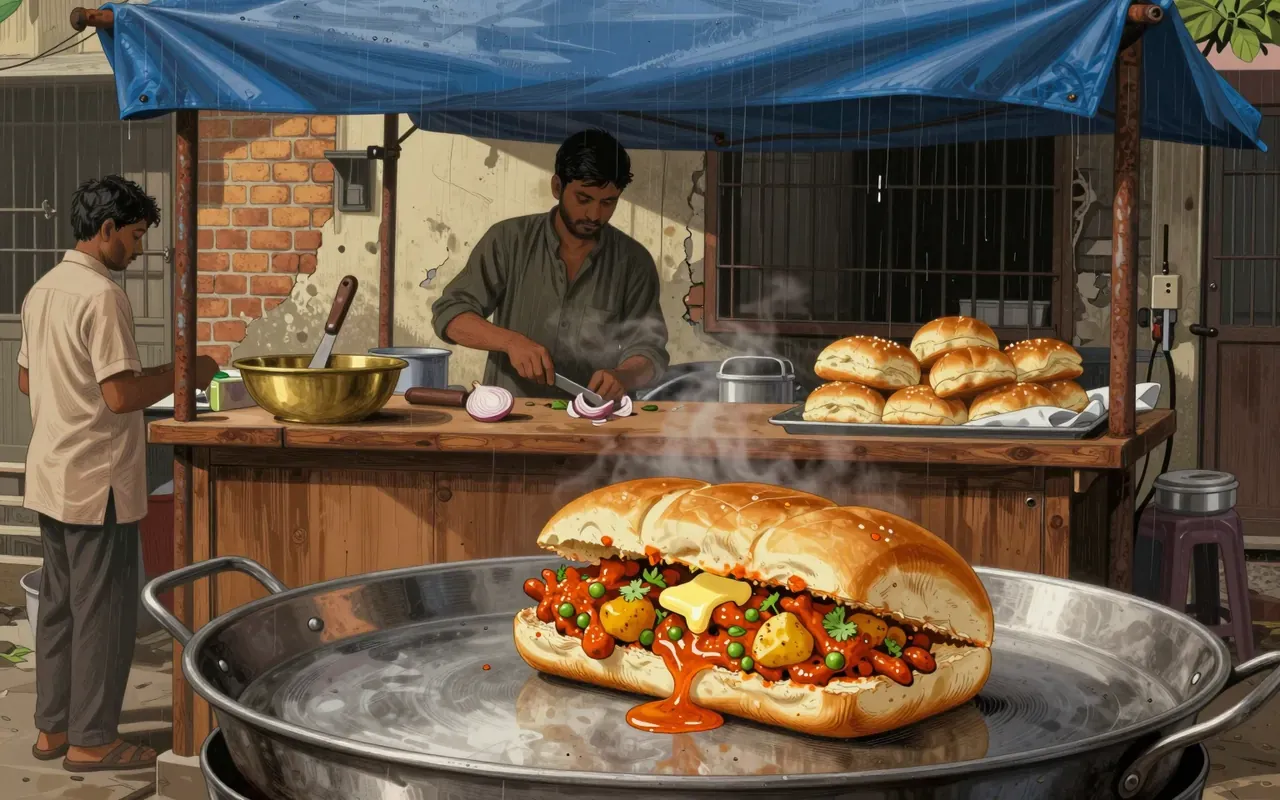
      Pav bhajiPav bhaji is a staple food of Maharashtra, consisting of a thick spicy vegetable curry (bhaji) served with a soft, buttered bread roll (pav). It originated as a fast lunchtime dish for textile mill workers in Mumbai.
      1:01
      HotteokHotteok is a filled Korean street pancake. It originated in Qing dynasty China and was brought to Joseon Korea in the 19th century.
      10:19
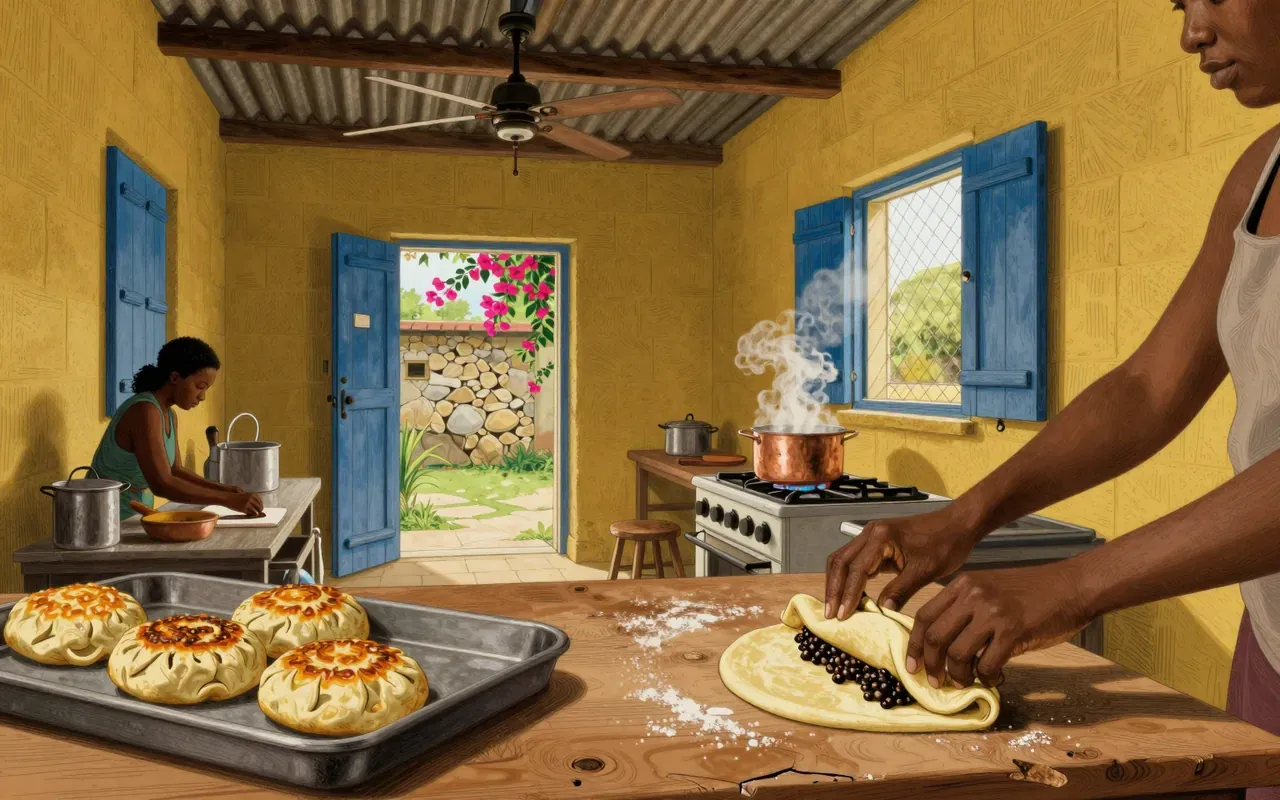
      Jamaican pattyA Jamaican patty is a semicircular, flaky, golden-yellow baked turnover formed by folding a circular dough cutout over spiced ground beef. It originated in Jamaica as a Creole dish shaped by British, Spanish, African, Chinese, Indian and Indigenous Arawak traditions—not as a copy of the Cornish pasty or Spanish empanada, but as a local response to available ingredients and techniques. Its folded structure works: it contains juicy, spiced filling without leakage. It falls short as a vehicle for delicate or vegetarian preparations—the method demands robustness. It changed how street food functions in Jamaica and abroad, becoming affordable daily fuel first, then a branded export. It is for eaters who value portability, spice and cultural specificity—not for those seeking lightness, purity or neutrality. It is worth your time if you want to taste a dish whose form and history are inseparable.
      Up next in Food

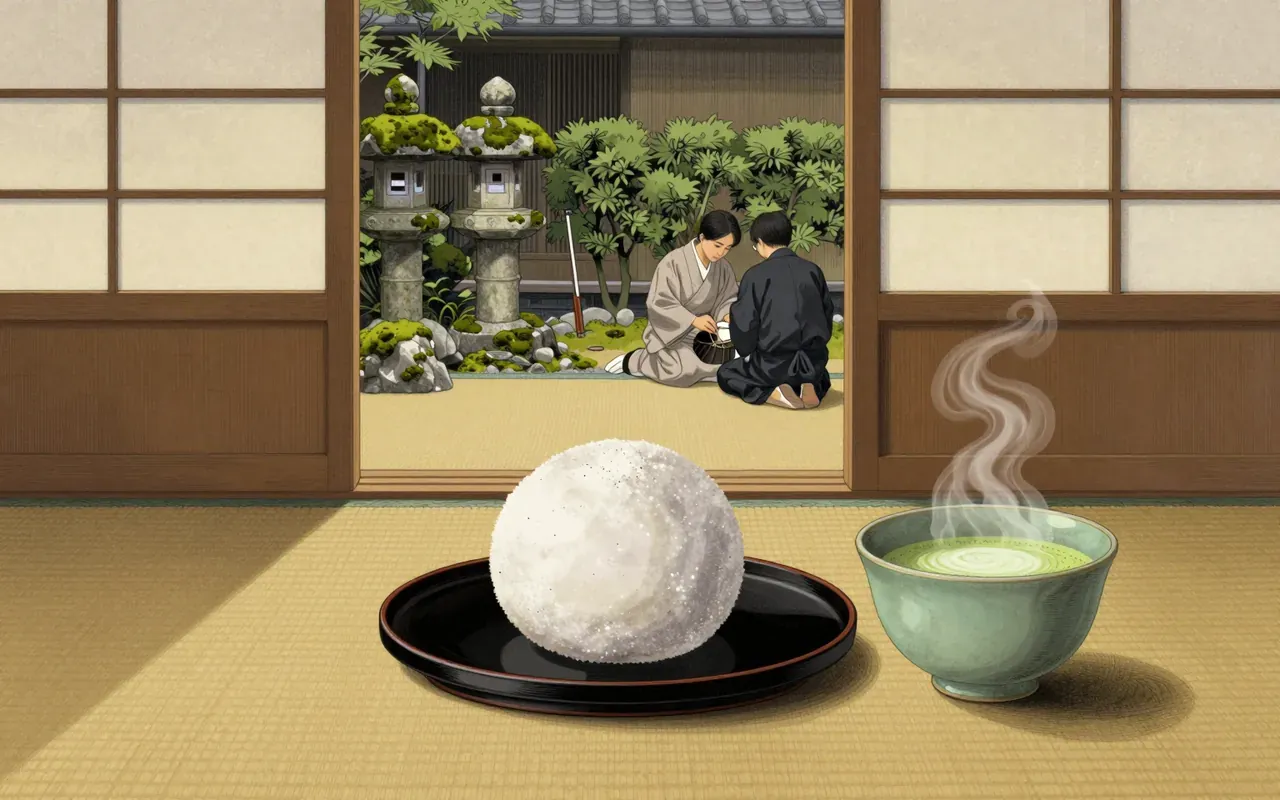
      Daifuku

      · 1:27

      A small round Japanese confection of mochi wrapped around sweet red bean paste, dusted with starch, and traditionally associated with good luck.

      1:27