Kebab is not Turkish, Persian, or Arabic alone—it is a Middle Eastern category, defined by method, not nationality.
2:30
What kabāb meant in Baghdad
The 10th-century definition fixes kebab as cut-up meat—fried or grilled—not minced, not wrapped, not served in pita.
4:48
Kebab arrived in English before it arrived on British plates
The word entered English long before the dish became familiar—proving lexical adoption outpaces culinary adoption.
6:35
Döner changed everything—but came last
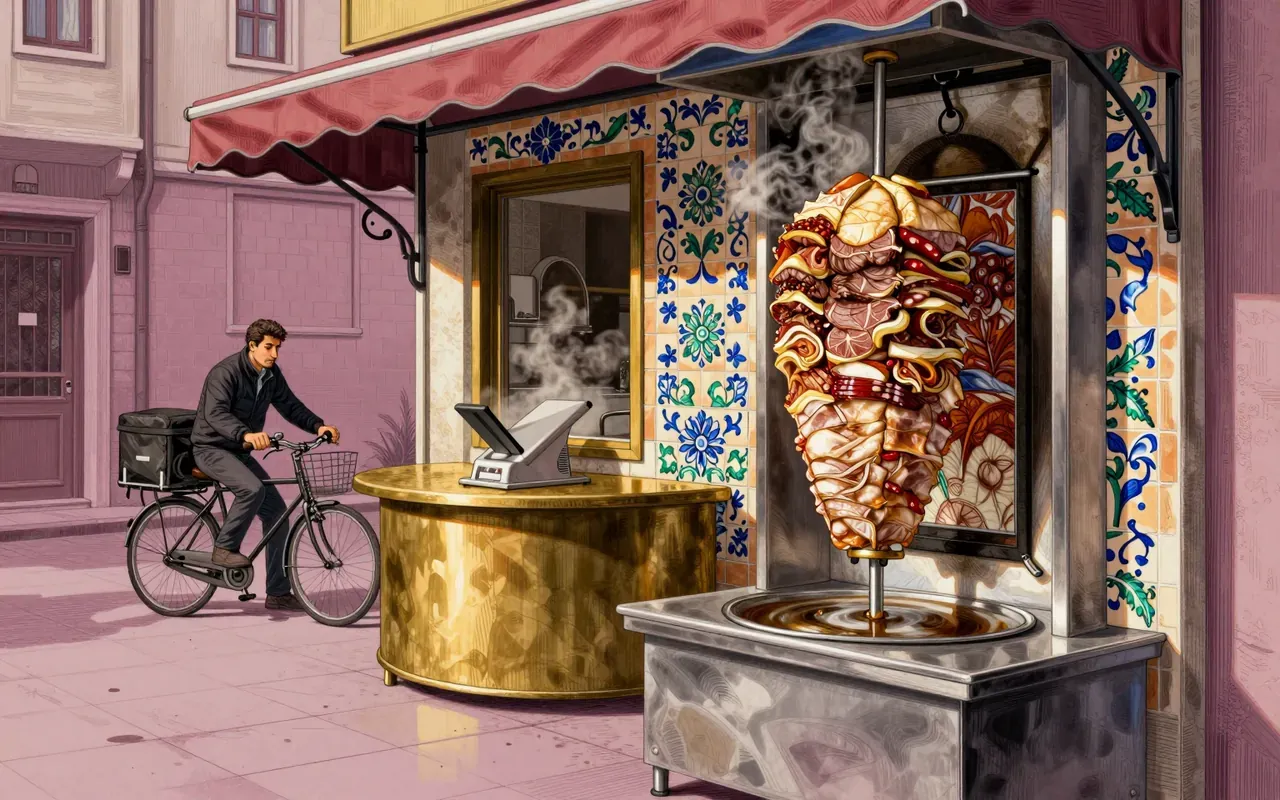
Döner is a latecomer—a 19th-century Turkish innovation that reshaped kebab globally, but only after industrial rotisseries and mass migration made it viable.
Worth your time?
Yes. Cook the whole thing.
4.5/ 5
What works
exposes how words migrate faster than recipes
holds the term to its earliest textual definition
separates döner’s 19th-century innovation from older forms
What does not
claims influence on specific chefs or movements
confuses Minoan archaeological finds with documented kabāb practice
treats popularity in London or Berlin as historical significance
Cook it if
readers who distrust food origin myths
people who notice what’s missing from menus and maps
Skip it if
those seeking celebration without scrutiny
readers who want definitive national ownership
The written brief1 min read
What the thing is
Kebab is a family of roasted meat preparations, defined by cut-up pieces cooked over fire or in pan, not by shape, spice, or region.
Where it came from
It emerged in the Middle East, with the term and technique documented in 10th-century Baghdad; the word entered English in the late 17th century via Arabic, Persian, and Turkish; the döner variant began in 19th-century Turkey.
What it gets right
It turns meat into portable, adaptable, fire-cooked sustenance. It works on skewers, spits, griddles, and street corners.
What it gets wrong
It is routinely misattributed to a single origin or culture. The claim of Minoan kebabs contradicts the documented linguistic and culinary lineage from Arabic and Persian sources—and no evidence links the Minoan preparation to the word or technique ‘kabāb’ as defined in the 10th-century texts.
Why it matters now
It reveals how food terms travel faster than recipes—and how modern assumptions about authenticity flatten centuries of adaptation, translation, and displacement.
Is it worth your time
Yes—if you care about how food carries layered, contested histories across millennia without needing permission.