1:17in productionCh. 1 · What the dish is and where it came from/ 1:17 · ceiling 15 min
Dishes · Street food
Lángos
A Hungarian deep-fried flatbread made from yeast dough.
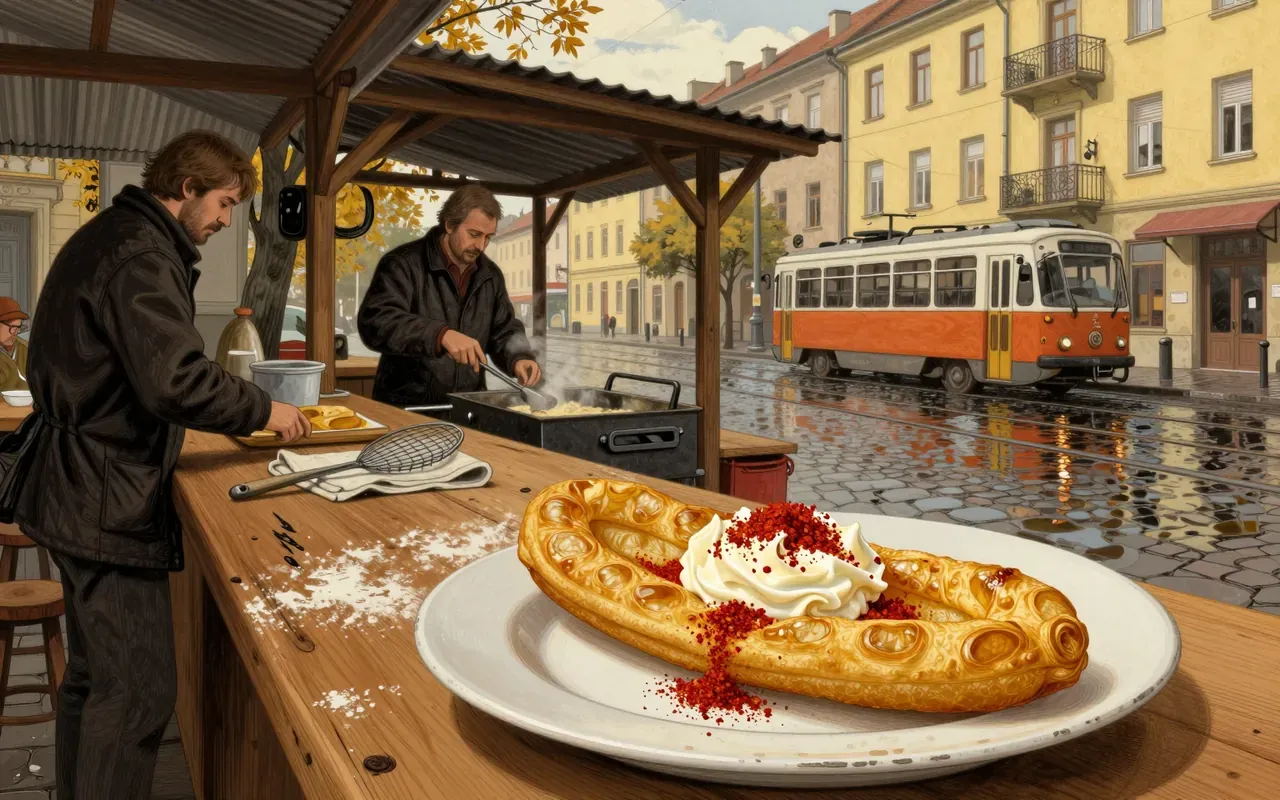
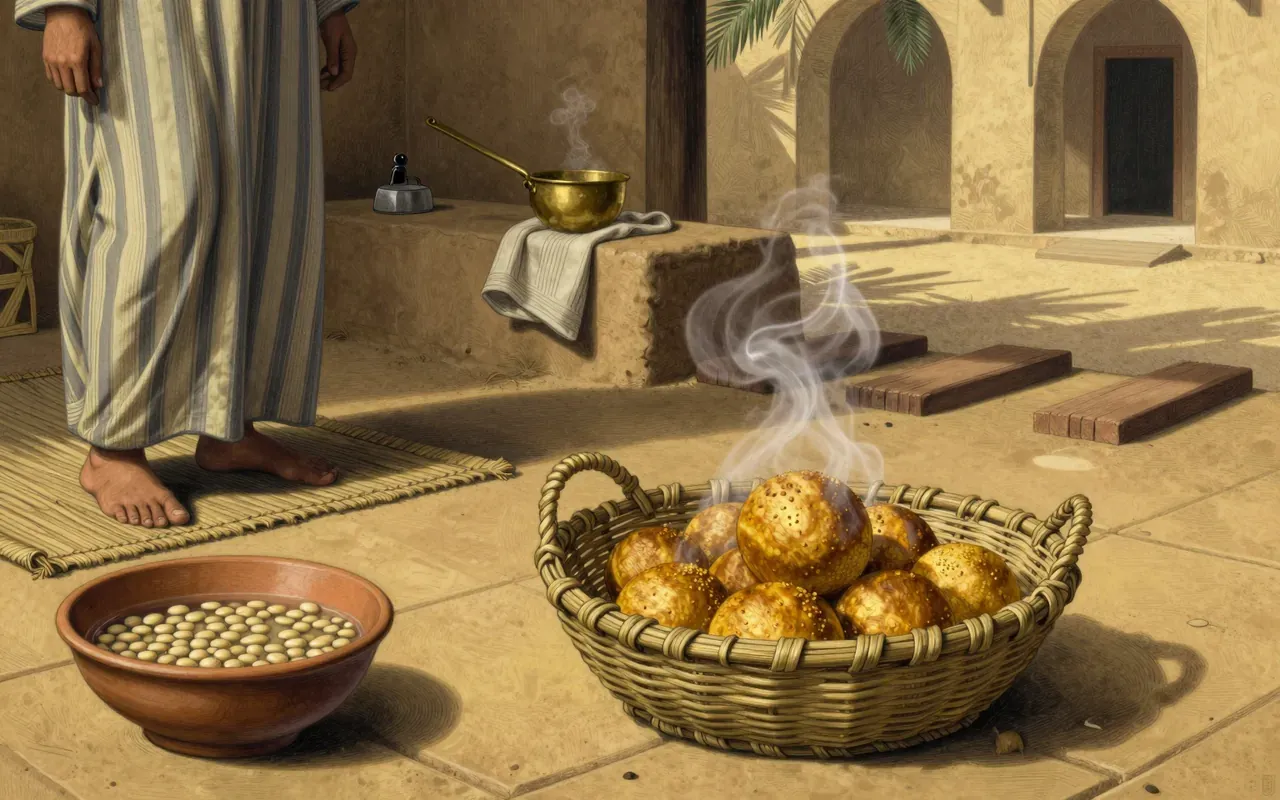
Lángos is a typical Hungarian food. It originated as a baked flatbread made from leftover bread dough, cooked at the front of a brick or clay oven while it heated up. Its name means 'flamed', referencing that morning oven-heating context.
Modern lángos is made by preparing a yeast dough with water or milk, flour, yeast, and salt, then deep frying it.
0:30
What it gets right
It gets right a simple, yeast-leavened structure with a light, airy texture from carbon dioxide bubbles.
0:42
What it does not
Its fried-bread format may be less appealing if you want a baked loaf or a lighter accompaniment.
0:49
What it changed
It changed from a baked breakfast item—made from leftover dough and served hot on bread-baking day—to a deep-fried flatbread.
0:57
Who it is for, and who it is not
It is for people seeking a Hungarian yeast-leavened flatbread.
1:08
Is it worth your time
Worth trying if a fried flatbread appeals to you.
Worth your time?
Selectively. Start with the brief, then cook the parts we point at.
What works
It gets right a simple, yeast-leavened structure with a light, airy texture from carbon dioxide bubbles. Using water or milk, flour, yeast, and salt keeps the base ingredients minimal and familiar.
What does not
Its fried-bread format may be less appealing if you want a baked loaf or a lighter accompaniment.
Cook it if
Skip it if
The written brief1 min read
What the dish is and where it came from
Lángos is a typical Hungarian food. It originated as a baked flatbread made from leftover bread dough, cooked at the front of a brick or clay oven while it heated up. Its name means ‘flamed’, referencing that morning oven-heating context.
How it works, in terms someone would actually use
Modern lángos is made by preparing a yeast dough with water or milk, flour, yeast, and salt, then deep frying it. The yeast produces carbon dioxide, causing the dough to rise and form air bubbles.
What it gets right
It gets right a simple, yeast-leavened structure with a light, airy texture from carbon dioxide bubbles. Using water or milk, flour, yeast, and salt keeps the base ingredients minimal and familiar.
What it does not
Its fried-bread format may be less appealing if you want a baked loaf or a lighter accompaniment.
What it changed
It changed from a baked breakfast item—made from leftover dough and served hot on bread-baking day—to a deep-fried flatbread.
Who it is for, and who it is not
It is for people seeking a Hungarian yeast-leavened flatbread. It is not for people expecting a filled, topped, or non-fried bread product based on the supplied descriptions.
Is it worth your time
Worth trying if a fried flatbread appeals to you. Choose it for that preparation rather than expecting the texture of an oven-baked loaf.