foodbriefs
10:16in productionCh. 1 · Not Ancient. Not Accidental./ 10:16 · ceiling 15 min
Dishes · Food history

Masala dosa

Masala dosa is a 1930s Madras invention—not ancient tradition, but brilliant modern street food.

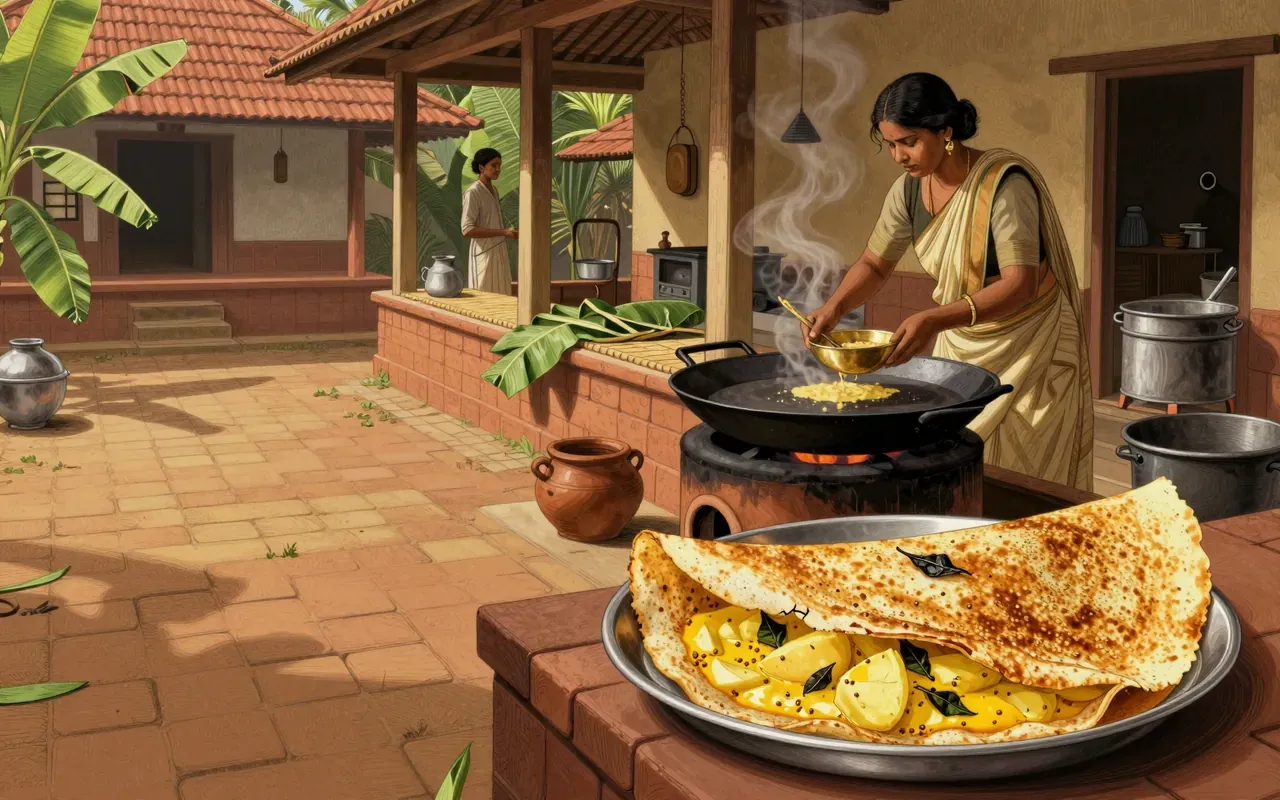
Masala dosa is a South Indian dish: a fermented rice-and-legume crepe, stuffed with spiced potato curry. It was created and popularised in Madras in the 1930s by K. Krishna Rao.

Chapters & takeaways4
  1. 1:19
    Not Ancient. Not Accidental.

    Masala dosa was invented in 1930s Madras by K. Krishna Rao—not evolved slowly over centuries.

  2. 3:36
    The Potato Timeline Breaks the Myth

    Potatoes arrived in India with the Portuguese in the 16th century—so the 12th-century origin story is impossible.

  3. 5:17
    Dosaka ≠ Masala Dosa

    The Mysore tale persists—but it confuses dosaka (a 12th-century dosa-like dish) with masala dosa, which requires potatoes.

  4. 7:04
    How a Hotel Chain Launched a Dish

    Udupi-style hotels in Madras—like Sri Krishna Vilas and New Woodlands—made it mainstream street food.

Worth your time?

Yes. Cook the whole thing.

4.5/ 5
What works
  • crisp-to-soft textural contrast
  • fermented tang balancing potato richness
  • portability without leakage when cooked correctly
What does not
  • represents pre-colonial South Indian cooking
Cook it if
  • people who like crisp-starch contrasts
  • cooks comfortable with fermentation and flat-griddle control
Skip it if
  • those avoiding nightshades
  • people unwilling to ferment batter overnight
The written brief1 min read

What the dish is and where it came from

Masala dosa is a South Indian dish: a fermented rice-and-legume crepe, stuffed with spiced potato curry. It was created and popularised in Madras in the 1930s by K. Krishna Rao.

How it works, in terms someone would actually use

A fermented batter of rice and legumes spreads thin on a hot tava, crisps at the edges, then folds around a spiced potato stir fry. The crispness comes from pan-roasting the dosa until dry and brittle; the filling must be dry enough to avoid steaming the crepe shut.

What it gets right

The contrast between shatter-crisp dosa and soft, turmeric-stained potato curry works decisively. Fermentation gives tang and lift; pan-roasting gives structure.

What it does not

It does not represent ancient South Indian cuisine. Potatoes arrived in India only after the 16th century, so any claim linking it to 12th-century Mysore is chronologically impossible.

What it changed

It turned dosa from a plain crepe into a portable, self-contained meal—shifting South Indian street food from snack to main course.

Who it is for, and who it is not

It is for anyone who values texture contrast and savoury depth in handheld food. It is not for those who avoid fermented starch or nightshade vegetables.

Is it worth your time

Yes—if you want a dish that delivers crunch, heat, and starch in one bite, and you’re willing to ferment batter overnight and manage heat on a flat griddle.
Same course · Dishes4 of 485
Up next in Food

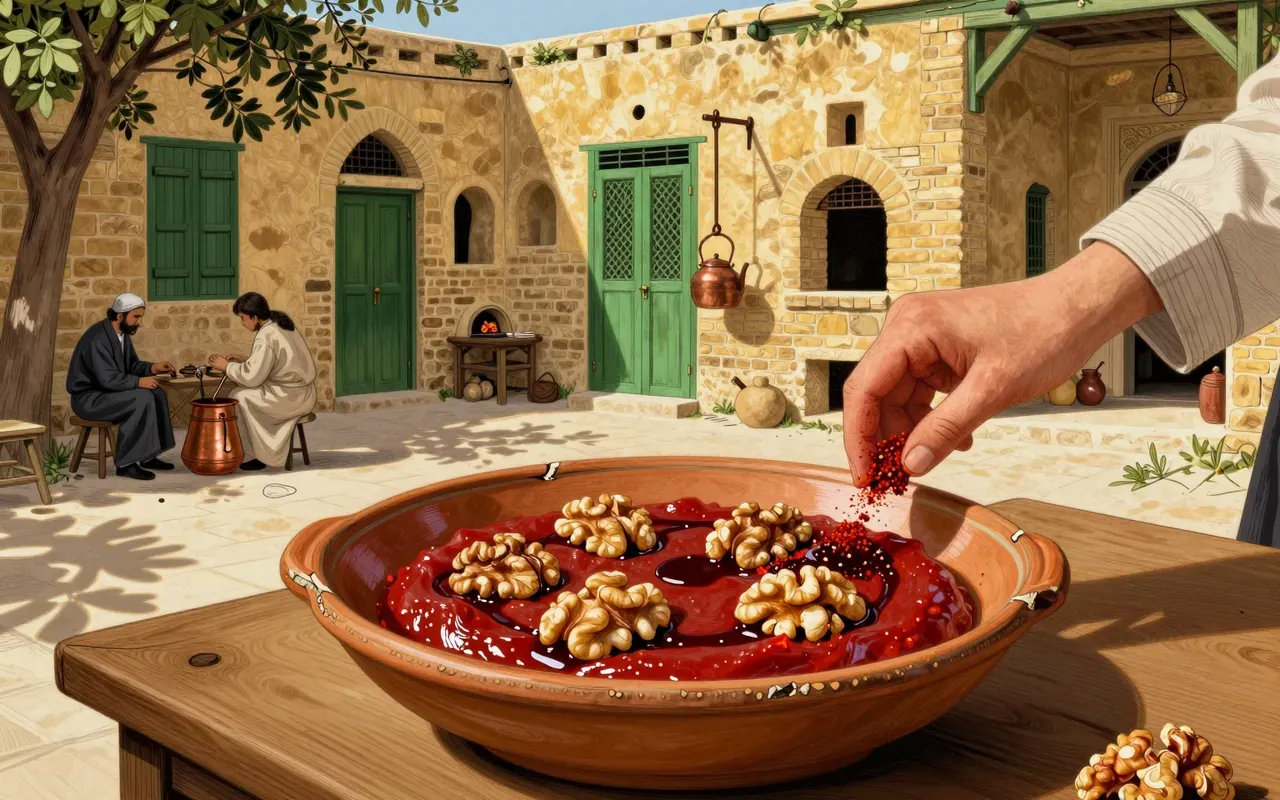
Muhammara

· 9:38

A dip that refuses dairy, demands mortar work, and proves Aleppo’s palate was never monochrome.

9:38