1:05in productionCh. 1 · What the dish is and where it came from/ 1:05 · ceiling 15 min
Dishes · Street food
Mandazi
A triangular, circular, or oval fried bread from the Swahili coast, often made with coconut milk and served plain.
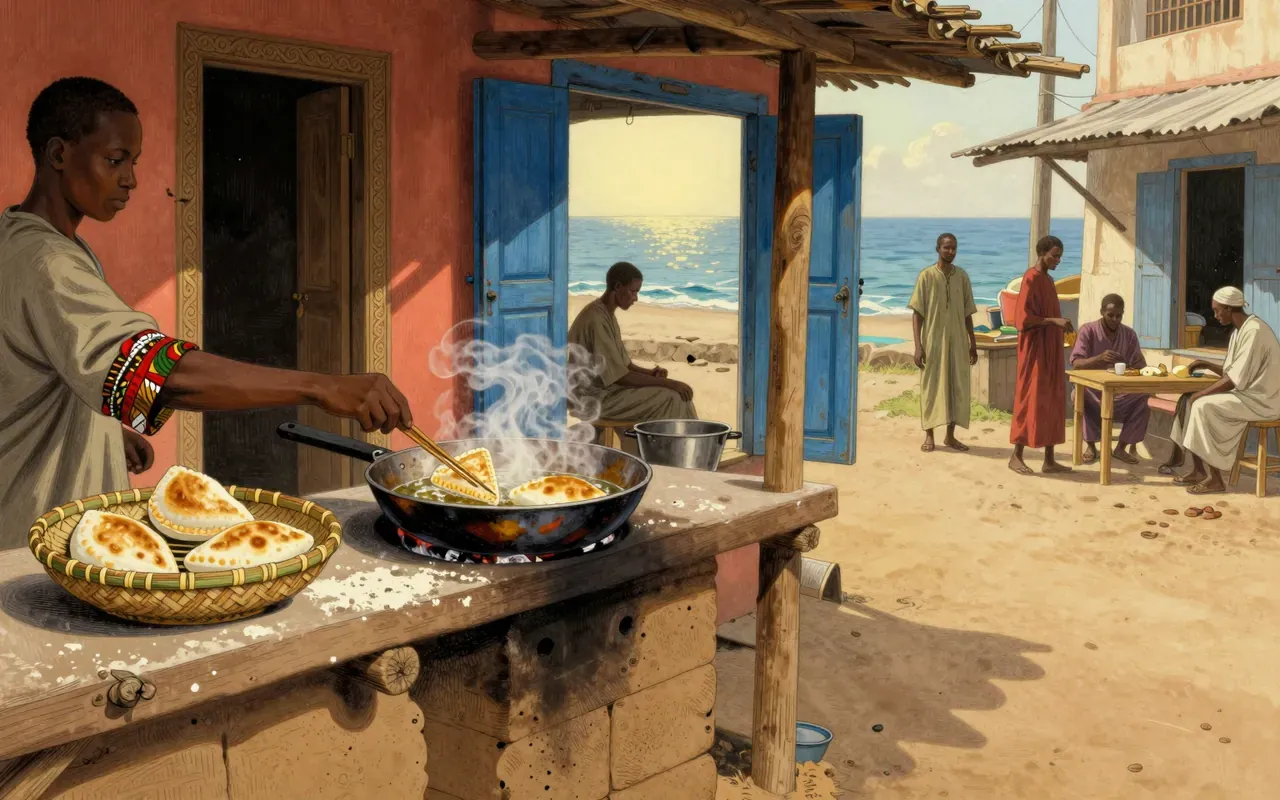
Mandazi is a fried bread originating on the Swahili coast of East Africa. It is a principal dish in Swahili cuisine, especially in coastal Kenya and Tanzania.
Mandazi is a fried bread originating on the Swahili coast of East Africa.
0:11
How it works, in terms someone would actually use
Dough is briefly cooked in hot oil until golden brown.
0:18
What it gets right
It delivers mild sweetness and a fluffy texture.
0:29
What it does not
It is less sweet than U.S.
0:39
What it changed
When coconut milk is added, it is commonly called mahamri or mamri.
0:48
Who it is for, and who it is not
It suits people who enjoy soft, mildly sweet, oil-fried bread in triangular, circular, or oval shapes.
0:59
Is it worth your time
Yes—if you want a light, fluffy, modestly sweet fried bread without glaze or frosting.
Worth your time?
Selectively. Start with the brief, then cook the parts we point at.
What works
It delivers mild sweetness and a fluffy texture. Coconut milk adds sweetness; the absence of glaze or frosting keeps it simple and less sugary than U.S. doughnuts.
What does not
It is less sweet than U.S. doughnuts and lacks glaze or frosting, making it less appealing if you prefer highly sweetened or decorated fried pastries.
Cook it if
Skip it if
The written brief1 min read
What the dish is and where it came from
Mandazi is a fried bread originating on the Swahili coast of East Africa. It is a principal dish in Swahili cuisine, especially in coastal Kenya and Tanzania.
How it works, in terms someone would actually use
Dough is briefly cooked in hot oil until golden brown. No other method—baking, steaming, or griddling—is mentioned.
What it gets right
It delivers mild sweetness and a fluffy texture. Coconut milk adds sweetness; the absence of glaze or frosting keeps it simple and less sugary than U.S. doughnuts.
What it does not
It is less sweet than U.S. doughnuts and lacks glaze or frosting, making it less appealing if you prefer highly sweetened or decorated fried pastries.
What it changed
When coconut milk is added, it is commonly called mahamri or mamri. Ground peanuts or almonds may be used for flavor variation.
Who it is for, and who it is not
It suits people who enjoy soft, mildly sweet, oil-fried bread in triangular, circular, or oval shapes. It is not for those avoiding coconut milk or fried foods.
Is it worth your time
Yes—if you want a light, fluffy, modestly sweet fried bread without glaze or frosting.