1:21in productionCh. 1 · What the dish is and where it came from/ 1:21 · ceiling 15 min
Dishes · Food history
Mango sticky rice
A Southeast and South Asian dessert of glutinous rice, fresh mango, and coconut milk.
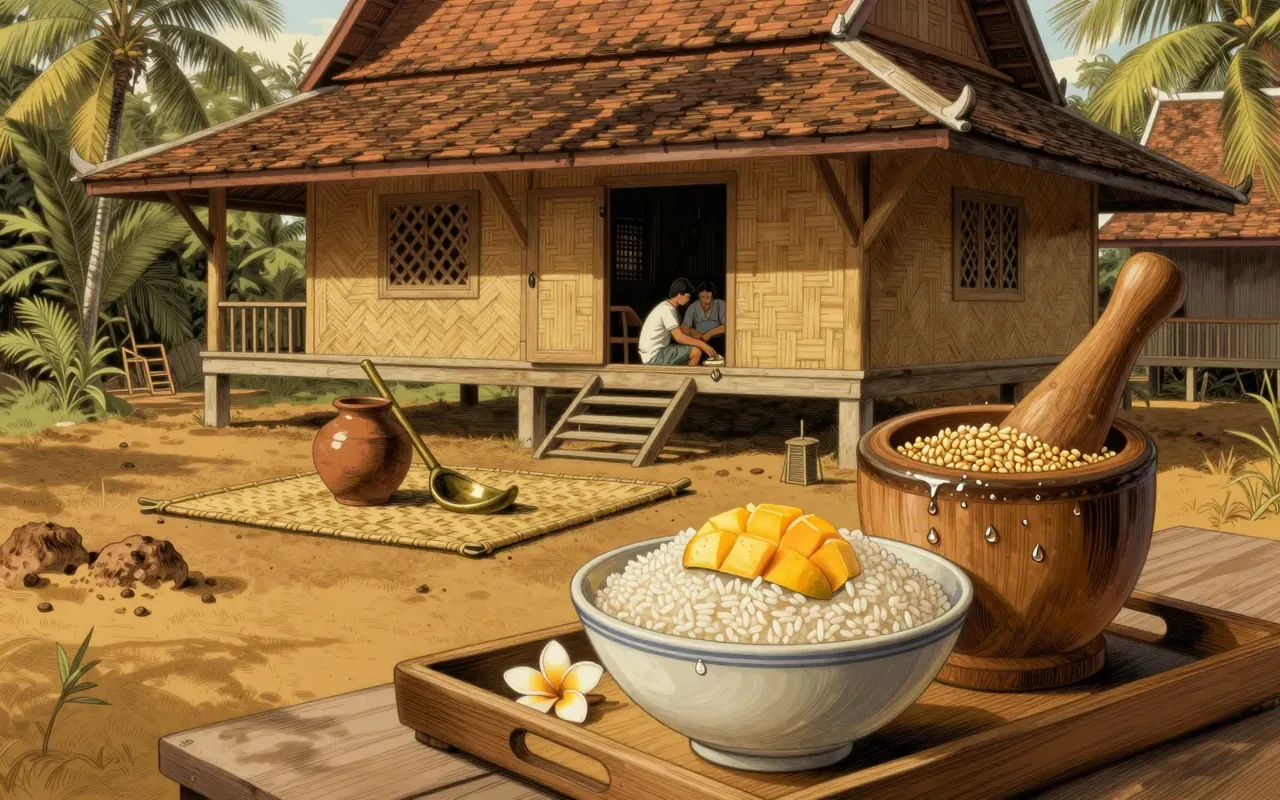
Mango sticky rice is a traditional Southeast Asian and South Asian dessert made with glutinous rice, fresh mango, and coconut milk. It is said to have originated in Thailand, with its exact origin believed to date back to the late Ayutthaya period.
Mango sticky rice is a traditional Southeast Asian and South Asian dessert made with glutinous rice, fresh mango, and coconut milk.
0:17
How it works, in terms someone would actually use
The rice is soaked, then cooked by steaming or rice cooker.
0:34
What it gets right
It combines sweet yellow mango—often Nam Dok Mai or ok-rong—with glutinous sticky rice, which is sweeter than normal sticky rice, and rich coconut milk.
0:47
What it does not
It is not a savory dish and contains no vegetables, dairy beyond coconut milk, or grains other than glutinous rice.
0:55
What it changed
During King Chulalongkorn’s reign, khao niao moon was consumed alongside ripe mango—suggesting an early pairing that evolved into the modern dish.
1:03
Who it is for, and who it is not
It is for people who enjoy sweet, creamy, fruit-based desserts with soft-chewy rice.
1:13
Is it worth your time
Yes—if you like its core ingredients and format, it is a straightforward, widely available dessert rooted in regional tradition.
Worth your time?
Selectively. Start with the brief, then cook the parts we point at.
What works
It combines sweet yellow mango—often Nam Dok Mai or ok-rong—with glutinous sticky rice, which is sweeter than normal sticky rice, and rich coconut milk. This trio delivers contrast in texture and sweetness.
What does not
It is not a savory dish and contains no vegetables, dairy beyond coconut milk, or grains other than glutinous rice.
Cook it if
Skip it if
The written brief1 min read
What the dish is and where it came from
Mango sticky rice is a traditional Southeast Asian and South Asian dessert made with glutinous rice, fresh mango, and coconut milk. It is said to have originated in Thailand, with its exact origin believed to date back to the late Ayutthaya period.
How it works, in terms someone would actually use
The rice is soaked, then cooked by steaming or rice cooker. Coconut milk is mixed with salt and sugar and heated without boiling. The warm coconut mixture is folded into the cooked rice and left to sit so the rice absorbs it.
What it gets right
It combines sweet yellow mango—often Nam Dok Mai or ok-rong—with glutinous sticky rice, which is sweeter than normal sticky rice, and rich coconut milk. This trio delivers contrast in texture and sweetness.
What it does not
It is not a savory dish and contains no vegetables, dairy beyond coconut milk, or grains other than glutinous rice.
What it changed
During King Chulalongkorn’s reign, khao niao moon was consumed alongside ripe mango—suggesting an early pairing that evolved into the modern dish.
Who it is for, and who it is not
It is for people who enjoy sweet, creamy, fruit-based desserts with soft-chewy rice. It is not for those avoiding coconut milk, mango, or glutinous rice.
Is it worth your time
Yes—if you like its core ingredients and format, it is a straightforward, widely available dessert rooted in regional tradition.