1:14in productionCh. 1 · What the dish is and where it came from/ 1:14 · ceiling 15 min
Dishes · Culture
Massaman curry
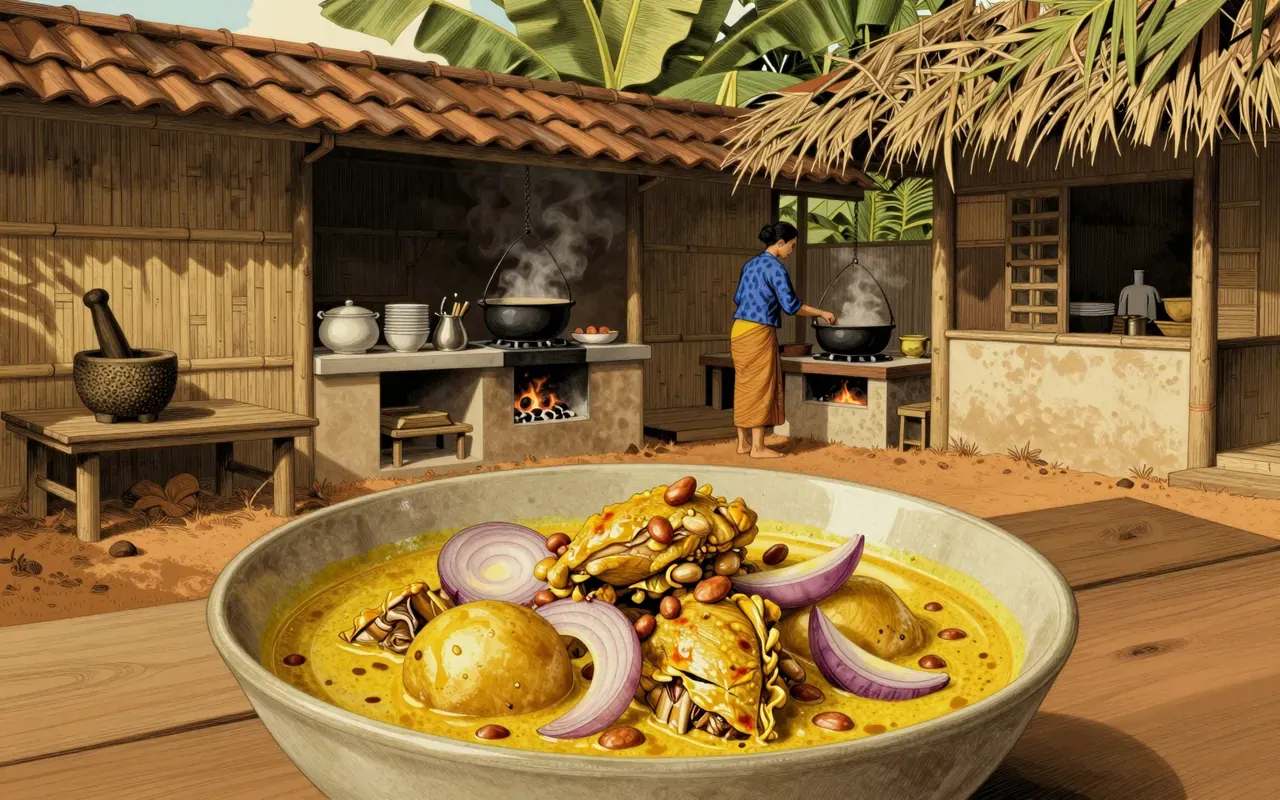
A rich, mildly spicy Thai curry with Persian, Indian, and Malay influences, built on coconut milk, meat, potatoes, onions, and peanuts.
Massaman curry is a rich, mildly spicy Thai curry. According to Thai journalist Santi Sawetwimon and food experts David Thompson and Hanuman Aspler, it originated in 17th-century central Thailand at the Ayutthaya court through Persian merchant Sheik Ahmad Qomi.
Massaman curry is a rich, mildly spicy Thai curry.
0:16
How it works, in terms someone would actually use
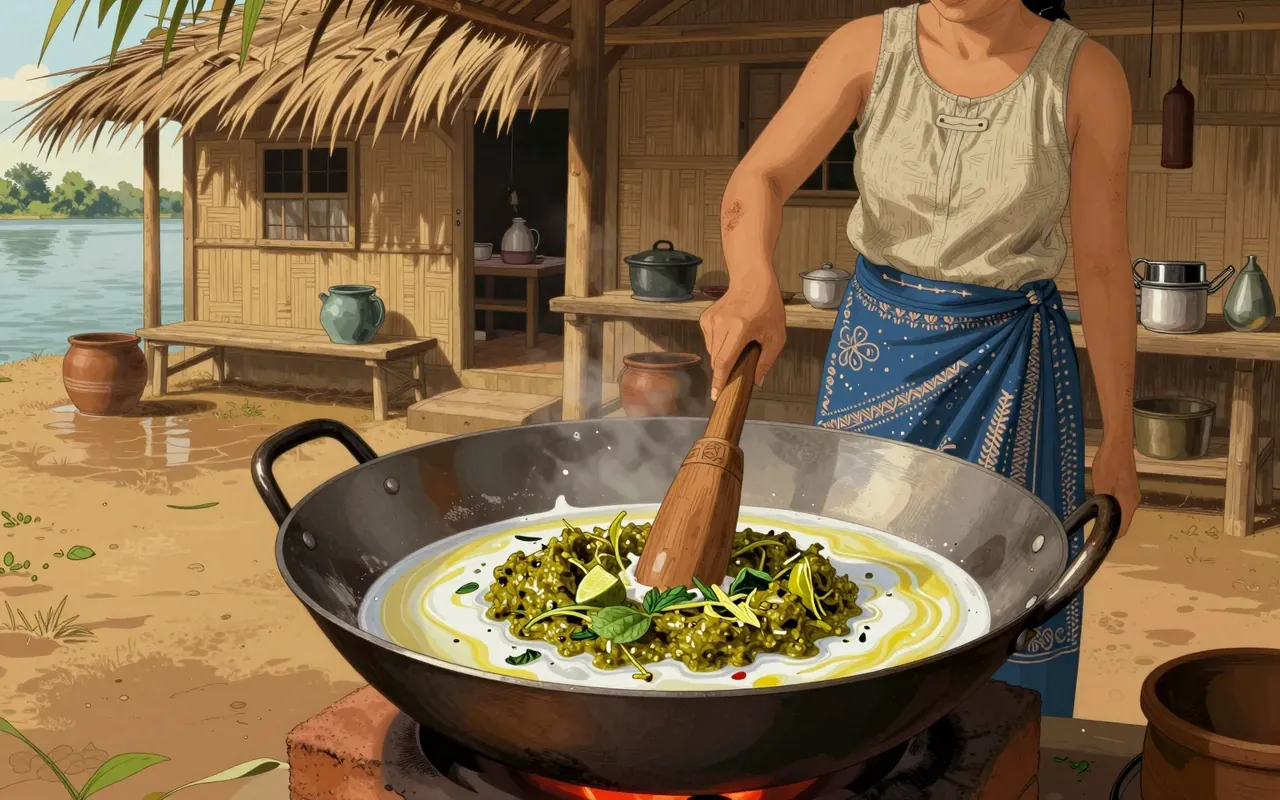
The curry paste is first fried with coconut cream.
0:26
What it gets right
It delivers richness from coconut milk and cream, balanced sweetness and tang from sugar and tamarind, and hearty texture from potatoes, onions, and peanuts.
0:38
What it does not
Pork is rarely used due to the dish’s Muslim roots and Islamic prohibition of pork.
0:44
What it changed
It integrated spices—cardamom, cinnamon, cloves, star anise, cumin, bay leaves, nutmeg, mace—from Persia, India, and the Malay Archipelago into Thai cooking via Muslim and later European traders.
0:55
Who it is for, and who it is not
It is for people drawn to rich, spiced, coconut-based curries with meat and starchy vegetables.
1:07
Is it worth your time
Yes—it offers a distinct, layered flavor profile grounded in accessible ingredients: coconut milk, chicken, potatoes, onions, and peanuts.
Worth your time?
Selectively. Start with the brief, then cook the parts we point at.
What works
It delivers richness from coconut milk and cream, balanced sweetness and tang from sugar and tamarind, and hearty texture from potatoes, onions, and peanuts. Its mild spice makes it broadly approachable.
What does not
Pork is rarely used due to the dish’s Muslim roots and Islamic prohibition of pork.
Cook it if
Skip it if
The written brief1 min read
What the dish is and where it came from
Massaman curry is a rich, mildly spicy Thai curry. According to Thai journalist Santi Sawetwimon and food experts David Thompson and Hanuman Aspler, it originated in 17th-century central Thailand at the Ayutthaya court through Persian merchant Sheik Ahmad Qomi.
How it works, in terms someone would actually use
The curry paste is first fried with coconut cream. Then meat, potatoes, onions, fish sauce or salt, tamarind paste, sugar, coconut milk, and peanuts are added.
What it gets right
It delivers richness from coconut milk and cream, balanced sweetness and tang from sugar and tamarind, and hearty texture from potatoes, onions, and peanuts. Its mild spice makes it broadly approachable.
What it does not
Pork is rarely used due to the dish’s Muslim roots and Islamic prohibition of pork.
What it changed
It integrated spices—cardamom, cinnamon, cloves, star anise, cumin, bay leaves, nutmeg, mace—from Persia, India, and the Malay Archipelago into Thai cooking via Muslim and later European traders.
Who it is for, and who it is not
It is for people drawn to rich, spiced, coconut-based curries with meat and starchy vegetables. It is not for those avoiding pork-free dishes or seeking strictly vegetarian or seafood-based preparations.
Is it worth your time
Yes—it offers a distinct, layered flavor profile grounded in accessible ingredients: coconut milk, chicken, potatoes, onions, and peanuts.