0:54in productionCh. 1 · What the dish is and where it came from/ 0:54 · ceiling 15 min
Dishes · Food history
Oden
A Japanese one-pot dish of boiled eggs, daikon, konjac, and fish balls simmered in light soy-flavored dashi.
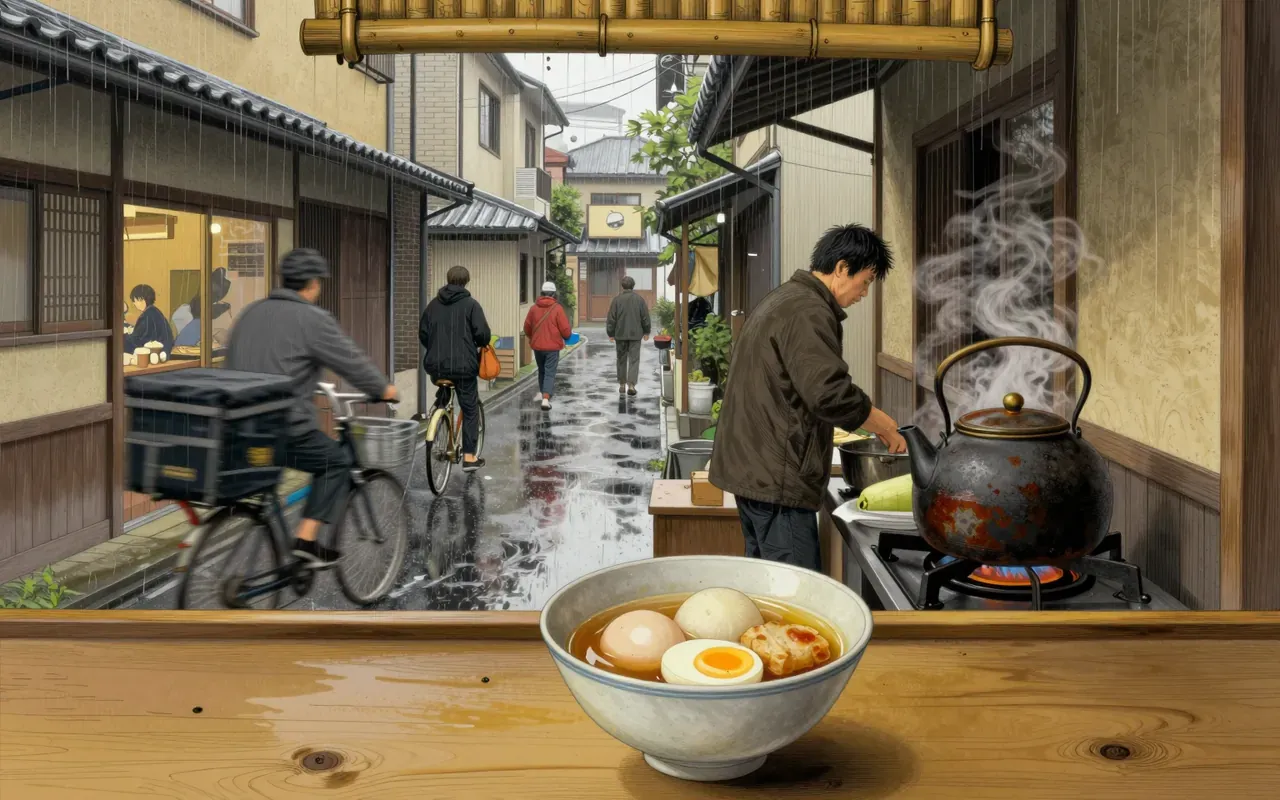
Oden is a Japanese nabemono—a one-pot dish—featuring boiled eggs, daikon or konjac, and processed fish balls stewed in a light, soy-flavored dashi broth.
Oden is a Japanese nabemono—a one-pot dish—featuring boiled eggs, daikon or konjac, and processed fish balls stewed in a light, soy-flavored dashi broth.
0:09
How it works, in terms someone would actually use
Ingredients are stewed together in a shared pot of dashi broth.
0:19
What it gets right
It gets right the depth of flavor from long-simmered, replenished broth—many vendors build complexity over time.
0:25
What it does not
It does not include miso as a cooking medium; that method belongs to its predecessor, dengaku.
0:31
What it changed
It changed from dengaku—boiled konjac or tofu eaten with miso—to ingredients cooked directly in dashi broth.
0:37
Who it is for, and who it is not
It is for people who enjoy warm, brothy one-pot meals, including year-round in some carts and restaurants.
0:46
Is it worth your time
It is worth your time if you like simple, savory ingredients in light dashi—especially boiled eggs, daikon, konjac, or fish balls.
Worth your time?
Selectively. Start with the brief, then cook the parts we point at.
What works
It gets right the depth of flavor from long-simmered, replenished broth—many vendors build complexity over time.
What does not
It does not include miso as a cooking medium; that method belongs to its predecessor, dengaku.
Cook it if
Skip it if
The written brief1 min read
What the dish is and where it came from
Oden is a Japanese nabemono—a one-pot dish—featuring boiled eggs, daikon or konjac, and processed fish balls stewed in a light, soy-flavored dashi broth.
How it works, in terms someone would actually use
Ingredients are stewed together in a shared pot of dashi broth. Some restaurants maintain the broth as a master stock, replenishing it over months or years.
What it gets right
It gets right the depth of flavor from long-simmered, replenished broth—many vendors build complexity over time.
What it does not
It does not include miso as a cooking medium; that method belongs to its predecessor, dengaku.
What it changed
It changed from dengaku—boiled konjac or tofu eaten with miso—to ingredients cooked directly in dashi broth.
Who it is for, and who it is not
It is for people who enjoy warm, brothy one-pot meals, including year-round in some carts and restaurants. It is not exclusively seasonal.
Is it worth your time
It is worth your time if you like simple, savory ingredients in light dashi—especially boiled eggs, daikon, konjac, or fish balls.