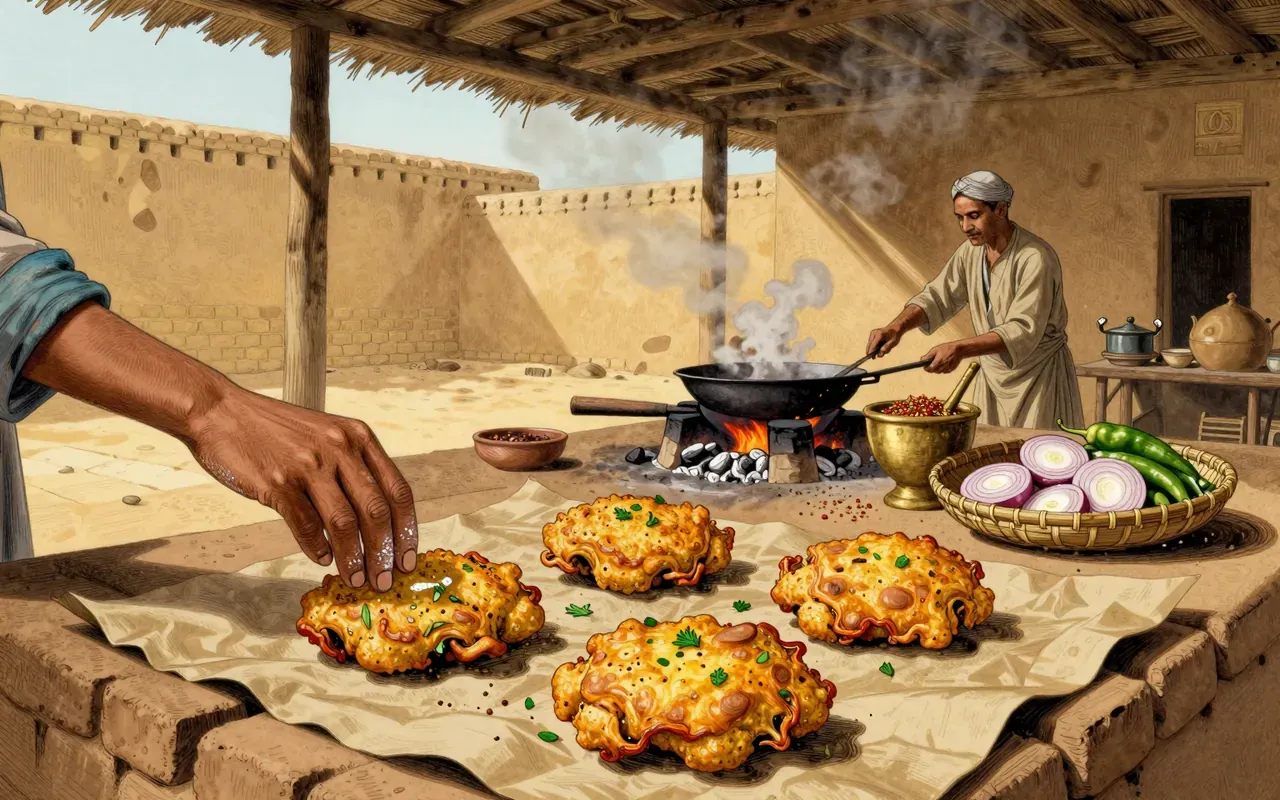
Pakora is a fritter originating from the Indian subcontinent.
0:04
How it works, in terms someone would actually use
It is made by coating ingredients—usually vegetables—in a spiced batter and deep frying them.
0:10
What it gets right
It gets right a simple, crisp format using accessible vegetables like potatoes and onions, bound and flavored with gram flour and spices.
0:19
What it does not
It does not offer a baked or shallow-fried alternative; all described methods require deep frying.
0:25
What it changed
It changed in form when 11th-century cooks pressed gram flour into fish-shaped molds before frying.
0:31
Who it is for, and who it is not
It is for people who eat deep-fried vegetable fritters.
0:39
Is it worth your time
It is worth your time if you seek a straightforward, vegetable-based fritter with historical roots in South Asian cookbooks.
Worth your time?
Selectively. Start with the brief, then cook the parts we point at.
What works
It gets right a simple, crisp format using accessible vegetables like potatoes and onions, bound and flavored with gram flour and spices.
What does not
It does not offer a baked or shallow-fried alternative; all described methods require deep frying.
Cook it if
Skip it if
The written brief1 min read
What the dish is and where it came from
Pakora is a fritter originating from the Indian subcontinent. Early texts describe it as a round cake made of pulse fried in oil, or as crispy fried vegetables. The Manasollasa (1130 CE) documents preparation with vegetables and gram flour.
How it works, in terms someone would actually use
It is made by coating ingredients—usually vegetables—in a spiced batter and deep frying them.
What it gets right
It gets right a simple, crisp format using accessible vegetables like potatoes and onions, bound and flavored with gram flour and spices.
What it does not
It does not offer a baked or shallow-fried alternative; all described methods require deep frying.
What it changed
It changed in form when 11th-century cooks pressed gram flour into fish-shaped molds before frying. The Lokopakara (1025 CE) describes pressing the gram flour into fish-shaped moulds and frying in mustard oil.
Who it is for, and who it is not
It is for people who eat deep-fried vegetable fritters. It is not for people avoiding deep-fried foods or gram flour.
Is it worth your time
It is worth your time if you seek a straightforward, vegetable-based fritter with historical roots in South Asian cookbooks.