1:01in productionCh. 1 · What the dish is and where it came from/ 1:01 · ceiling 15 min
Dishes · Culture
Pineapple bun
A sweet Hong Kong bun with a crisp, sugary, pineapple-textured topping over soft bread.
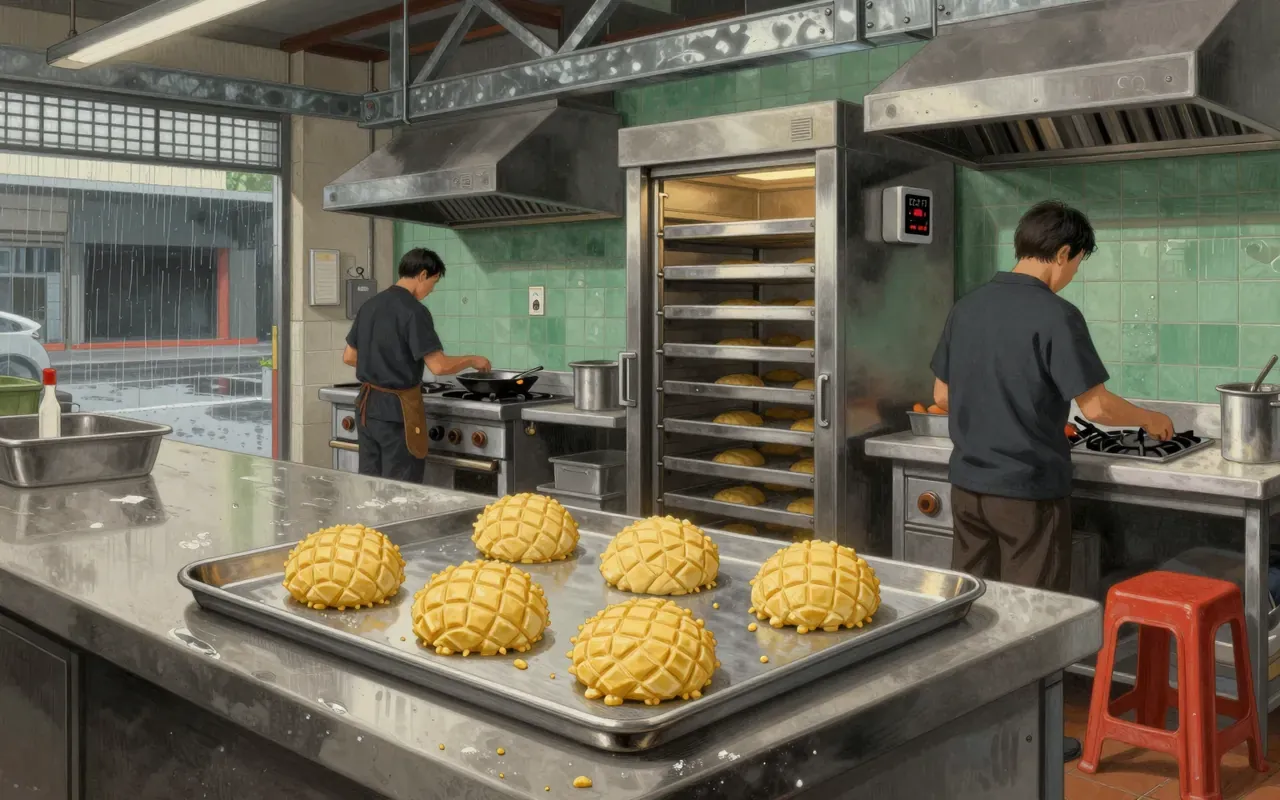
A pineapple bun (bo1 lo4 baau1) is a sweet bun from Hong Kong, first documented there in 1942. One account links its emergence to Japanese troop arrival; another credits the Ng family’s 1946 adaptation of the Mexican concha.
A pineapple bun (bo1 lo4 baau1) is a sweet bun from Hong Kong, first documented there in 1942.
0:15
How it works, in terms someone would actually use
It consists of a soft bread base topped with a separate dough layer made from sugar, eggs, flour, and lard—similar to sugar cookie dough—scored to resemble pineapple skin.
0:26
What it gets right
The contrast between the crunchy, sweet topping and the mild, soft bread underneath defines its appeal.
0:32
What it does not
It does not contain pineapple, which may disappoint those expecting fruit flavor or acidity.
0:38
What it changed
Originally called 'crispy-skin buns', it was renamed by customers.
0:46
Who it is for, and who it is not
It is for people who enjoy sweet, texturally contrasted baked goods.
0:55
Is it worth your time
Yes—it is a widely available, culturally significant Hong Kong staple with distinctive texture and sweetness.
Worth your time?
Selectively. Start with the brief, then cook the parts we point at.
What works
The contrast between the crunchy, sweet topping and the mild, soft bread underneath defines its appeal.
What does not
It does not contain pineapple, which may disappoint those expecting fruit flavor or acidity.
Cook it if
Skip it if
The written brief1 min read
What the dish is and where it came from
A pineapple bun (bo1 lo4 baau1) is a sweet bun from Hong Kong, first documented there in 1942. One account links its emergence to Japanese troop arrival; another credits the Ng family’s 1946 adaptation of the Mexican concha.
How it works, in terms someone would actually use
It consists of a soft bread base topped with a separate dough layer made from sugar, eggs, flour, and lard—similar to sugar cookie dough—scored to resemble pineapple skin.
What it gets right
The contrast between the crunchy, sweet topping and the mild, soft bread underneath defines its appeal.
What it does not
It does not contain pineapple, which may disappoint those expecting fruit flavor or acidity.
What it changed
Originally called ‘crispy-skin buns’, it was renamed by customers. In 2014, Hong Kong officially recognized it as intangible cultural heritage.
Who it is for, and who it is not
It is for people who enjoy sweet, texturally contrasted baked goods. It is not for those seeking savory, fruit-based, or low-sugar items.
Is it worth your time
Yes—it is a widely available, culturally significant Hong Kong staple with distinctive texture and sweetness.