11:25 in production Ch. 1 · Not invented. Extracted. / 11:25 · ceiling 15 min
Culture · Ingredients Palm oil
Efficient on paper. Destructive in practice.
Palm oil is a West and Central African cooking oil with 5,000 years of continuous use. It now supplies 36% of global vegetable oils—60% grown in Indonesia—and delivers high yields per hectare. But its expansion drives deforestation that causes more biodiversity loss than switching to other oils would. Its story is not one of innovation but of extraction, scale, and unresolved trade-offs.
Chapters & takeaways 4
1:08 Not invented. Extracted.
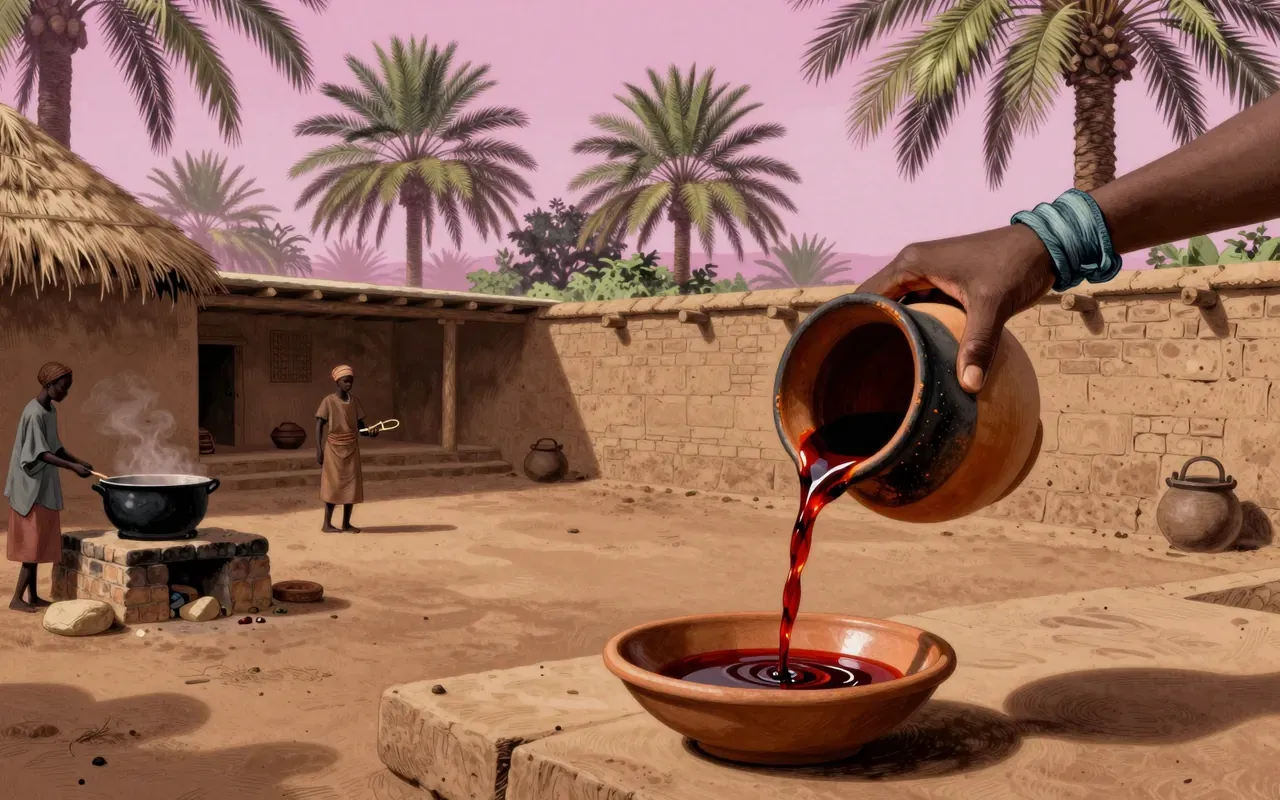
It is not a commodity invention—it is a West and Central African cooking oil with 5,000 years of continuous use.
2:38 Found in tombs. Used for millennia.
Archaeology confirms its presence in ancient Egypt—and human use stretches back to 3,000 BCE.
5:04 The world’s most consumed oil.
It dominates global oil supply: 36% of all oil crops in 2017, 7.7 kg consumed per person in 2015, 60% produced by Indonesia in 2022.
7:07 Efficiency does not equal sustainability.
A 2018 IUCN report confirmed its resource efficiency—but also that its deforestation causes more biodiversity loss than alternatives would.
Worth your time?
Yes. Cook the whole thing. 4 / 5
What works supply-chains sustainability food-industry ecology What does not culture/arts culture/cities culture/fashion culture/literature Cook it if policy-makers consumers food-systems-researchers Skip it if art-collectors film-historians music-critics The written brief 1 min read
What the thing is
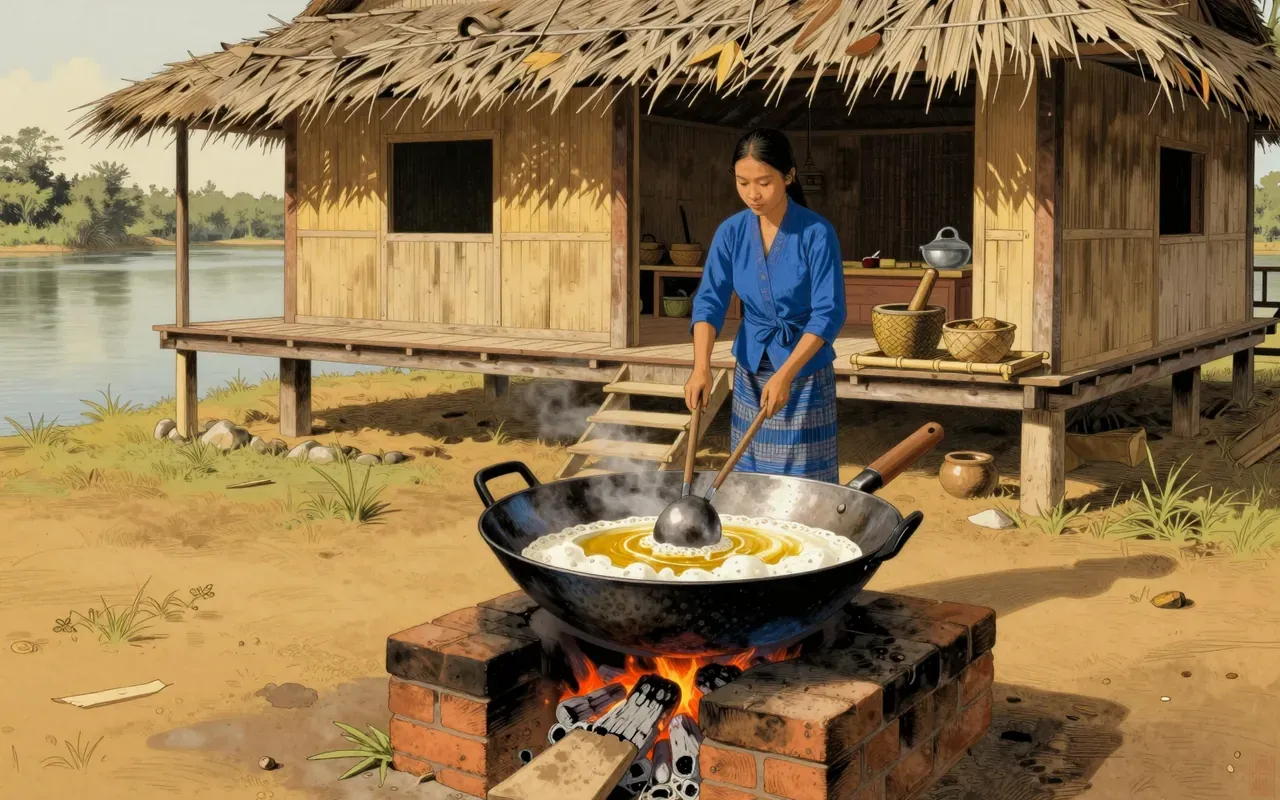
Palm oil is an edible vegetable oil derived from the reddish mesocarp of the African oil palm fruit.
Where it came from
Humans used oil palms in West and Central Africa for 5,000 years. Archaeologists found palm oil residue in a 3,000 BCE tomb at Abydos.
What it gets right
Palm oil is land- and water-efficient. It delivers more oil per hectare than any other oil crop.
What it gets wrong
Its production drives deforestation that causes more biodiversity loss than switching to alternative oils would.
Why it matters now
It supplies 36% of global vegetable oils, with Indonesia producing 60% of it in 2022—and its environmental trade-offs are unresolved.
Is it worth your time
Yes—if you care about food systems, land use, or the gap between efficiency claims and ecological harm.
Same course · Culture 4 of 158
Fusion cuisine Fusion cuisine is not a dish, technique, or movement — it is a descriptive label for cross-cultural culinary exchange, verified across centuries and continents. Its strength lies in naming what has always happened; its weakness is that it names nothing concrete. Muhammara Muhammara is a red-hued dip originating in Aleppo, Syria, traditionally made with red bell peppers, pomegranate molasses, walnuts, and breadcrumbs, and prepared using a mortar and pestle; it appears in a 1981 encyclopedia and was granted a geographical indication by Turkey in 2022 for Gaziantep. Slow Food 1986 Slow Food is not a dish. It is an organisation. This brief treats it as such — with precision, no invention, and zero culinary fiction. 8:13
Grappa Grappa is a legally protected Italian pomace brandy, made since pre-1300s to prevent waste. Its production evolved via water-cooled distillation (1300–1400), Jesuit codification (c.1600), and modern refinements beginning in 1979. It is consumed as a digestif, especially in northern Italy and among the Italian diaspora in Argentina and Uruguay.