1:48in productionCh. 1 · What the dish is and where it came from/ 1:48 · ceiling 15 min
Dishes · Street food
Pho
A Vietnamese soup of broth, rice noodles, herbs, and beef or chicken, originating in early 20th-century Nam Định Province.
Pho is a Vietnamese soup dish consisting of broth, rice noodles (bánh phở), herbs, and meat—usually beef or sometimes chicken. It originated in Northern Vietnam in the early 20th century, first appearing in written records then. Residents of Nam Định city and the villages of Vân Cù and Dao Cù in Nam Định Province are credited with creating traditional pho. The modern form emerged between 1900 and 1907 in Nam Định Province, southeast of Hanoi.
Pho is a Vietnamese soup dish consisting of broth, rice noodles (bánh phở), herbs, and meat—usually beef or sometimes chicken.
0:30
How it works, in terms someone would actually use
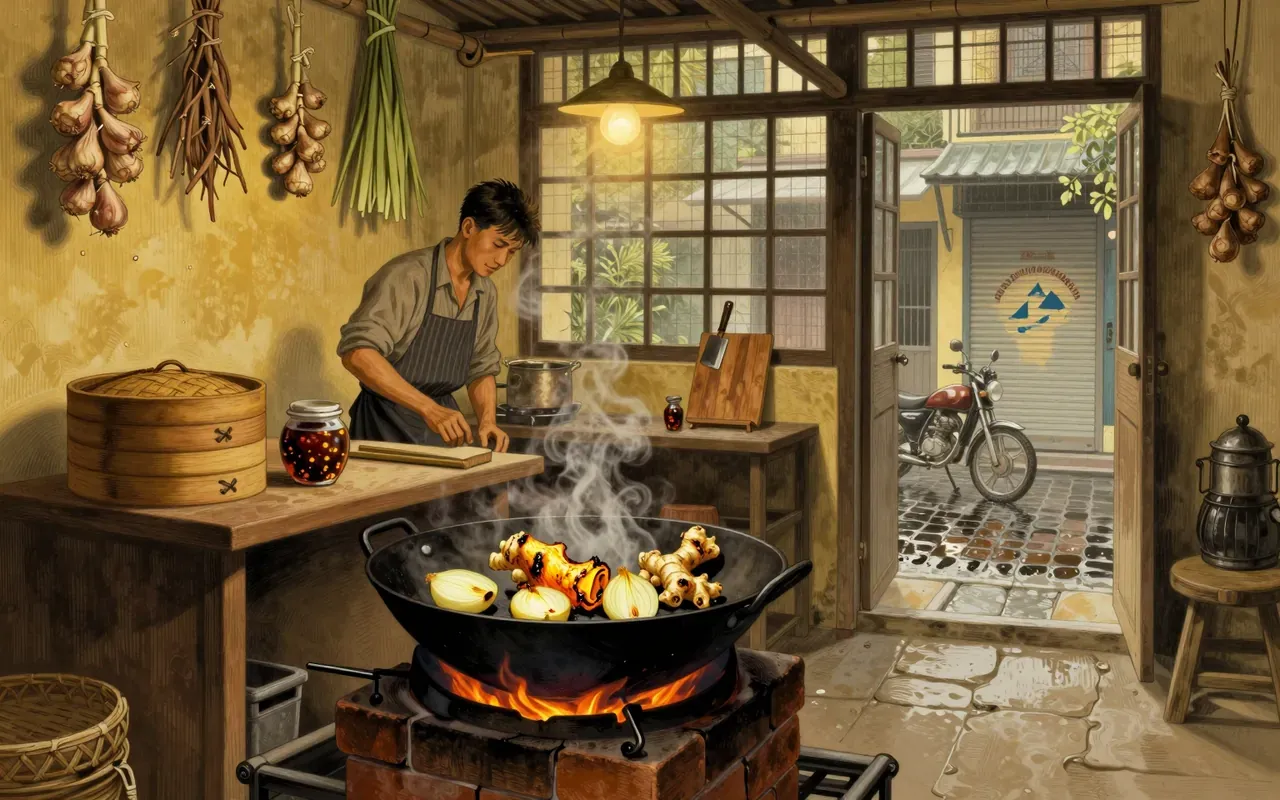
Pho is made by simmering beef bones, oxtails, flank steak, charred onion, charred ginger, and spices for several hours to produce the broth.
0:52
What it gets right
It gets right a layered savory profile: rich broth from long-simmered bones and meat, aromatic depth from charred aromatics and spices, and fresh contrast from herbs and rice noodles.
1:10
What it does not
It does not offer a vegetarian or seafood-focused option in its traditional form, as it centers on beef or chicken and meat-based broth.
1:19
What it changed
It changed street food culture in Vietnam by establishing a portable, timed meal—sold at dawn and dusk by vendors carrying full kitchens on poles.
1:29
Who it is for, and who it is not
It is for people who enjoy hot, brothy soups with tender meat, rice noodles, and fresh herbs.
1:40
Is it worth your time
It is worth your time if you appreciate deeply simmered broths and customizable noodle soups with aromatic, savory foundations.
Worth your time?
Selectively. Start with the brief, then cook the parts we point at.
What works
It gets right a layered savory profile: rich broth from long-simmered bones and meat, aromatic depth from charred aromatics and spices, and fresh contrast from herbs and rice noodles. The combination of broth, noodles, herbs, and beef or chicken delivers a balanced, complete bowl.
What does not
It does not offer a vegetarian or seafood-focused option in its traditional form, as it centers on beef or chicken and meat-based broth.
Cook it if
Skip it if
The written brief1 min read
What the dish is and where it came from
Pho is a Vietnamese soup dish consisting of broth, rice noodles (bánh phở), herbs, and meat—usually beef or sometimes chicken. It originated in Northern Vietnam in the early 20th century, first appearing in written records then. Residents of Nam Định city and the villages of Vân Cù and Dao Cù in Nam Định Province are credited with creating traditional pho. The modern form emerged between 1900 and 1907 in Nam Định Province, southeast of Hanoi.
How it works, in terms someone would actually use
Pho is made by simmering beef bones, oxtails, flank steak, charred onion, charred ginger, and spices for several hours to produce the broth. Careful cooks often roast ginger and onion over an open fire before adding them. It was originally sold at dawn and dusk by street vendors using mobile kitchens carried on poles.
What it gets right
It gets right a layered savory profile: rich broth from long-simmered bones and meat, aromatic depth from charred aromatics and spices, and fresh contrast from herbs and rice noodles. The combination of broth, noodles, herbs, and beef or chicken delivers a balanced, complete bowl.
What it does not
It does not offer a vegetarian or seafood-focused option in its traditional form, as it centers on beef or chicken and meat-based broth.
What it changed
It changed street food culture in Vietnam by establishing a portable, timed meal—sold at dawn and dusk by vendors carrying full kitchens on poles.
Who it is for, and who it is not
It is for people who enjoy hot, brothy soups with tender meat, rice noodles, and fresh herbs. It is not for people avoiding beef, chicken, or meat-based broths.
Is it worth your time
It is worth your time if you appreciate deeply simmered broths and customizable noodle soups with aromatic, savory foundations.
Pierogi are filled dumplings of unleavened dough, boiled and sometimes pan-fried, with traditional roots in Poland and widespread presence in North America.