1:18in productionCh. 1 · What the dish is and where it came from/ 1:18 · ceiling 15 min
Dishes · Culture
Pad thai
A stir-fried rice noodle dish with eggs, tofu, tamarind, fish sauce, dried shrimp, garlic, shallots, and lime.
Pad thai is a stir-fried rice noodle dish invented in Thailand in the 1930s or 1940s. It was promoted by the Thai government during World War II to reduce rice consumption. One early name was sen chan pad thai, referencing Chanthaburi Province.
Pad thai is a stir-fried rice noodle dish invented in Thailand in the 1930s or 1940s.
0:17
How it works, in terms someone would actually use
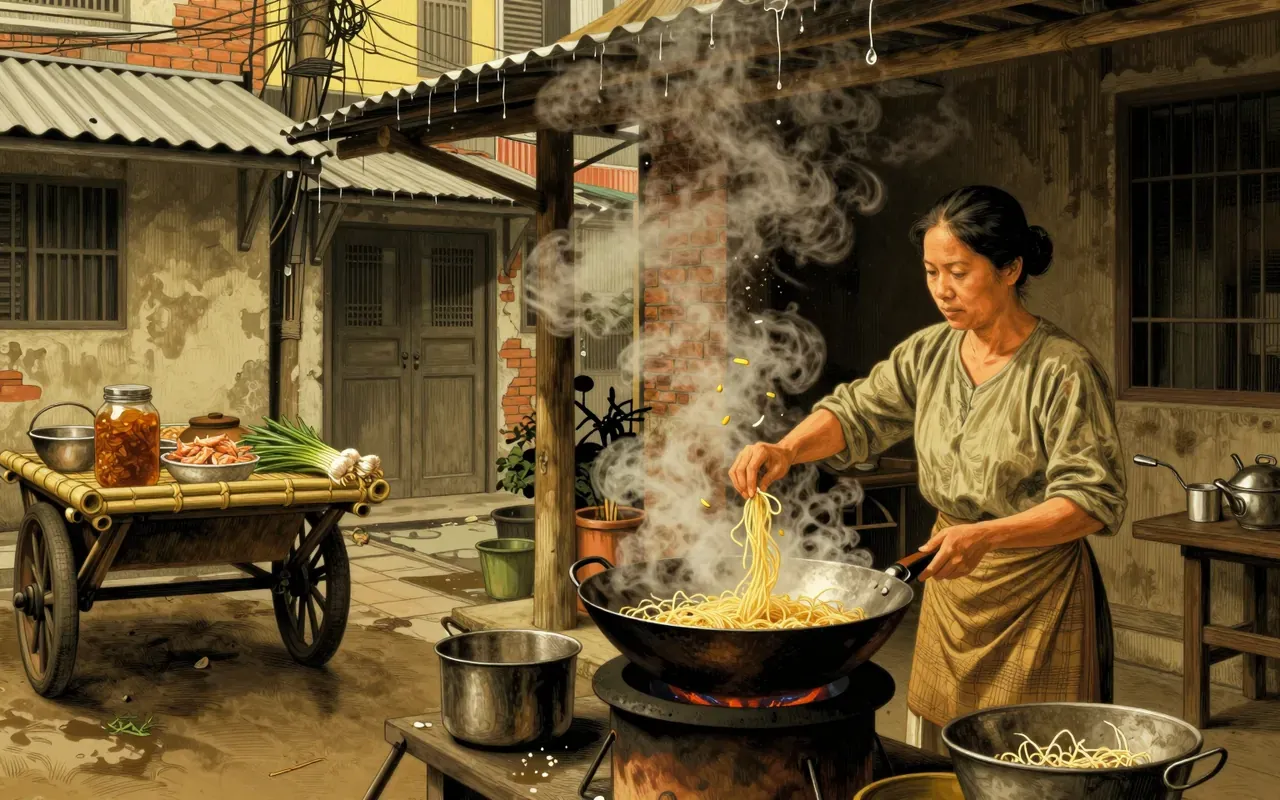
It is made by stir-frying rice noodles in a wok with eggs, firm tofu, tamarind juice, fish sauce, dried shrimp, garlic, and shallots.
0:31
What it gets right
It balances savory (fish sauce), sour (tamarind), salty (dried shrimp), and sweet (palm sugar) flavors.
0:43
What it does not
It contains dried shrimp and fish sauce, making it unsuitable for vegetarians or those avoiding seafood.
0:49
What it changed
The name changed from kuai tiao pad thai to pad thai, and an early variant was named sen chan pad thai after Chanthaburi Province.
0:59
Who it is for, and who it is not
It is for people who eat eggs, tofu, dried shrimp, and fish sauce.
1:11
Is it worth your time
It is worth your time if you enjoy stir-fried noodles with bold, balanced seasoning and varied textures.

Worth your time?
Selectively. Start with the brief, then cook the parts we point at.
What works
It balances savory (fish sauce), sour (tamarind), salty (dried shrimp), and sweet (palm sugar) flavors. The mix of textures—chewy noodles, soft tofu, crunchy peanuts, and fresh lime—contributes to its appeal.
What does not
It contains dried shrimp and fish sauce, making it unsuitable for vegetarians or those avoiding seafood.
Cook it if
Skip it if
The written brief1 min read
What the dish is and where it came from
Pad thai is a stir-fried rice noodle dish invented in Thailand in the 1930s or 1940s. It was promoted by the Thai government during World War II to reduce rice consumption. One early name was sen chan pad thai, referencing Chanthaburi Province.
How it works, in terms someone would actually use
It is made by stir-frying rice noodles in a wok with eggs, firm tofu, tamarind juice, fish sauce, dried shrimp, garlic, and shallots. It is served with lime wedges and often crushed roasted peanuts.
What it gets right
It balances savory (fish sauce), sour (tamarind), salty (dried shrimp), and sweet (palm sugar) flavors. The mix of textures—chewy noodles, soft tofu, crunchy peanuts, and fresh lime—contributes to its appeal.
What it does not
It contains dried shrimp and fish sauce, making it unsuitable for vegetarians or those avoiding seafood.
What it changed
The name changed from kuai tiao pad thai to pad thai, and an early variant was named sen chan pad thai after Chanthaburi Province.
Who it is for, and who it is not
It is for people who eat eggs, tofu, dried shrimp, and fish sauce. It is not for vegetarians, pescatarians avoiding dried seafood, or those allergic to peanuts or shellfish.
Is it worth your time
It is worth your time if you enjoy stir-fried noodles with bold, balanced seasoning and varied textures.