1:31in productionCh. 1 · What the dish is and where it came from/ 1:31 · ceiling 15 min
Baking
Pretzel
A baked pastry shaped into a symmetrical knot, traditionally made with flour and water, treated with washing soda or lye, and topped with salt.
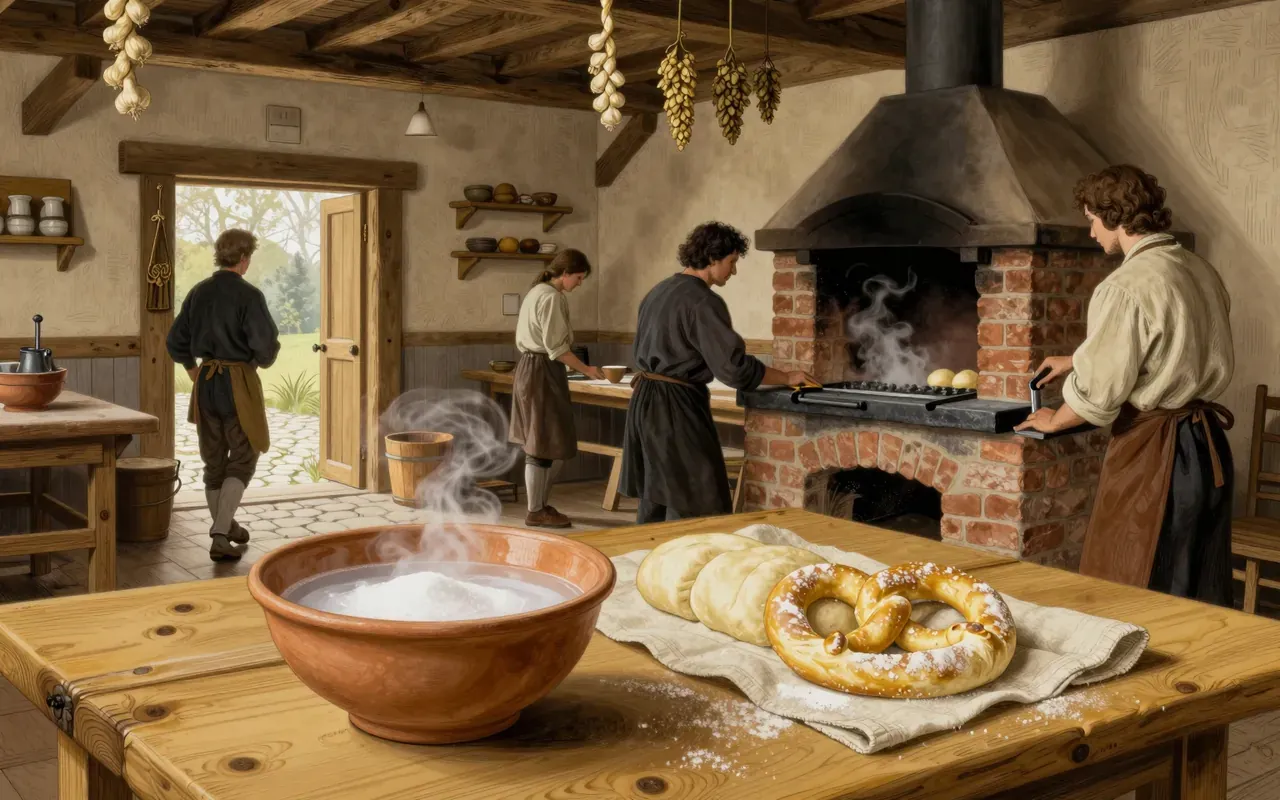
A pretzel is a baked pastry made from dough, commonly shaped into a symmetrical knot. Its earliest known depiction appears in a 12th-century Alsatian manuscript. It has been associated with bakers’ guilds in southern German areas since at least the 12th century and is deeply rooted in Franconia and Upper German baking traditions. One disputed account attributes its invention to an Italian monk around 610 AD.
A pretzel is a baked pastry made from dough, commonly shaped into a symmetrical knot.
0:26
How it works, in terms someone would actually use
Dough is formed into a long strip, twisted into a loop or bow, then baked after treatment with washing soda or lye — a step that yields its signature skin and flavor via the Maillard reaction.
0:43
What it gets right
The lye or washing soda treatment produces a distinctive chewy-crisp texture and rich flavor; salt enhances this effect directly.
0:51
What it does not
Its simple flour-and-water formulation made it suitable for Lenten observance, but that also means it lacks dairy, eggs, or fat — limiting richness for some palates.
1:01
What it changed
Hard pretzels emerged as a commercial product in Pennsylvania in 1850.
1:12
Who it is for, and who it is not
It is for people seeking a simple, shelf-stable baked snack or a Lenten-compliant food.
1:23
Is it worth your time
Yes — especially if you prefer a crisp, salty snack or enjoy seasonal or novelty varieties like chocolate-covered pretzels.
Worth your time?
Selectively. Start with the brief, then cook the parts we point at.
What works
The lye or washing soda treatment produces a distinctive chewy-crisp texture and rich flavor; salt enhances this effect directly.
What does not
Its simple flour-and-water formulation made it suitable for Lenten observance, but that also means it lacks dairy, eggs, or fat — limiting richness for some palates.
Cook it if
Skip it if
The written brief1 min read
What the dish is and where it came from
A pretzel is a baked pastry made from dough, commonly shaped into a symmetrical knot. Its earliest known depiction appears in a 12th-century Alsatian manuscript. It has been associated with bakers’ guilds in southern German areas since at least the 12th century and is deeply rooted in Franconia and Upper German baking traditions. One disputed account attributes its invention to an Italian monk around 610 AD.
How it works, in terms someone would actually use
Dough is formed into a long strip, twisted into a loop or bow, then baked after treatment with washing soda or lye — a step that yields its signature skin and flavor via the Maillard reaction. Salt is the most common topping.
What it gets right
The lye or washing soda treatment produces a distinctive chewy-crisp texture and rich flavor; salt enhances this effect directly.
What it does not
Its simple flour-and-water formulation made it suitable for Lenten observance, but that also means it lacks dairy, eggs, or fat — limiting richness for some palates.
What it changed
Hard pretzels emerged as a commercial product in Pennsylvania in 1850. In the U.S., they later diversified into coated and flavored varieties like chocolate, mustard, and cinnamon sugar.
Who it is for, and who it is not
It is for people seeking a simple, shelf-stable baked snack or a Lenten-compliant food. It is not for those requiring dairy, eggs, or lard in their baked goods.
Is it worth your time
Yes — especially if you prefer a crisp, salty snack or enjoy seasonal or novelty varieties like chocolate-covered pretzels.