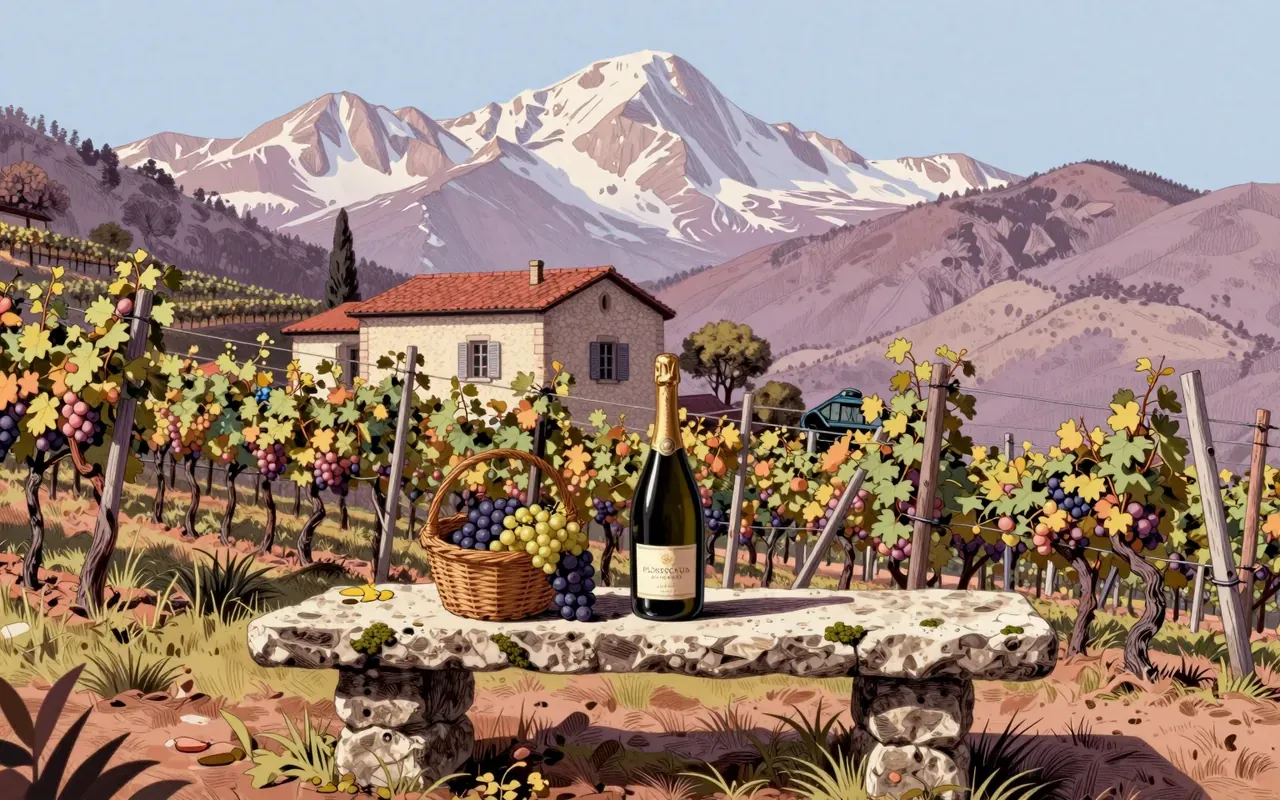
The name ‘Prosecco’ predates the modern wine by centuries—and anchors it to a place it no longer represents.
2:13
85% Glera, 15% loophole
Glera defines Prosecco—but only up to 85%. The rest is licensed flexibility, not tradition.
3:52
Superiore means hills, not just bubbles
Only two hillside DOCG zones produce Prosecco Superiore—and all of it must be spumante.
5:18
Rosé is a clause, not a vintage
Rosé Prosecco arrived in 2020—not as innovation, but as a rule change: 10–15% Pinot nero, no more.
Worth your time?
Yes. Cook the whole thing.
3.5/ 5
What works
as a case study in denomination politics
as evidence of how EU wine law reshapes identity
What does not
culture/art
culture/arts
culture/cities
culture/fashion
Cook it if
wine professionals
EU food policy readers
Italian regional historians
Skip it if
casual drinkers seeking tasting notes
travel writers pitching Venice day trips
The written brief1 min read
What the thing is
Prosecco is a DOC/DOCG Italian white wine, predominantly sparkling or semi-sparkling, made mainly from Glera grapes with up to 15% other varieties.
Where it came from
It originates from nine provinces across Veneto and Friuli-Venezia Giulia, named after the village of Prosecco in Trieste. The name first appeared as ‘Prosecho’ in 1593 and ‘Prosecco’ in print in 1754.
What it gets right
It delivers consistent, aromatic, low-alcohol sparkle at scale. Its DOC/DOCG structure protects two hillside zones—Conegliano Valdobbiadene and Asolo—where Prosecco Superiore must be spumante only.
What it gets wrong
It conflates origin with identity. The name comes from a village in Trieste, but today’s Prosecco is overwhelmingly from Veneto and Friuli-Venezia Giulia—nine provinces, not one place. The 2009 grape rename (Prosecco → Glera) severed linguistic continuity without clarifying terroir.
Why it matters now
Because its 2020 rosé variant—10–15% Pinot nero—marks the first formal expansion beyond Glera-dominant blends, testing whether the denomination can evolve without erasing its geographic and varietal constraints.
Is it worth your time
Yes—if you care about how a regional wine became a global shorthand for affordable fizz, and what that displacement cost the places and practices that made it.