9:40in productionCh. 1 · What the word says/ 9:40 · ceiling 15 min
Culture · Dishes
Ratatouille
A dish built on surplus became a symbol of refinement—despite arriving centuries late to its own origin story.
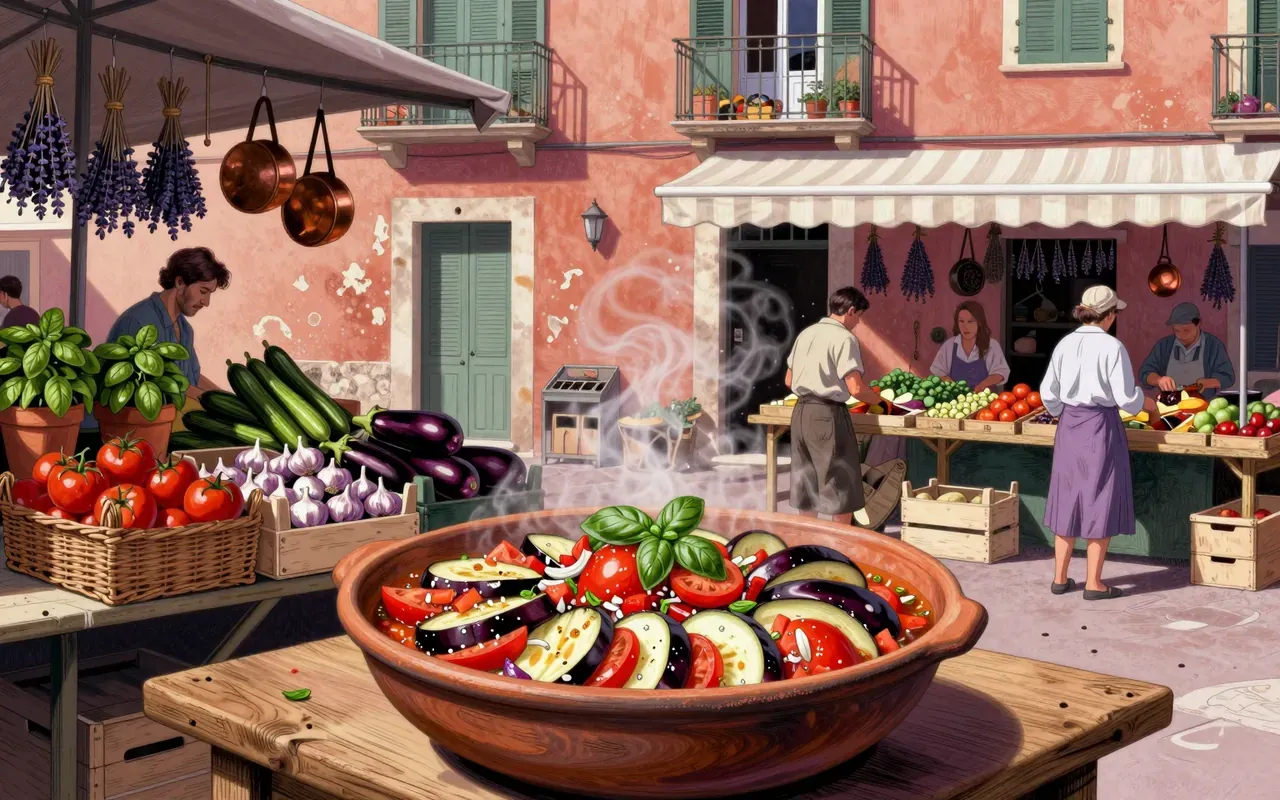
Ratatouille is a vegetable stew from Provence, rooted in practicality—not prestige. Its ingredients arrived centuries after its supposed origins. Its name celebrates motion, not mastery. Its modern reputation contradicts its early pejorative use. It matters because it shows how food narratives are rewritten to serve identity, not history.
It was never fine dining. It was pantry-clearing, cooked in olive oil.
3:30
When the ingredients arrived
Its 'traditional' vegetables arrived in France long after Provence had its culinary identity.
5:10
What the word used to mean
In the early 19th century, 'ratatouille' meant something coarse—not something noble.
Worth your time?
Yes. Cook the whole thing.
4/ 5
What works
none
What does not
iconic
groundbreaking
seminal
Cook it if
cooks
food historians
anyone who questions culinary origin stories
Skip it if
those seeking symbolic or aesthetic analysis
The written brief1 min read
What the thing is
Ratatouille is a stew or sauté of seasonal summer vegetables cooked in olive oil.
Where it came from
It originated in the Provence region of southern France, particularly associated with Nice and its surrounding region, as a practical means of using surplus summer produce.
What it gets right
It honours seasonal abundance. It uses olive oil as both medium and marker of place. It names itself after the act of stirring—a gesture of labour, not artistry.
What it gets wrong
It is often presented as ancient Provençal tradition, but its core ingredients—tomatoes, peppers, squash—did not enter French diets until centuries after the region’s medieval culinary forms were set.
Why it matters now
It reveals how national dishes are retrofitted: ingredients once distrusted (tomatoes, peppers) become essential, and a term once pejorative (‘coarse stew’) becomes a signifier of authenticity.
Is it worth your time
Yes—if you care about how ordinary food becomes emblematic, and why a dish made from surplus vegetables now stands for culinary legitimacy.