8:04in productionCh. 1 · Not just Iberian. Black Iberian./ 8:04 · ceiling 15 min
Culture · Dishes
Jamón ibérico
A legal framework disguised as a delicacy—and the only cured meat where 'pata negra' means 'black label', not 'black hoof'.
Jamón ibérico is a tightly regulated cured ham from Black Iberian pigs in Spain and Portugal. Its 2014 labelling reform turned vague terms like 'pata negra' into enforceable legal grades. It succeeds in binding land, animal and time into one standard—but mistakes regulatory precision for gustatory guarantee.
It is geographically and genetically bounded: only Spain and Portugal, only Black Iberian pigs or ≥50% crosses with Duroc.
2:18
Pata negra is a label, not a look
Since January 2014, 'pata negra' means black label—acorn-fed, pure-bred, legally certified—not a colloquial term for any dark-hooved ham.
3:48
Dehesa to plate: 36 months
Bellota grade requires free-range acorn feeding in dehesas and 36 months’ curing—no shortcuts, no substitutions.
5:09
Time is measured in months, not seasons
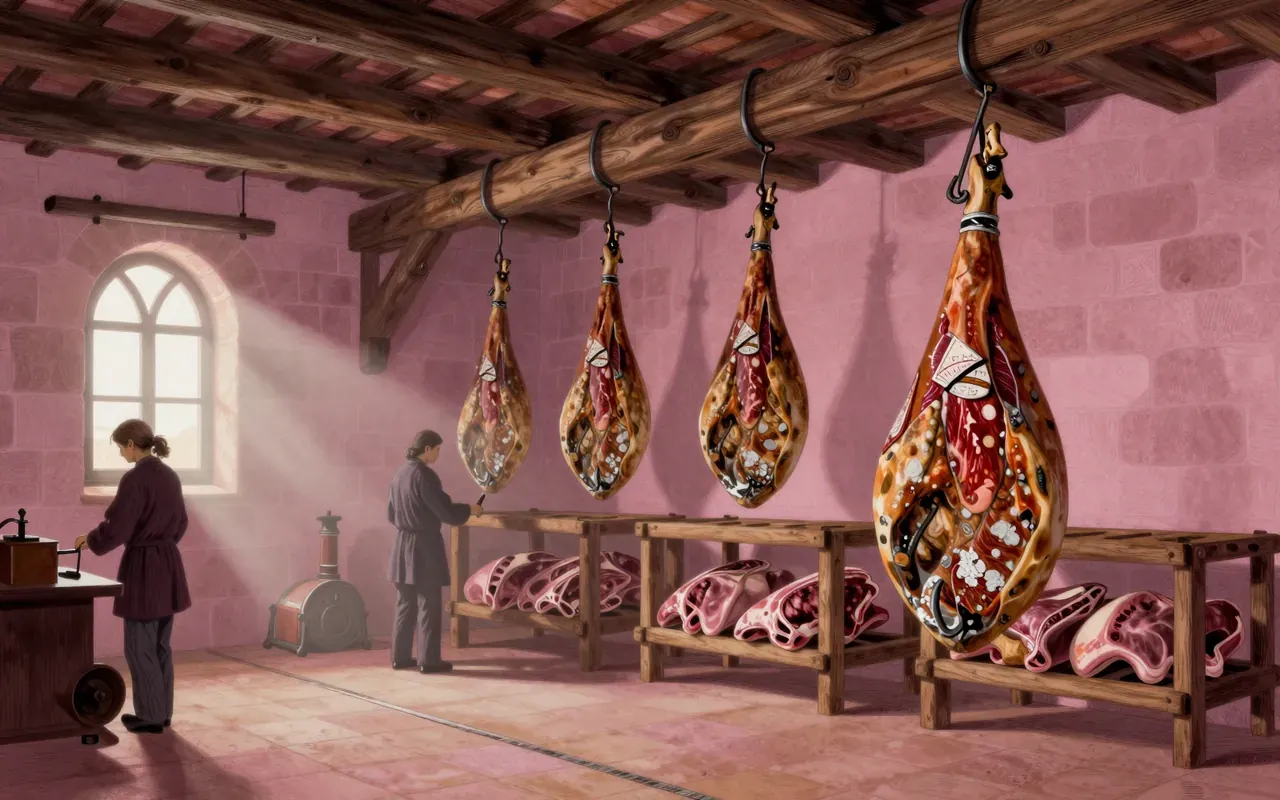
Curing is staged: two weeks’ salting, four to six weeks’ drying, then 12–48 months’ ageing—time as ingredient, not delay.
Worth your time?
Yes. Cook the whole thing.
4/ 5
What works
culture/food
What does not
culture/arts
culture/literature
culture/movements-and-scenes
Cook it if
chefs
food-policy-readers
producers
Skip it if
casual-diners
luxury-consumers
The written brief1 min read
What the thing is
Jamón ibérico is dry-cured ham from Black Iberian pigs in Spain and Portugal. It is defined by origin, ancestry (≥50% Iberian × Duroc), diet (acorn, grain or mixed), and a mandatory curing period of 12–48 months.
Where it came from
It originated on the Iberian Peninsula, where Black Iberian pigs were raised in dehesas—oak forest pastures straddling the Spanish-Portuguese border.
What it gets right
It enforces traceability through ancestry, diet and geography. The 2014 colour-coded labelling system makes grading legible and legally binding.
What it gets wrong
It conflates purity with quality. A black label guarantees pure-bred ancestry and acorn feeding—but not flavour, texture or producer skill.
Why it matters now
Because it is a rare working model of terroir-based food regulation that treats pig genetics, land use and seasonal foraging as inseparable legal categories—not marketing tropes.
Is it worth your time
Yes—if you care about food as regulated craft, not luxury signifier. It rewards attention to provenance, method and label discipline.