9:36in productionCh. 1 · What the name means/ 9:36 · ceiling 15 min
Dishes
Katsu curry
1948
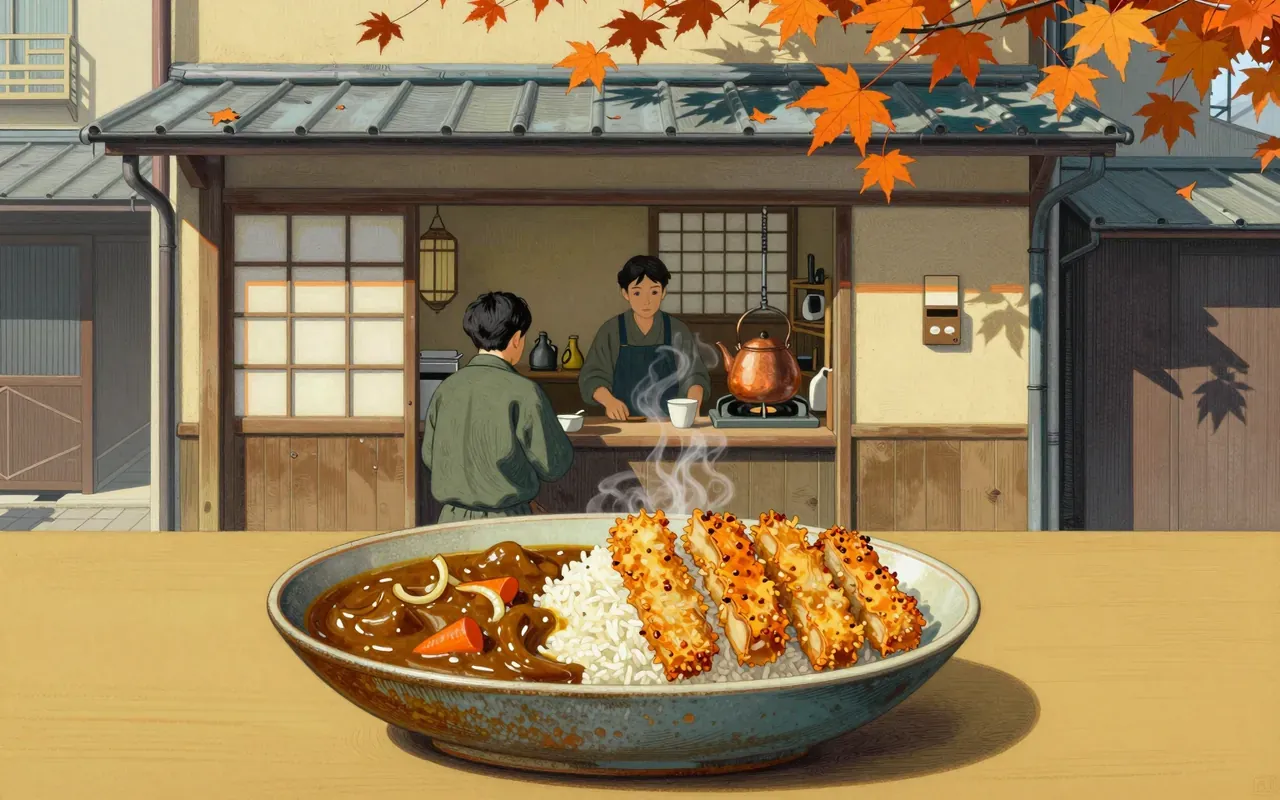
Katsu curry isn’t fusion—it’s logistics solved with a knife before the plate leaves the kitchen.
Katsu curry is a Japanese yōshoku dish of tonkatsu, rice, and curry. Its origin is contested among three Tokyo restaurants: Kawakin in Asakusa (1918), Ōroji in Shinjuku (1921), and Ginza Swiss in Ginza (1948). In Japan, it refers exclusively to curry served with a cutlet. The cutlet is usually precut into strips, eliminating the need for a knife.
Katsu curry is defined in Japan as curry served with a cutlet—not the other way around.
2:35
Why it’s eaten with chopsticks only
The cutlet is always precut into strips, so no knife is needed at the table.
3:55
Where it came from
Three Tokyo yōshoku restaurants claim its birth—between 1918 and 1948.
5:19
What counts—and what doesn’t
In Japan, 'katsu curry' refers exclusively to curry with a cutlet—no exceptions.
Worth your time?
Yes. Cook the whole thing.
4/ 5
What works
It commits to contrast: crisp fried pork against soft rice and thick, mild curry.
The strip-cutting ensures every mouthful balances all three elements.
What does not
It does not represent Indian or British curry traditions.
It does not use whole cutlets at the table.
It does not originate before 1918 or outside Tokyo.
Cook it if
It is for diners who prioritise speed, texture, and integration over authenticity to any non-Japanese tradition.
It is not for those seeking regional Japanese home cooking or unadulterated curry.
Skip it if
It is not for those seeking regional Japanese home cooking or unadulterated curry.
The written brief1 min read
What the dish is and where it came from
Katsu curry is a Japanese yōshoku dish of tonkatsu, rice, and curry. Its origin is contested among three Tokyo restaurants: Kawakin in Asakusa (1918), Ōroji in Shinjuku (1921), and Ginza Swiss in Ginza (1948).
How it works, in terms someone would actually use
The cutlet is precut into strips before serving, so the diner eats curry and pork together in one bite without needing a knife.
What it gets right
It commits to contrast: crisp fried pork against soft rice and thick, mild curry. The strip-cutting ensures every mouthful balances all three elements.
What it does not
It does not represent Indian or British curry traditions. It does not use whole cutlets at the table. It does not originate before 1918 or outside Tokyo.
What it changed
It fixed the logistical gap between Western-style cutlets and Japanese rice-and-curry meals by merging them into a single plate with built-in portion control.
Who it is for, and who it is not
It is for diners who prioritise speed, texture, and integration over authenticity to any non-Japanese tradition. It is not for those seeking regional Japanese home cooking or unadulterated curry.
Is it worth your time
Yes—if you want a fast, hearty, texturally decisive Japanese yōshoku dish that delivers savoury depth and crunch in equal measure.