1:21in productionCh. 1 · What the dish is and where it came from/ 1:21 · ceiling 15 min
Dishes · Food history
Oyakodon
A Japanese rice bowl dish with chicken, egg, scallion or onion, soy sauce, and stock, simmered together and served over rice.
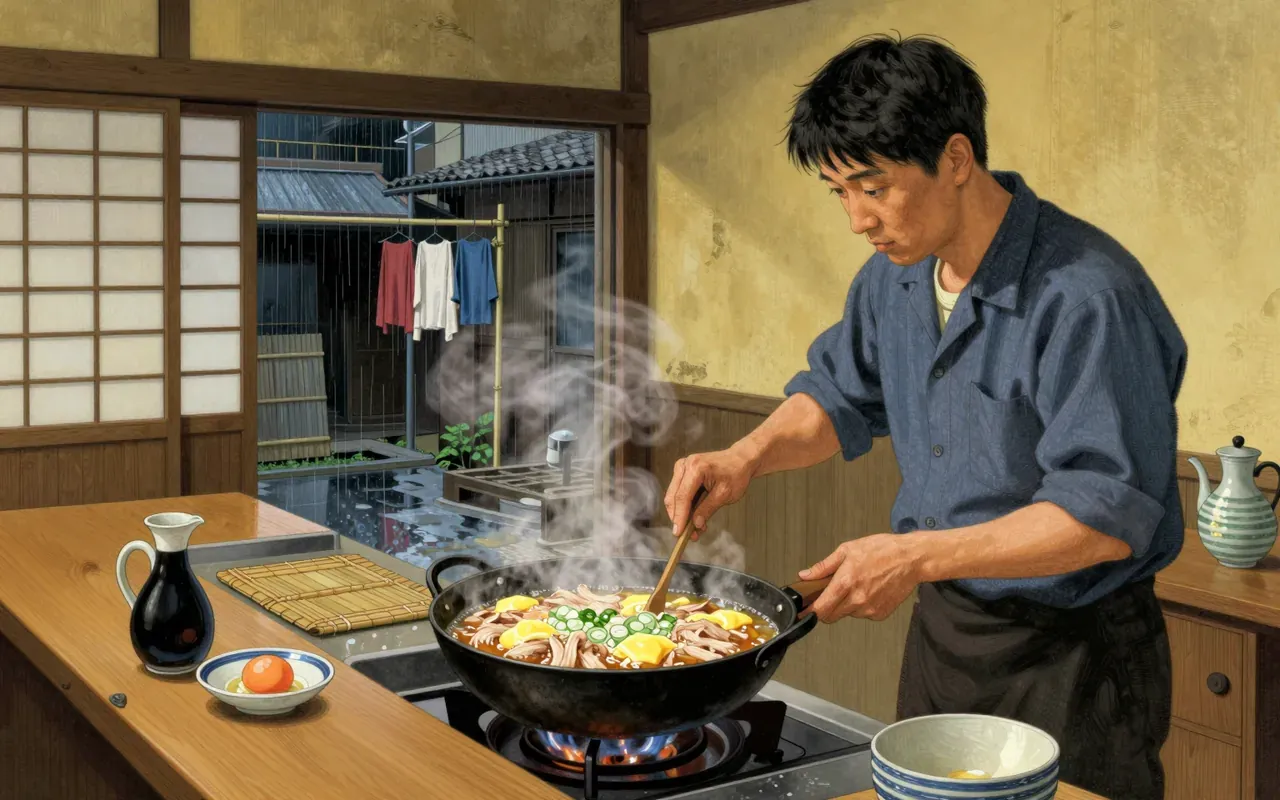
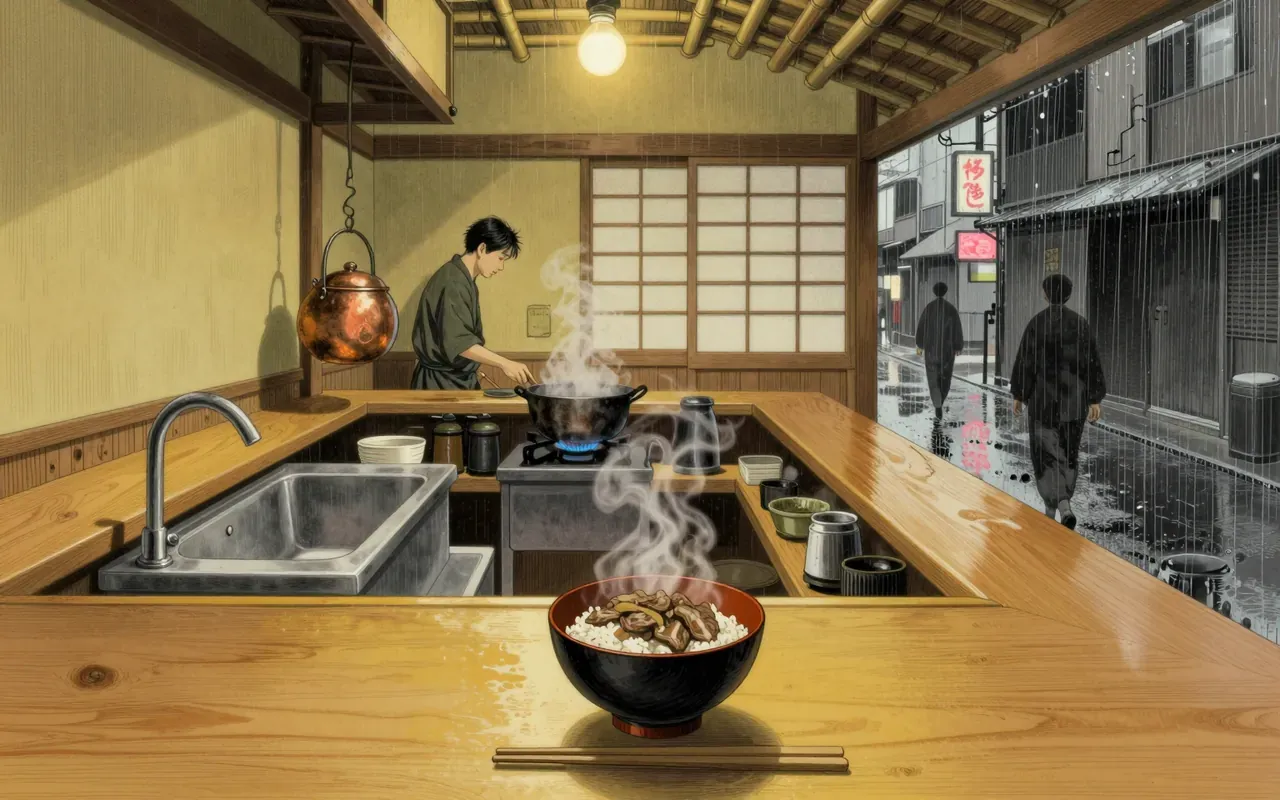
Oyakodon is a donburi—a Japanese rice bowl dish—in which chicken, egg, sliced scallion (or sometimes regular onions), and other ingredients are simmered together in a soy sauce– and stock–based soup, then served over rice. Its name means "parent-and-child donburi", referencing the use of both chicken and egg.
Oyakodon is a donburi—a Japanese rice bowl dish—in which chicken, egg, sliced scallion (or sometimes regular onions), and other ingredients are simmered together in a soy sauce– and stock–based soup, then served over rice.
0:19
How it works, in terms someone would actually use
A patron combined leftover chicken and warishita (a simmering sauce for chicken and onions) with beaten egg, serving it over rice.
0:34
What it gets right
It gets right the balance of savory, soft textures, and visual simplicity: tender chicken, softly set egg, aromatic scallion or onion, all bound by a glossy, umami-rich sauce over rice.
0:46
What it does not
It does not offer a vegetarian or poultry-free option, since chicken and egg are essential components.
0:52
What it changed
It changed from a takeout-only offering to a standard donburi format.
1:05
Who it is for, and who it is not
It is for people who want a warm, protein-rich rice bowl with mild, familiar flavors.
1:15
Is it worth your time
Yes—it delivers a complete, balanced meal in one bowl using accessible ingredients and straightforward preparation.
Worth your time?
Selectively. Start with the brief, then cook the parts we point at.
What works
It gets right the balance of savory, soft textures, and visual simplicity: tender chicken, softly set egg, aromatic scallion or onion, all bound by a glossy, umami-rich sauce over rice.
What does not
It does not offer a vegetarian or poultry-free option, since chicken and egg are essential components.
Cook it if
Skip it if
The written brief1 min read
What the dish is and where it came from
Oyakodon is a donburi—a Japanese rice bowl dish—in which chicken, egg, sliced scallion (or sometimes regular onions), and other ingredients are simmered together in a soy sauce– and stock–based soup, then served over rice. Its name means “parent-and-child donburi”, referencing the use of both chicken and egg.
How it works, in terms someone would actually use
A patron combined leftover chicken and warishita (a simmering sauce for chicken and onions) with beaten egg, serving it over rice. In 1891, a chef reimagined that mixture as a complete rice bowl meal—the prototype of modern oyakodon.
What it gets right
It gets right the balance of savory, soft textures, and visual simplicity: tender chicken, softly set egg, aromatic scallion or onion, all bound by a glossy, umami-rich sauce over rice.
What it does not
It does not offer a vegetarian or poultry-free option, since chicken and egg are essential components.
What it changed
It changed from a takeout-only offering to a standard donburi format. The 1884 Kobe advertisement marks the earliest known use of the combined term; the 1891 Tokyo iteration established the modern rice-bowl form.
Who it is for, and who it is not
It is for people who want a warm, protein-rich rice bowl with mild, familiar flavors. It is not for those avoiding chicken or eggs.
Is it worth your time
Yes—it delivers a complete, balanced meal in one bowl using accessible ingredients and straightforward preparation.