What the thing is
Street food is food sold by a hawker or vendor on a street or at another public place.
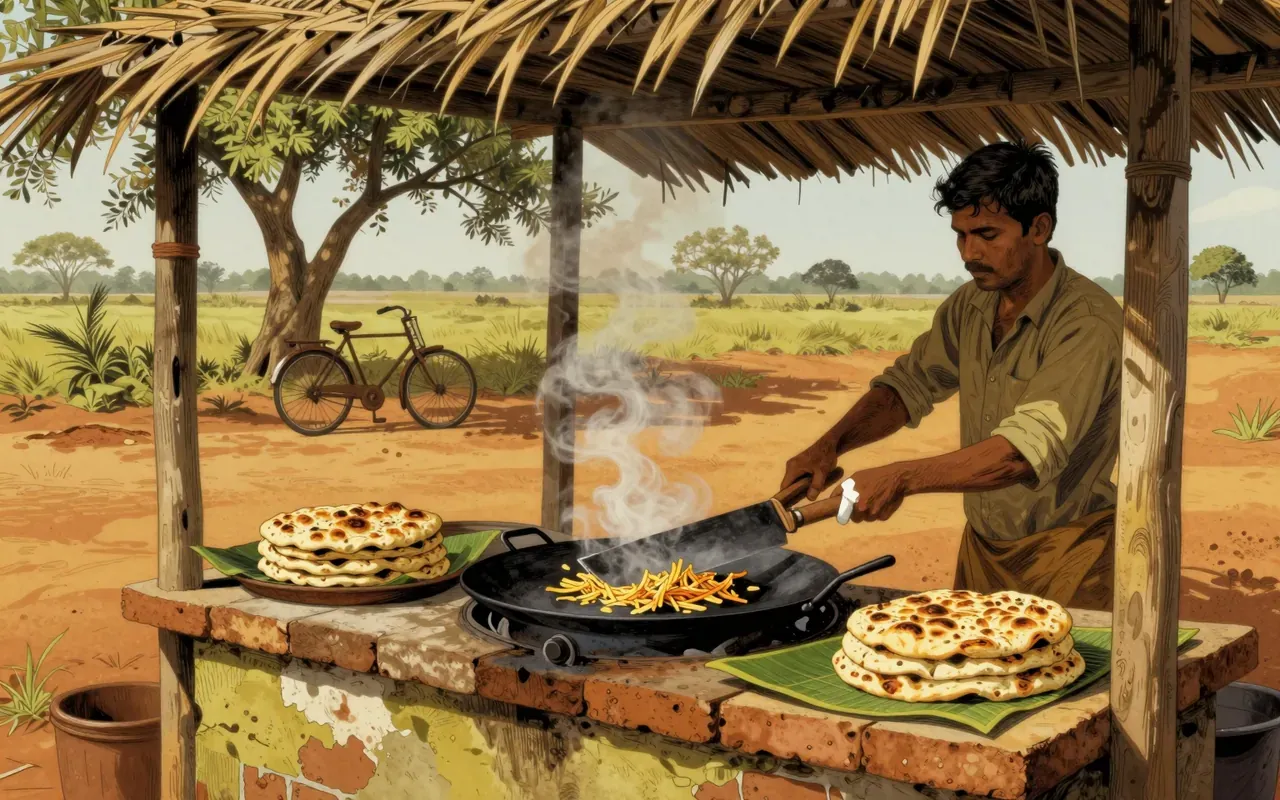
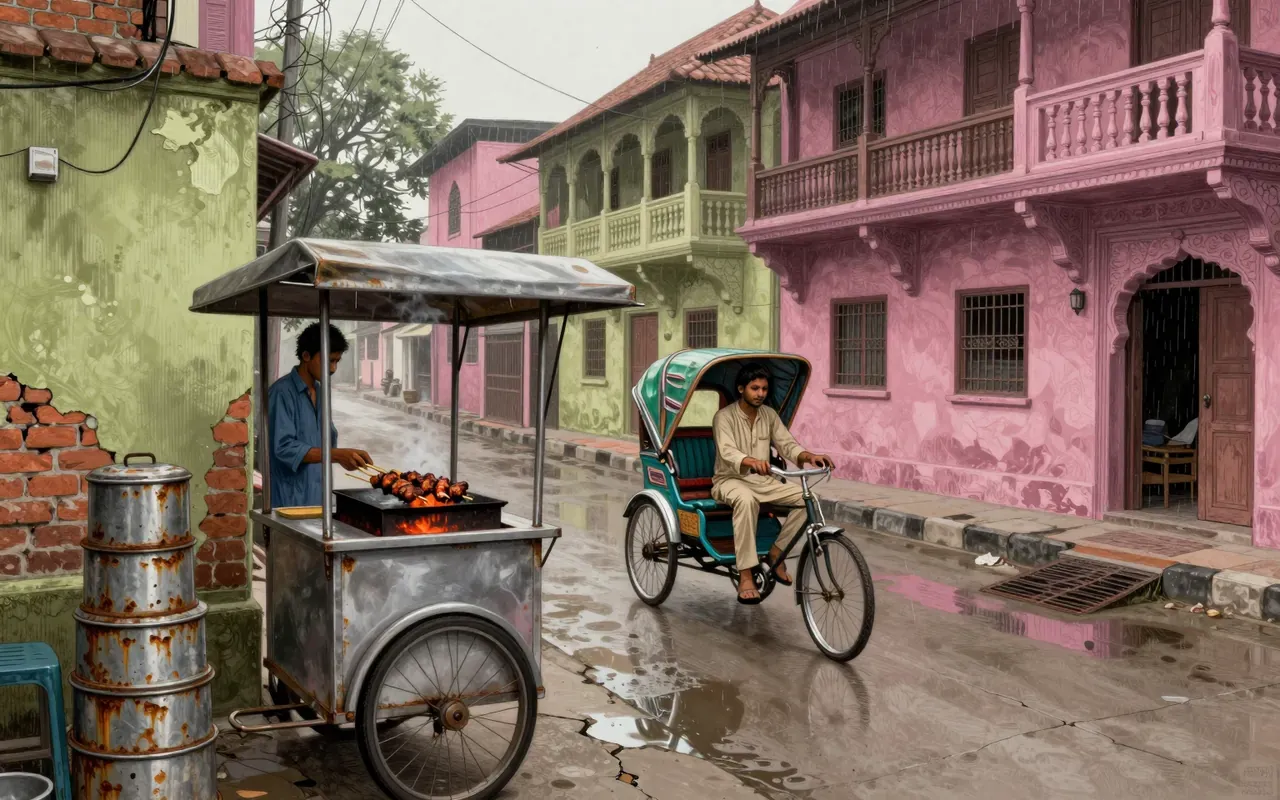
That place can also be a market, fair or park. The food is often sold from a portable booth, cart or food truck and is meant for immediate consumption. Most street foods count as both finger food and fast food, and they are generally cheaper than restaurant meals. Some are regional, but many have spread beyond where they began.
Where it came from
It originated in ancient Greece and Pompeii. It is regional but many varieties have spread beyond their origins.
In ancient Greece small fried fish was a street food, though the philosopher Theophrastus held the custom in low regard. Excavation at Pompeii turned up evidence of a large number of street food vendors. In ancient Rome, poor urban residents whose tenement houses had no ovens or hearths ate widely from the street; chickpea soup with bread and grain paste were common meals. The Arthashastra mentions food vendors in ancient India, and one of its regulations says that those who trade in cooked rice, liquor and flesh are to live in the south of the city.
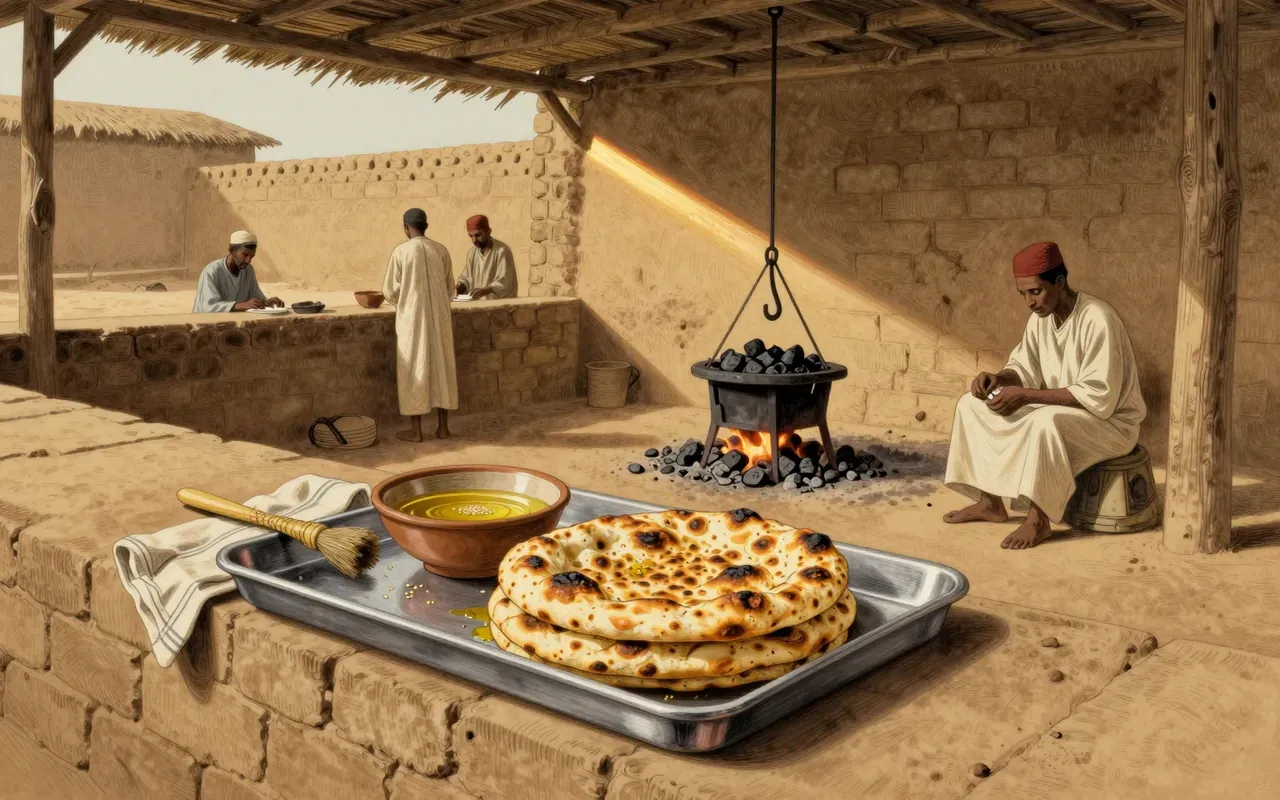
Later records are vivid. A travelling Florentine in the late 14th century reported that in Cairo people spread rawhide picnic cloths on the street to eat lamb kebabs, rice and fritters bought from vendors. In Renaissance Turkey many crossroads had vendors selling spit-roasted chicken and lamb, and in 1502 Ottoman Turkey became the first country to legislate and standardize the sale of street food. Aztec marketplaces had vendors selling atolli, a gruel of maize dough, almost 50 types of tamales, insects and stews. Vendors in Victorian London sold tripe, pea soup, whelk, prawns and jellied eels, and French fries probably originated as a street food in Paris in the 1840s.
In China, selling street food stretches back millennia and became integral to the food culture in the Tang Dynasty; in ancient China it mainly catered to the poor, though wealthy residents often sent servants to buy it. Because of the Chinese diaspora, Chinese street food influenced other Asian cuisines, and the street food culture of much of Southeast Asia was established by coolie workers brought from China in the late 19th century. Ramen began as a street food for Chinese labourers and students in Yokohama Chinatown before becoming a national dish of Japan. In Indonesia, travelling food vendors appear in temple bas reliefs from the 9th century and in 14th-century inscriptions.
In the Americas, street vendors in the colonial period sold oysters, roasted corn, fruit and sweets at low prices to all classes, and oysters stayed cheap until around 1910, when overfishing and pollution pushed prices up. Many women of African descent made their living selling street food in the 18th and 19th centuries, from fruit, cakes and nuts in Savannah to coffee, biscuits and pralines in New Orleans.
What it gets right
It delivers immediate, affordable nutrition. It creates jobs. It operates where formal infrastructure fails.
The scale is large. A 2007 Food and Agriculture Organization study put it at 2.5 billion people eating street food every day, and a majority of middle- to high-income consumers rely on its quick access and affordability, particularly in developing countries. In Thailand about 76% of urban residents regularly visit street food vendors, and the country’s 103,000 vendors generated 270 billion baht in 2017. Street food did not become popular among native Thai people until the early 1960s, when rapid urban growth stimulated it, and by the 1970s it had displaced home-cooking.
Vendors also pay into the local economy. In Dar es Salaam, vendors buy local fresh food, and urban gardens and small farms in the area have expanded. In the United States, street food vendors are credited with supporting New York City’s rapid growth by supplying meals for merchants and workers, and US proprietors have often aimed to move from the street to their own shops. In Mexico, though, a rise in street vendors has been read as a sign of deteriorating conditions, since food vending is the only work open to unskilled migrants from the countryside.
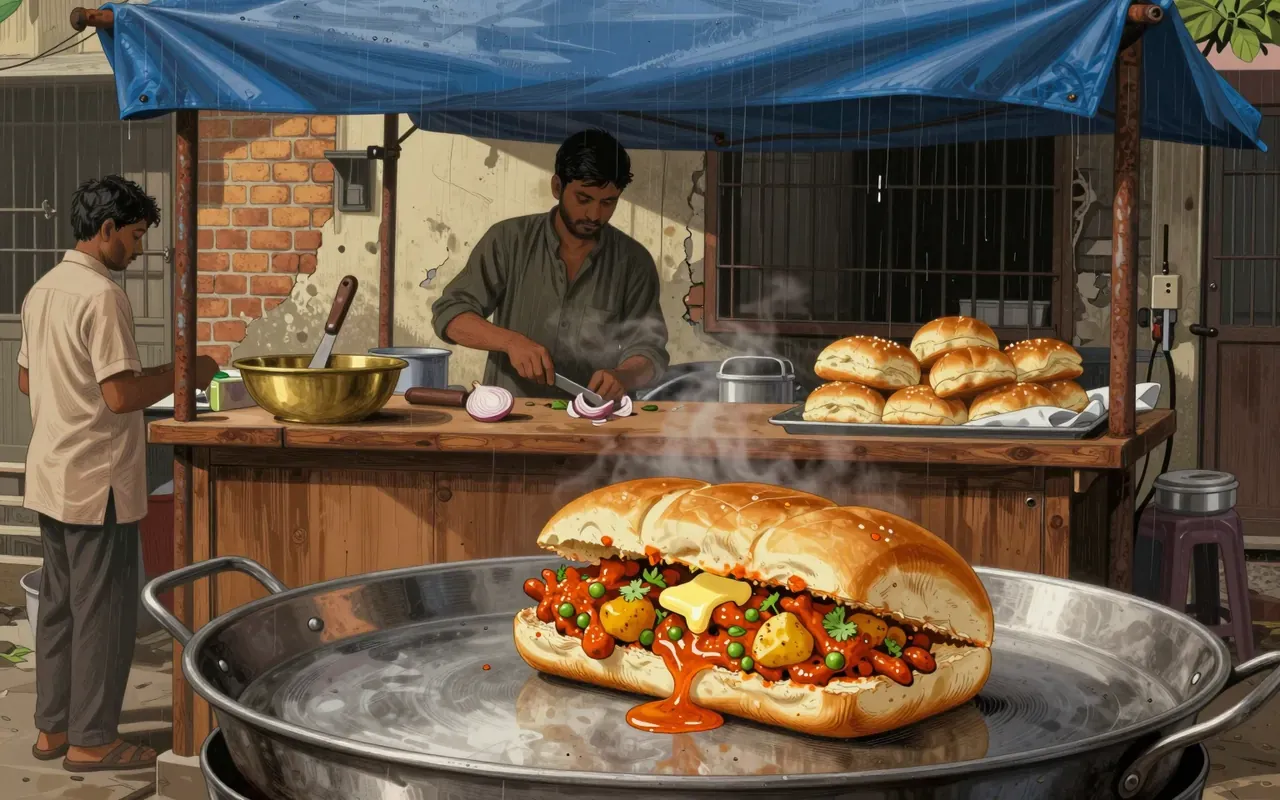
The range of food is wide. Bangkok’s popular offerings include pad thai, green papaya salad, tom yum soup, Thai curries and mango sticky rice. Indian street food includes vada pav, chole bhature, bhel puri, gol gappa, samosas, idli and pav bhaji, and in Hindi-speaking regions it is popularly called nukkadwala, “corner” food. Mexican street food is known as antojitos, “little cravings”, and includes tacos al pastor and huaraches. Falafel is sold on street corners in Syria, Egypt and Israel, and ful, a slow-cooked fava bean dish, is common in Egypt. Hawaii’s plate lunch of rice, macaroni salad and meat was inspired by the bento of the Japanese brought there as plantation workers.
What it gets wrong
It poses documented risks: food safety failures, sanitation gaps, illegal occupation of space, traffic disruption, and social friction.
Official suspicion is old. In New York, street vendors faced considerable opposition: after earlier limits on their hours, they were completely banned by 1707. In Singapore, hawkers, over half of them unlicensed, were considered primarily a nuisance to be removed from the streets, and 113 hawker centres were built between 1971 and 1986 to take them off the streets while preserving the food culture. In US cities, the libertarian magazine Reason says food trucks face rules meant to stop them competing with restaurants; in Chicago one rule bars them from selling within 200 feet of a restaurant, which critics call anti-competitive.
The health picture is less settled than the fear. As early as the 14th century government officials oversaw street vendors. Studies show contamination rates comparable to restaurants, and actual harm to consumers’ health is yet to be fully proven and understood, because tracking cases is hard and disease-reporting systems are lacking. A 2002 World Health Organization sampling of 511 street foods in Ghana found most within accepted microbial limits, and a sampling of 15 street foods in Calcutta found them nutritionally well balanced, at roughly 200 kcal per rupee.
Why it matters now
Governments now weigh its socioeconomic importance against its risks — from public health to urban order.
Responses differ. The UK Food Standards Agency has given vendors and traders detailed food-safety guidance since 2000. In India the government recognized vendors’ fundamental rights while imposing reasonable restrictions, and the Food Safety and Standards Act of 2006 was enacted to monitor food quality. Other ways listed to improve safety are mystery shopping, training, rewards for vendors and technical testing. In 2007 the UN Food and Agriculture Organization recommended considering adding nutrients to street foods that a culture commonly eats, after the UN and others had recognized in the late 1990s that vendors were an underused way to deliver fortified food. Singapore’s hawker centres, which evolved from street food commerce, were added to UNESCO’s Intangible Cultural Heritage list on 16 December 2020.
Is it worth your time
Yes — if you care about how food shapes cities, labour, and daily survival for 2.5 billion people.