1:02in productionCh. 1 · What the dish is and where it came from/ 1:02 · ceiling 15 min
Dishes
Amatriciana sauce
A tomato-based pasta sauce from Amatrice, Lazio, made with guanciale, pecorino, chili, black pepper, olive oil or lard, white wine, and salt.
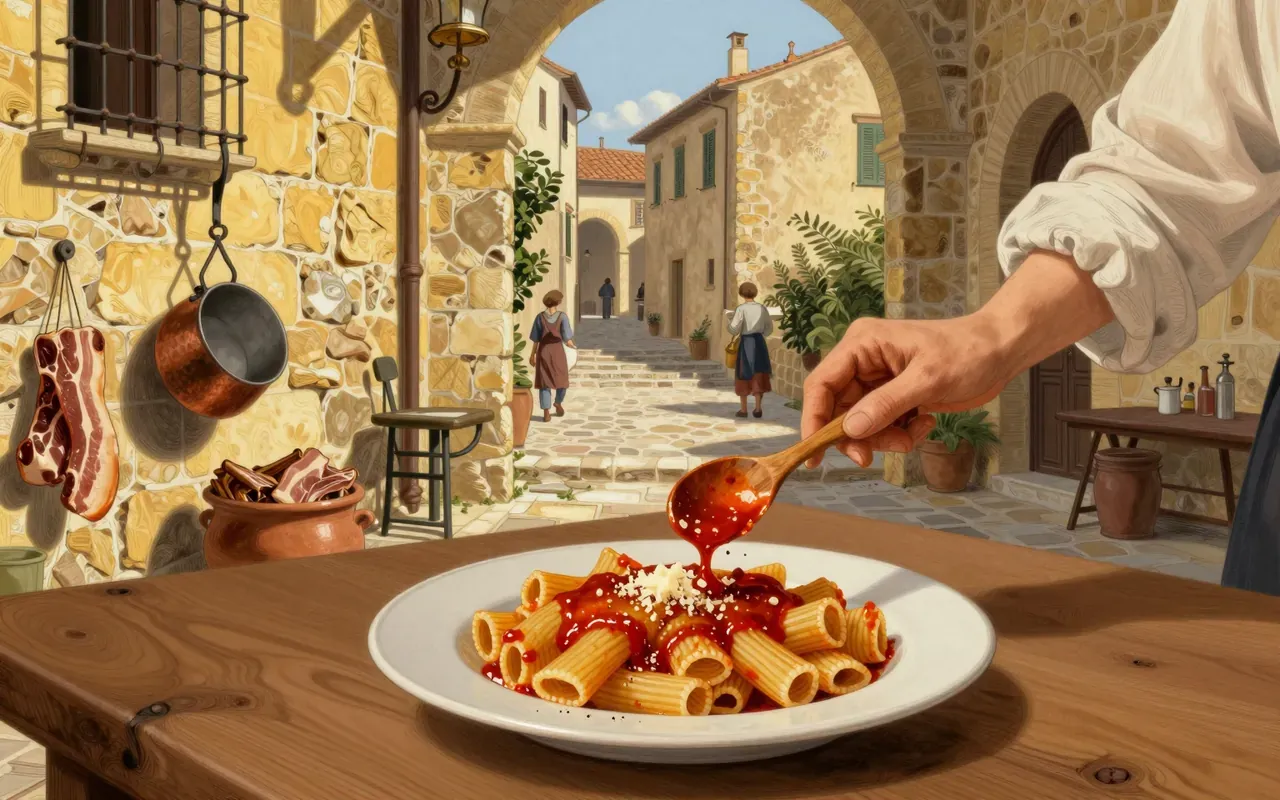
Amatriciana is a pasta sauce originating in the comune of Amatrice, in the mountainous province of Rieti, Lazio. It is one of the best-known sauces in Roman and Italian cuisine.
Amatriciana is a pasta sauce originating in the comune of Amatrice, in the mountainous province of Rieti, Lazio.
0:12
How it works, in terms someone would actually use
It is made by cooking guanciale in olive oil or lard, adding tomatoes, dry white wine, black pepper, dried chili pepper, salt, and grated pecorino romano or pecorino di Amatrice.
0:24
What it gets right
It gets right a balance of savory (guanciale), salty-umami (pecorino), bright acidity (tomatoes), heat (chili), and depth (wine and black pepper).
0:32
What it does not
It does not include garlic or onion—per the former mayor of Amatrice, these are excluded.
0:38
What it changed
It changed from being prepared with spaghetti in Amatrice to commonly using bucatini in Rome.
0:44
Who it is for, and who it is not
It is for people who enjoy tomato-based sauces with cured pork and sharp cheese.
0:54
Is it worth your time
It is worth your time if you seek a historically rooted, regionally specific Italian pasta sauce with bold, layered flavors.
Worth your time?
Selectively. Start with the brief, then cook the parts we point at.
What works
It gets right a balance of savory (guanciale), salty-umami (pecorino), bright acidity (tomatoes), heat (chili), and depth (wine and black pepper).
What does not
It does not include garlic or onion—per the former mayor of Amatrice, these are excluded.
Cook it if
Skip it if
The written brief1 min read
What the dish is and where it came from
Amatriciana is a pasta sauce originating in the comune of Amatrice, in the mountainous province of Rieti, Lazio. It is one of the best-known sauces in Roman and Italian cuisine.
How it works, in terms someone would actually use
It is made by cooking guanciale in olive oil or lard, adding tomatoes, dry white wine, black pepper, dried chili pepper, salt, and grated pecorino romano or pecorino di Amatrice.
What it gets right
It gets right a balance of savory (guanciale), salty-umami (pecorino), bright acidity (tomatoes), heat (chili), and depth (wine and black pepper).
What it does not
It does not include garlic or onion—per the former mayor of Amatrice, these are excluded.
What it changed
It changed from being prepared with spaghetti in Amatrice to commonly using bucatini in Rome.
Who it is for, and who it is not
It is for people who enjoy tomato-based sauces with cured pork and sharp cheese. It is not for those avoiding pork, dairy, or chili.
Is it worth your time
It is worth your time if you seek a historically rooted, regionally specific Italian pasta sauce with bold, layered flavors.