What the dish is and where it came from
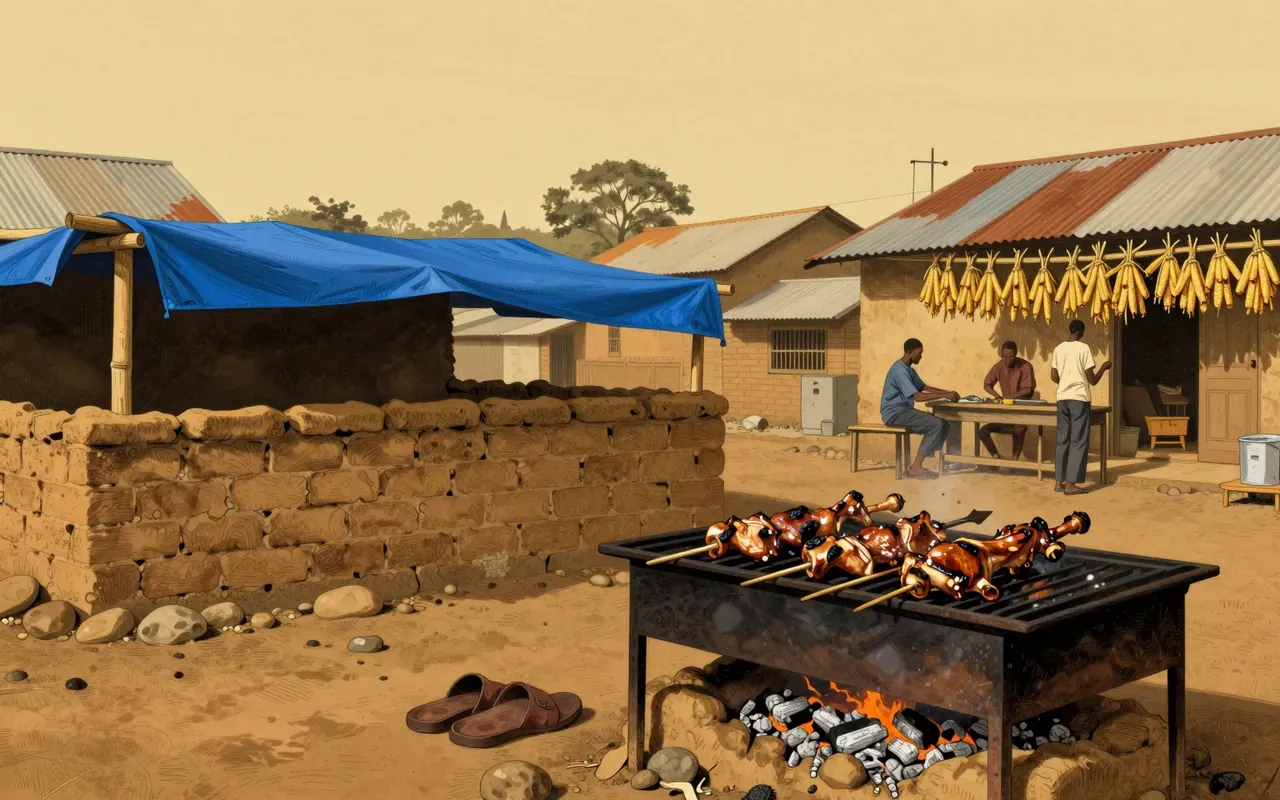
Nyama choma is a Kiswahili term meaning ‘barbecue meat’. It is grilled or barbecued goat or cattle meat. It originates from Tanzania and Kenya, where it is considered the national dish.
How it works, in terms someone would actually use
Nyama choma is grilled or barbecued goat or cattle meat. It is cooked over wood or charcoal, not gas. It is eaten by hand. It is served with kachumbari and ugali.
What it gets right
It centres goat and beef as culturally resonant proteins. It ties cooking method to communal practice—not just heat, but gathering. It holds wood and charcoal as non-negotiable.
What it does not
It does not standardise cuts, marinades, or timing. It does not rely on sauces, rubs, or temperature control. It does not prioritise tenderness over char or chew.
What it changed
It turned grilling into a regional social ritual. It established open-fire meat as the default for celebration across much of Eastern Africa.
Who it is for, and who it is not
It is for people who eat with their hands. It is for groups convening around fire. It is not for those seeking precision, speed, or separation from the cook’s process.
Is it worth your time
Yes—if you want food that anchors social gathering in East Africa. It demands fire, time, and shared space. It does not suit solo, fast, or indoor dining.