foodbriefs
1:04in productionCh. 1 · What the dish is and where it came from/ 1:04 · ceiling 15 min
Dishes · Food history

Bratwurst

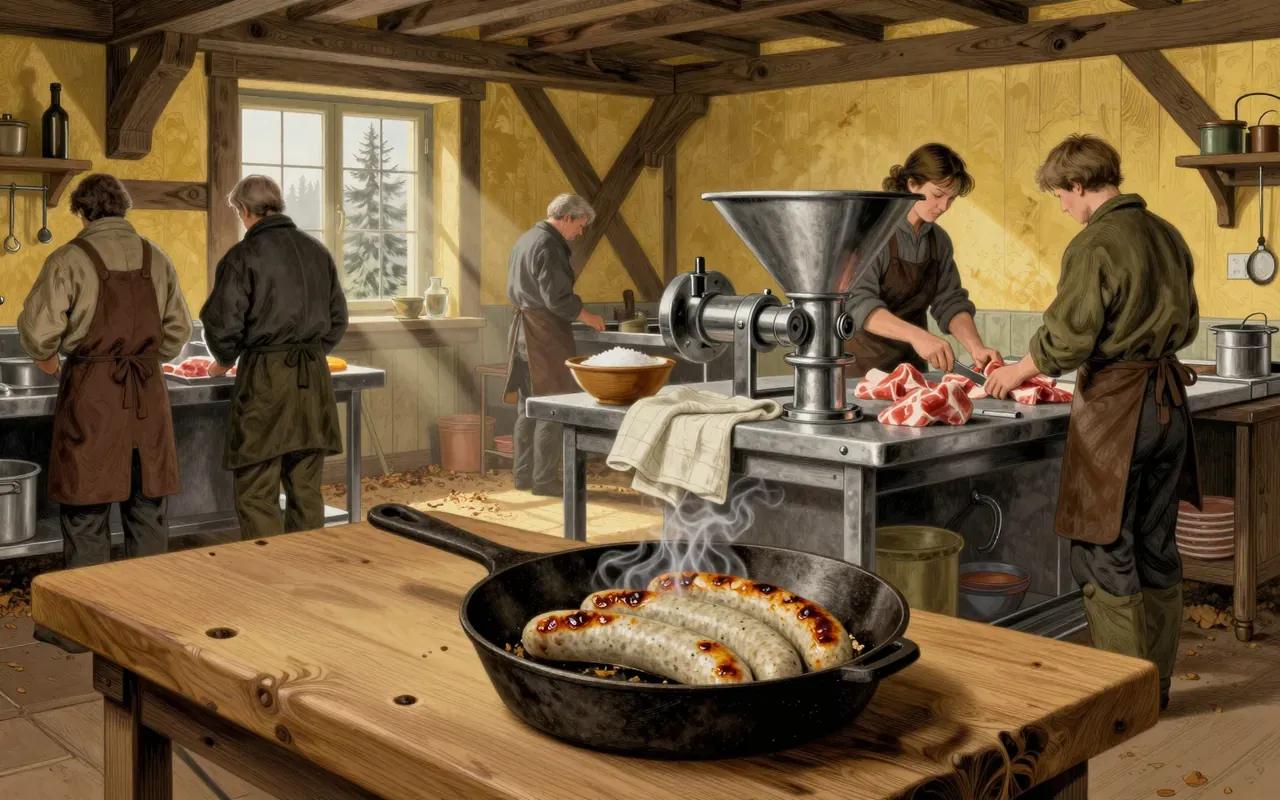
A German sausage made from pork or less commonly beef, veal, or combinations, with documented regional origins across Franconia, Thuringia, and eastern Switzerland.

Bratwurst is a German sausage with multiple documented regional origins: first recorded in Nuremberg in 1313, Coburg in 1498, Thuringia (Arnstadt) in 1404, and eastern Switzerland (St. Gallen) in 1438.

Chapters & takeaways7
  1. 0:00
    What the dish is and where it came from

    Bratwurst is a German sausage with multiple documented regional origins: first recorded in Nuremberg in 1313, Coburg in 1498, Thuringia (Arnstadt) in 1404, and eastern Switzerland (St.

  2. 0:12
    How it works, in terms someone would actually use

    The name derives from Old High German brät- (finely chopped meat) and Wurst (sausage); in modern German it is often associated with braten, meaning to pan fry or roast.

  3. 0:24
    What it gets right

    It gets right a focused meat identity—made from pork or, less commonly, beef, veal, or combinations—giving it clear, flexible protein appeal.

  4. 0:32
    What it does not

    It does not offer a non-meat option—the listed ingredients are exclusively animal-based.

  5. 0:37
    What it changed

    It changed American food culture regionally: popularized in Sheboygan County, Wisconsin, in the 1920s, then became a baseball stadium staple after its 1954 introduction at Milwaukee County Stadium.

  6. 0:48
    Who it is for, and who it is not

    It is for people seeking a meat-centric sausage; it is not for those avoiding pork, beef, or veal.

  7. 0:55
    Is it worth your time

    It is worth your time if you want a historically documented, regionally varied sausage rooted in German-speaking Europe and adapted in the U.S.
Worth your time?

Selectively. Start with the brief, then cook the parts we point at.

What works
  • It gets right a focused meat identity—made from pork or, less commonly, beef, veal, or combinations—giving it clear, flexible protein appeal.
What does not
  • It does not offer a non-meat option—the listed ingredients are exclusively animal-based.
Cook it if
    Skip it if
      The written brief1 min read

      What the dish is and where it came from

      Bratwurst is a German sausage with multiple documented regional origins: first recorded in Nuremberg in 1313, Coburg in 1498, Thuringia (Arnstadt) in 1404, and eastern Switzerland (St. Gallen) in 1438.

      How it works, in terms someone would actually use

      The name derives from Old High German brät- (finely chopped meat) and Wurst (sausage); in modern German it is often associated with braten, meaning to pan fry or roast.

      What it gets right

      It gets right a focused meat identity—made from pork or, less commonly, beef, veal, or combinations—giving it clear, flexible protein appeal.

      What it does not

      It does not offer a non-meat option—the listed ingredients are exclusively animal-based.

      What it changed

      It changed American food culture regionally: popularized in Sheboygan County, Wisconsin, in the 1920s, then became a baseball stadium staple after its 1954 introduction at Milwaukee County Stadium.

      Who it is for, and who it is not

      It is for people seeking a meat-centric sausage; it is not for those avoiding pork, beef, or veal.

      Is it worth your time

      It is worth your time if you want a historically documented, regionally varied sausage rooted in German-speaking Europe and adapted in the U.S.
      Same course · Dishes4 of 328
      Up next in Food

      Brigadeiro

      · 1:15

      A Brazilian chocolate confection made from condensed milk, cocoa powder, butter, and coated in chocolate sprinkles.

      1:15