foodbriefs
9:56in productionCh. 1 · Origin: Capri, not Italy/ 9:56 · ceiling 15 min
Dishes · Food history

Caprese salad

Caprese salad isn’t simple—it’s mercilessly specific.

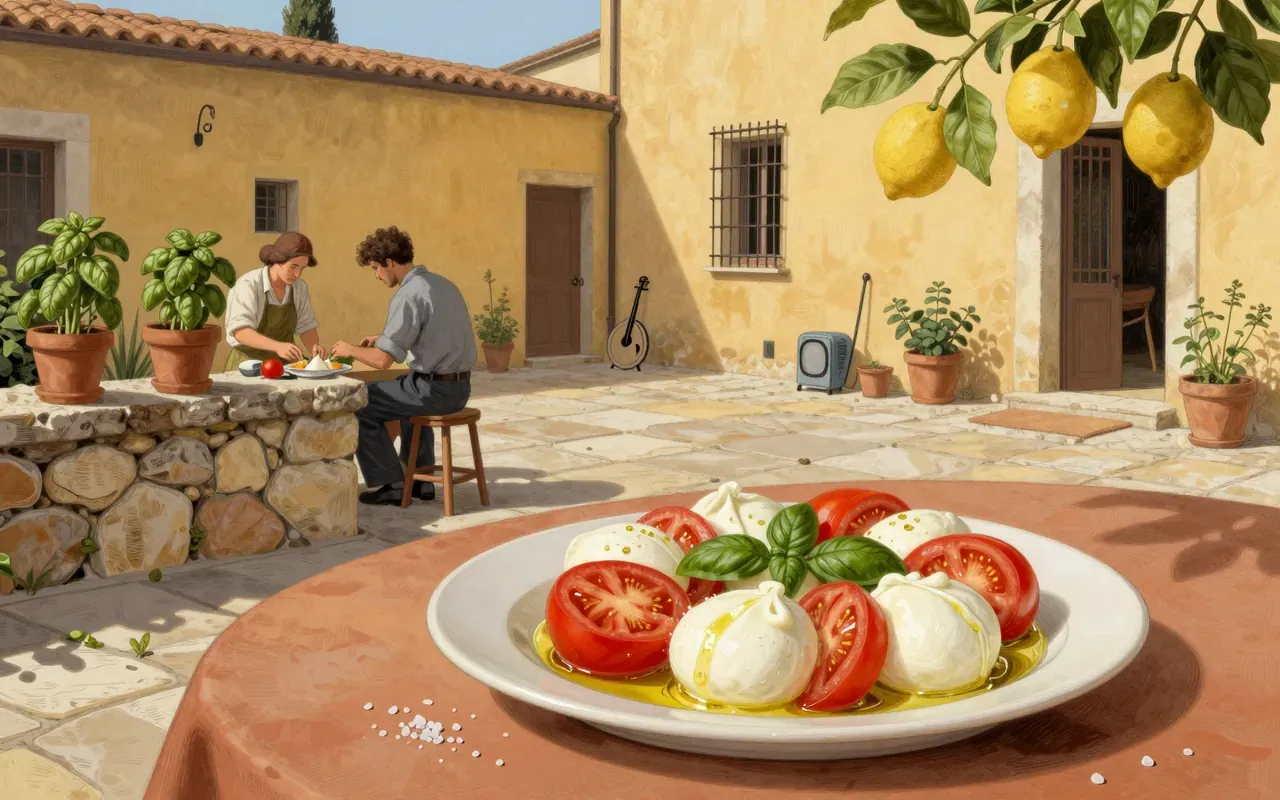
Caprese salad is a Capri-born antipasto of sliced tomato, mozzarella, and torn basil, dressed only with salt and olive oil. Its success hinges on ripeness, texture, and restraint—not technique or tradition beyond that. It became internationally known in the 1950s after serving King Farouk on Capri. It fails when ingredients are subpar or when vinegar is added. It changed how the world sees Italian food: as minimal, colourful, and effortless—but erased its island specificity in the process.

Chapters & takeaways6
  1. 0:53
    Origin: Capri, not Italy

    It is named for Capri—and born there—not as a national emblem but as a local antipasto.

  2. 2:06
    Method Is Non-Negotiable

    Slicing, alternating, and tearing—not cutting—are structural decisions, not aesthetic preferences.

  3. 3:18
    No Vinegar, No Compromise

    Vinegar breaks the dish’s balance in Italy; pepper and olives are optional, not standard.

  4. 4:35
    Fame Is Mid-Century, Not Ancient

    Its international fame began in the 1950s—not centuries ago—after serving King Farouk on Capri.

  5. 5:49
    Two Seasonings, Nothing More

    Salt and olive oil are mandatory; everything else is deviation, not variation.

  6. 7:06
    Antipasto, Not Afterthought

    It is an antipasto first—not a side, not a starter course elsewhere, not a garnish.

Worth your time?

Yes. Cook the whole thing.

4.5/ 5
What works
  • It showcases three ingredients in dialogue: the acidity of tomato, the creaminess of mozzarella, and the peppery lift of torn basil.
  • The alternating slice structure creates visual rhythm and ensures each bite includes all three.
What does not
  • It does not work with underripe tomatoes.
  • It does not work with balsamic vinegar in its traditional Italian form.
  • It does not disguise poor ingredients.
Cook it if
  • It is for people who value ingredient clarity over complexity.
  • It is not for those seeking heat, crunch, umami depth, or vinegar tang.
Skip it if
  • It is not for those seeking heat, crunch, umami depth, or vinegar tang.
The written brief1 min read

What the dish is and where it came from

A cold antipasto from Capri, composed of sliced fresh mozzarella, tomatoes, and torn basil, seasoned with salt and olive oil.

How it works, in terms someone would actually use

Slice ripe tomatoes and fresh mozzarella into even rounds. Alternate them on a plate. Tear basil leaves by hand—not cut—and tuck between slices. Drizzle with olive oil and season with salt. In Italy, skip vinegar to protect the mozzarella’s mild, milky taste.

What it gets right

It showcases three ingredients in dialogue: the acidity of tomato, the creaminess of mozzarella, and the peppery lift of torn basil. The alternating slice structure creates visual rhythm and ensures each bite includes all three.

What it does not

It does not tolerate underripe tomatoes or rubbery mozzarella. It does not work with balsamic vinegar in its traditional Italian form. It does not disguise poor ingredients.

What it changed

It turned a regional antipasto into a global shorthand for Italian simplicity—sparking adaptations like Caprese pizza and sandwiches—but flattened its origins into a generic ‘Italian salad’ divorced from Capri.

Who it is for, and who it is not

It is for people who value ingredient clarity over complexity. It is not for those seeking heat, crunch, umami depth, or vinegar tang.

Is it worth your time

Yes—if you have ripe summer tomatoes, fresh mozzarella, and basil at their peak. It demands no technique, only timing and restraint. Without those, it collapses into wet, bland layers.

Same course · Dishes4 of 485
Up next in Food

Moambe chicken

· 10:18

Palm butter—not tomato or peanut—makes this the definitive Central African stew.

10:18