Cacio e pepe is a pasta dish typical of Lazio, Italy.
0:09
How it works, in terms someone would actually use
The pasta cooks in boiling salted water.
0:20
What it gets right
The heat melts the cheese.
0:28
What it does not
Pecorino romano can easily become lumpy instead of smooth and creamy.
0:32
What it changed
It illustrates a Lazio pasta tradition built around pecorino romano and black pepper, with pasta cooking water also used in the preparation.
0:41
Who it is for, and who it is not
It is for people who want a dish built around cheese and black pepper.
0:51
Is it worth your time
It is worth your time if you want a simple pasta dish using only pecorino romano, black pepper, starchy water, and tonnarelli or spaghetti.
Worth your time?
Selectively. Start with the brief, then cook the parts we point at.
What works
The heat melts the cheese. The starches in the cooking water help bind the pepper and cheese to the pasta.
What does not
Pecorino romano can easily become lumpy instead of smooth and creamy.
Cook it if
Skip it if
The written brief1 min read
What the dish is and where it came from
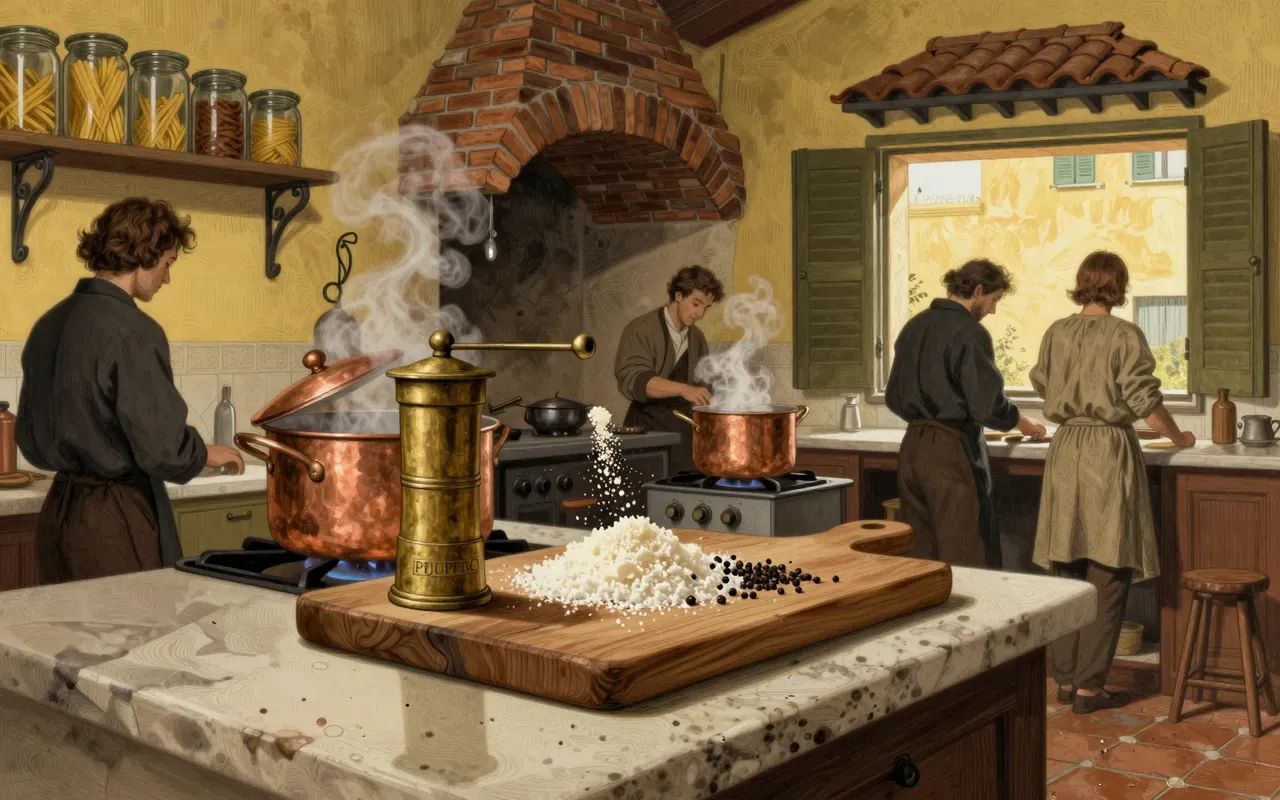
Cacio e pepe is a pasta dish typical of Lazio, Italy. It contains grated pecorino romano, black pepper, and tonnarelli or spaghetti.
How it works, in terms someone would actually use
The pasta cooks in boiling salted water. Then it’s poured into a bowl with grated pecorino romano and black pepper, along with a little hot, starchy cooking water.
What it gets right
The heat melts the cheese. The starches in the cooking water help bind the pepper and cheese to the pasta.
What it does not
Pecorino romano can easily become lumpy instead of smooth and creamy.
What it changed
It illustrates a Lazio pasta tradition built around pecorino romano and black pepper, with pasta cooking water also used in the preparation.
Who it is for, and who it is not
It is for people who want a dish built around cheese and black pepper. It is not for people avoiding dairy or black pepper.
Is it worth your time
It is worth your time if you want a simple pasta dish using only pecorino romano, black pepper, starchy water, and tonnarelli or spaghetti.
A green salad of romaine lettuce and croutons dressed with lemon juice, olive oil, eggs, Worcestershire sauce, anchovies, garlic, mustard, Parmesan, and black pepper.