9:19in productionCh. 1 · What ‘cooked cream’ really means/ 9:19 · ceiling 15 min
Culture · Dishes
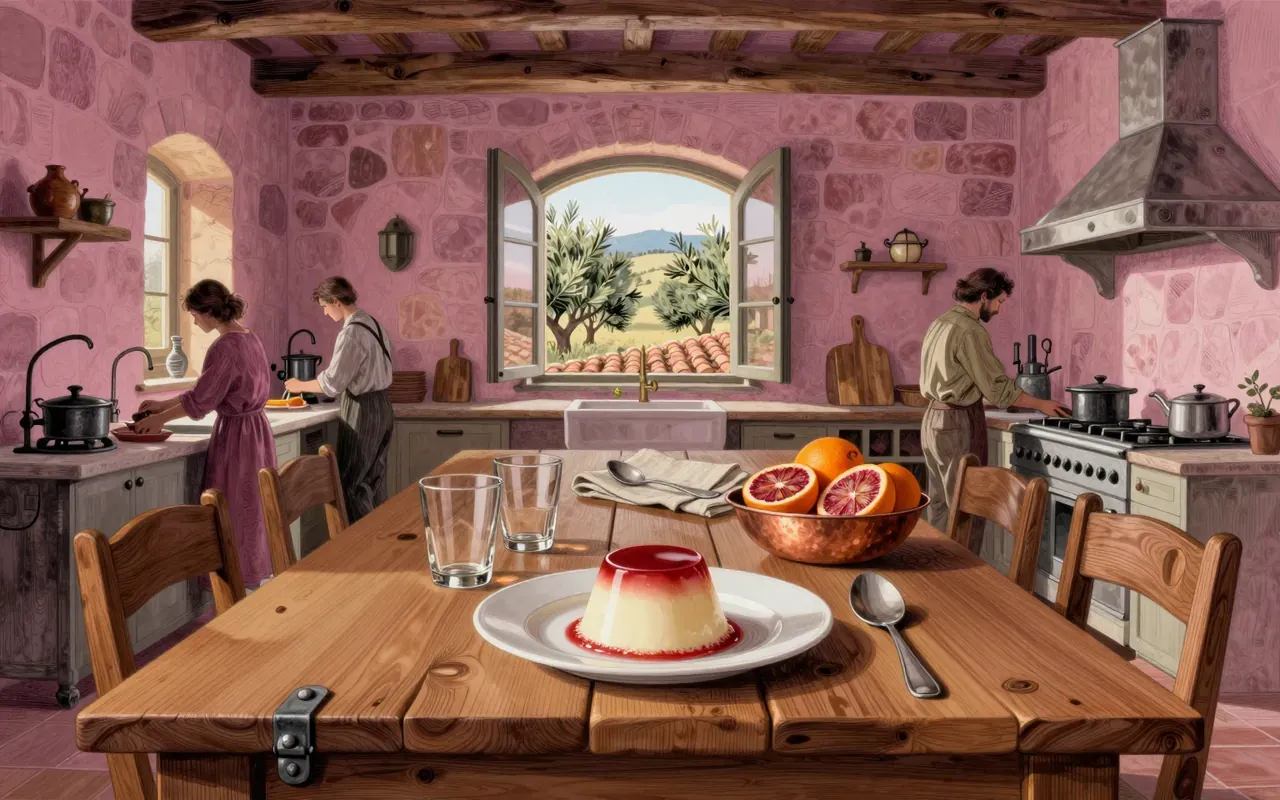
Panna cotta
A dessert named 'cooked cream' that isn’t cooked—and celebrated as traditional despite vanishing from print for nearly a century.
Panna cotta is a technically simple, historically ambiguous dessert whose name misleads and whose tradition was formalised long after its first documented use.
It’s not cooked—just warmed enough to dissolve gelatin and sugar.
1:52
A tradition invented in print
The name didn’t appear in Italian cookbooks before the 1960s—but Piedmont listed it as traditional in 2001.
3:28
Precursors without lineage
Latte inglese (1879) and Carême’s fromage bavarois predate it—but neither used the name or identical method.
5:24
Not a custard—never was
Calling it a custard is wrong: true custard uses egg yolks, not gelatin.
Worth your time?
Yes. Cook the whole thing.
3.5/ 5
What works
as a test of culinary literacy
as a case study in naming versus method
What does not
invent
define
displace
start
Cook it if
home cooks
menu writers
food historians
Skip it if
egg-allergy sufferers who assume it's egg-free without checking
The written brief1 min read
What the thing is
Panna cotta is a gelatin-set dessert made by warming sweetened cream just enough to dissolve gelatin and sugar, then chilling it in a mould.
Where it came from
It emerged in Piedmont, though the name appears in Italian cookbooks only from the 1960s; precursors include the 1879 latte inglese and Carême’s fromage bavarois.
What it gets right
It delivers clean, unadorned dairy luxury with minimal technique. Its gelatin set is reliable, neutral, and forgiving.
What it gets wrong
Its name falsely implies cooking. It misleads by sounding like a custard while rejecting egg-thickening entirely.
Why it matters now
It exposes the gap between culinary marketing and technical honesty—especially as ‘no-bake’ and ‘easy’ labels flatten real distinctions in thickening methods.
Is it worth your time
Yes—if you care about how food names obscure method, or how regional traditions are retroactively canonised.