What the thing is
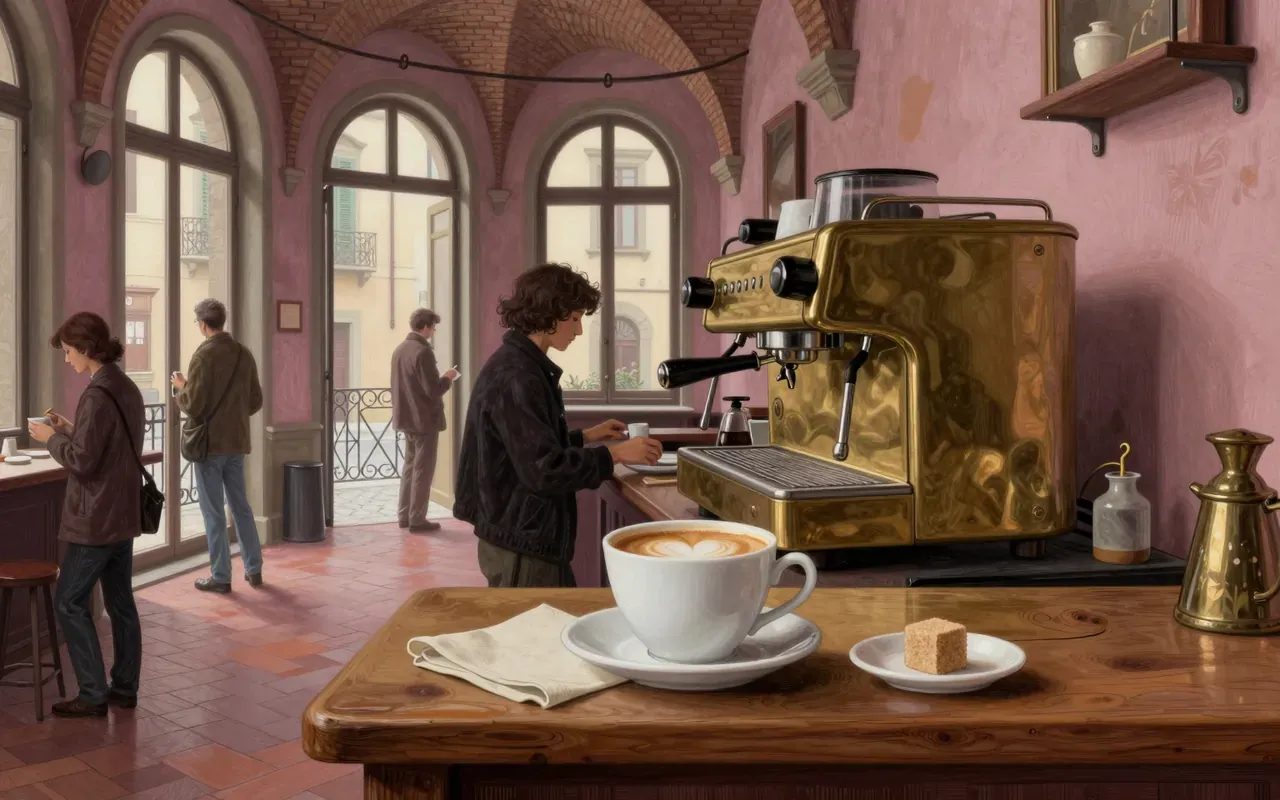
A 150–180 ml espresso-based drink. One-third espresso. One-third steamed milk. One-third milk foam. Served in a handled cup.
Where it came from
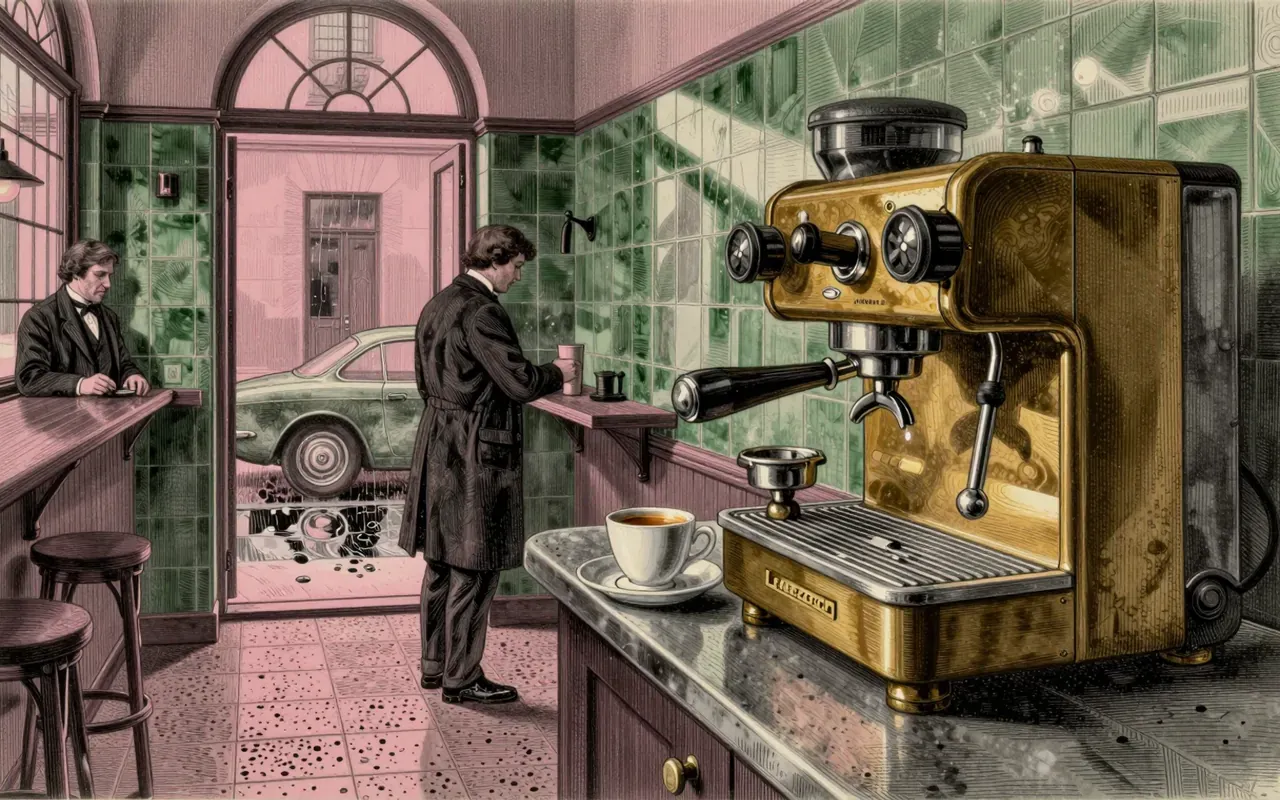
Vienna, possibly 18th century, as ‘Kapuziner’ with whipped cream and spices. Named for Capuchin friars’ brown habits. Appeared in 19th-century central Italy as black coffee with drops of milk. Evolved in Trieste and other Italian-speaking parts of the Austro-Hungarian Empire in the early 20th century, after espresso machines arrived.
What it gets right
It fixes coffee’s bitterness with milk’s sweetness and foam’s texture. It delivers caffeine fast, in a small, warm, handle-equipped cup. It enforces proportion: equal thirds espresso, steamed milk, foam.
What it gets wrong
It pretends to be Italian tradition while originating in Viennese coffeehouses under the Austro-Hungarian Empire. Its modern form postdates espresso machines—not ancient ritual.
Why it matters now
It reveals how colonial infrastructure (Austro-Hungarian coffeehouse networks), industrial technology (espresso machines), and linguistic borrowing (German → Italian) coalesced into a global default—without consensus, only repetition.
Is it worth your time
Yes—if you care how a drink’s name, size and foam encode centuries of empire, migration and machine. It is not a lifestyle choice. It is a document.