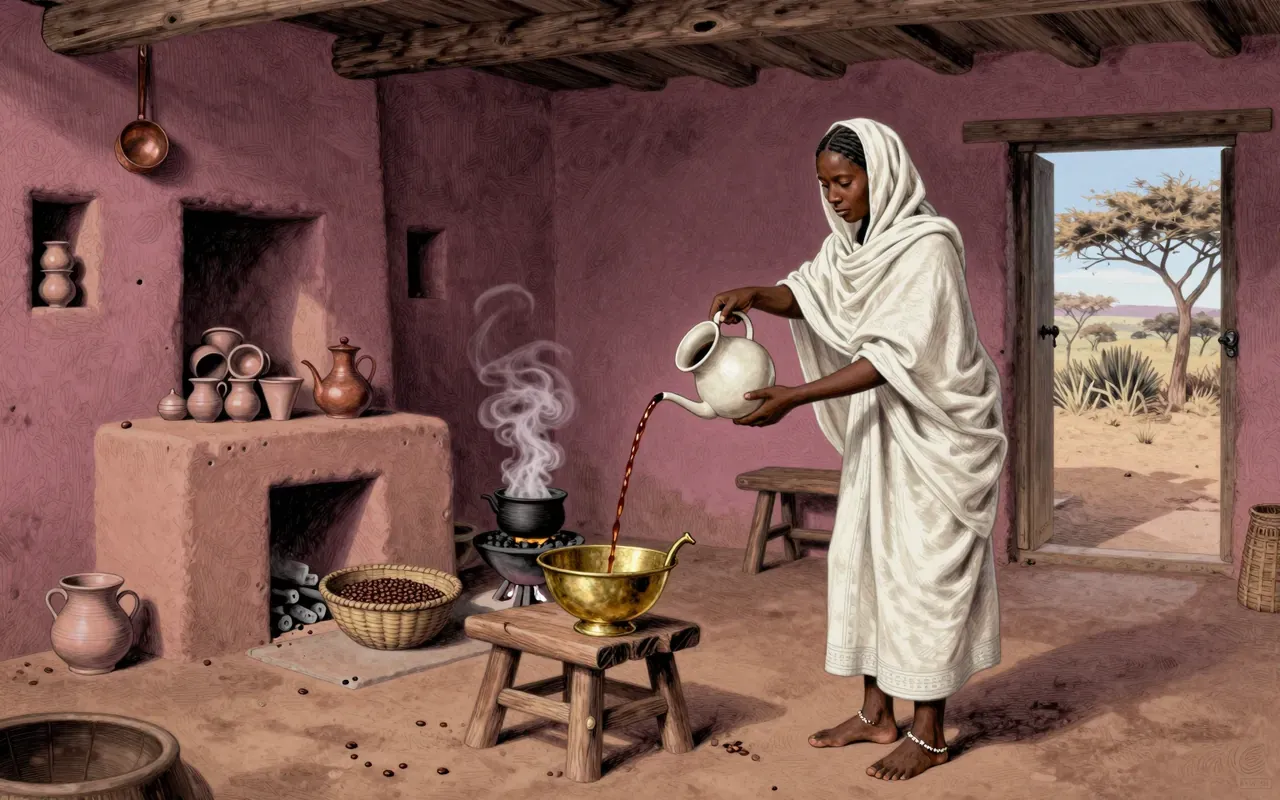
What the thing is
Coffee is a dark, bitter beverage brewed from roasted and ground seeds of the Coffea plant. It contains caffeine and has a stimulating effect on humans.
The seeds come from coffee cherries, the fruit of the Coffea plant, and are separated to give unroasted green beans. Roasting changes the bean physically and chemically: it loses weight as moisture goes, swells in volume, and the heat breaks starches down into sugars that brown and darken the bean.
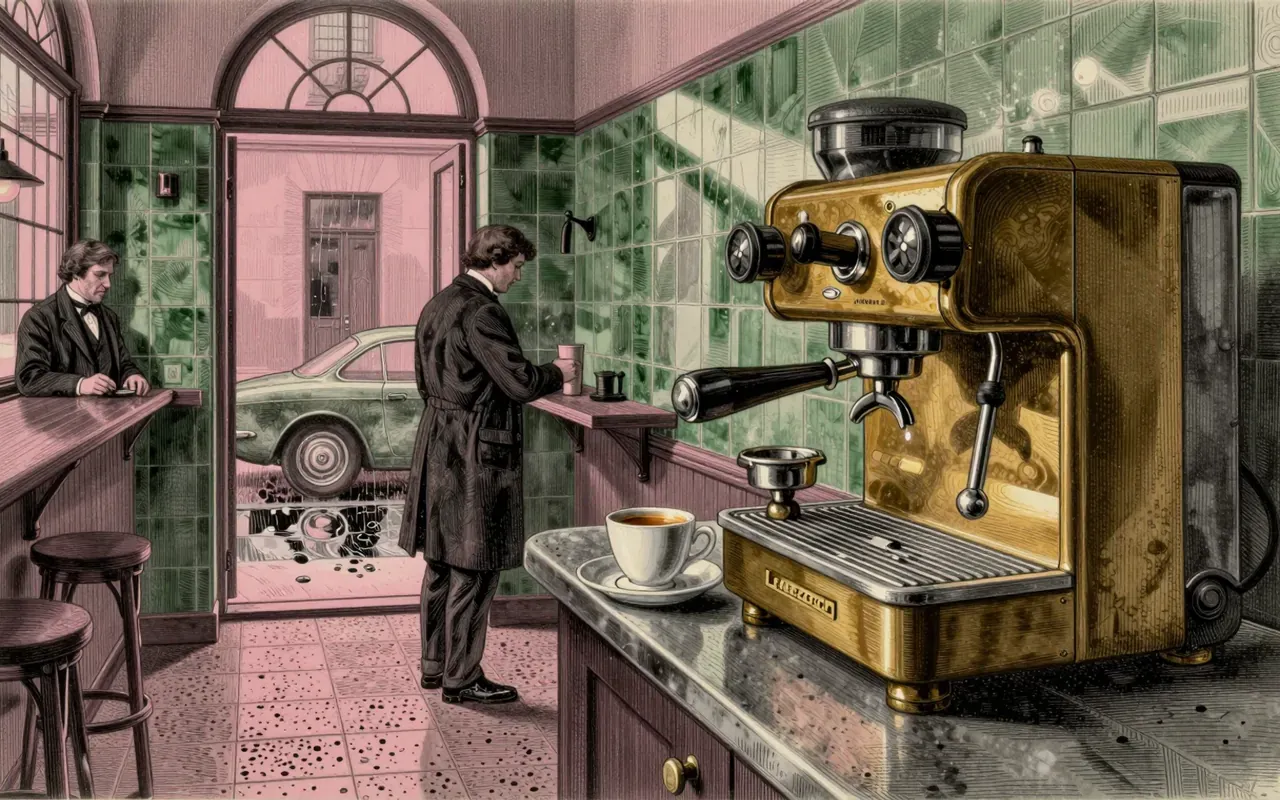
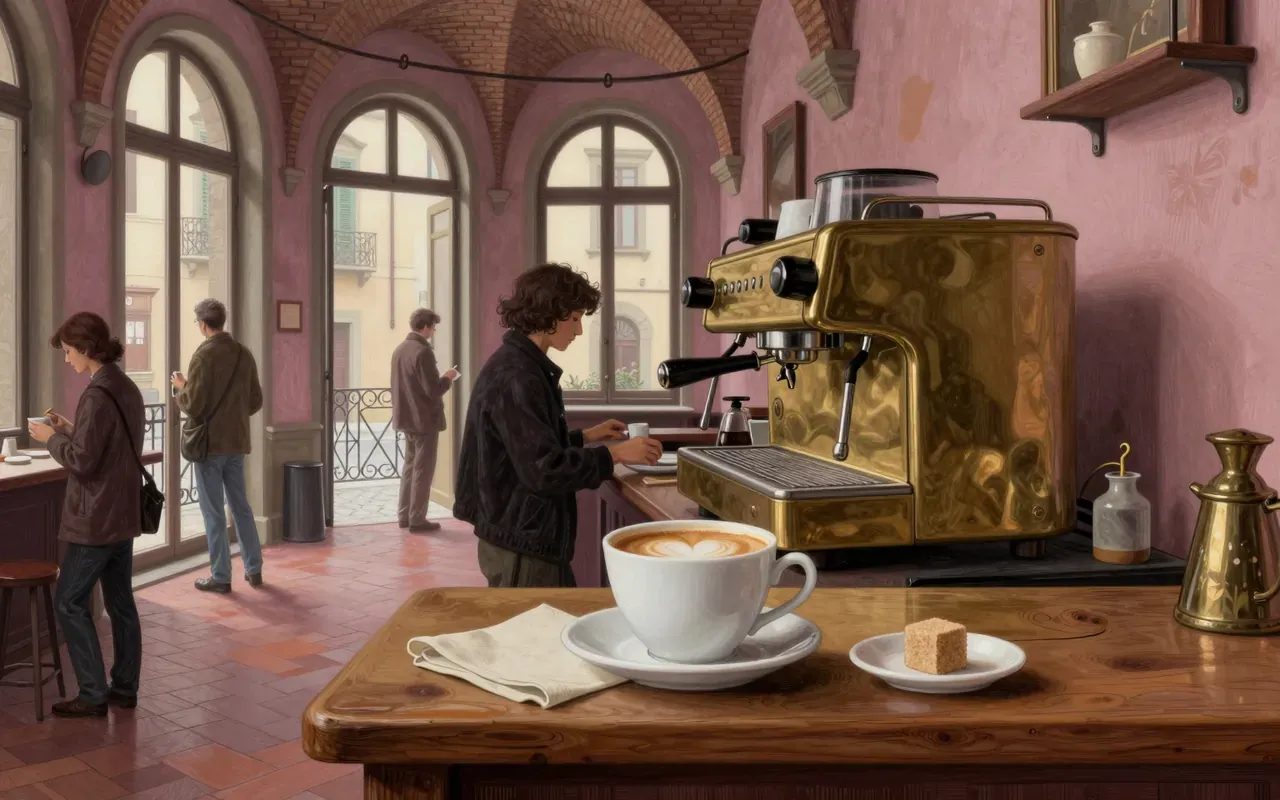
Brewing is where the grind and the water meet. Almost every method grinds the beans and mixes them with hot water long enough for flavour to emerge but not so long that bitter compounds are drawn out. Boiling is the earliest method, and Turkish coffee is an example: a fine powder is brought to the boil very briefly in a cezve. Espresso forces hot pressurised water through finely ground coffee and is far more concentrated than gravity brewing, topped by a reddish-brown foam called crema.
Where it came from
Coffee originated in southern Arabia. The earliest documented use was among Sufis in Yemen in the mid-15th century. Yemen supplied most of the world’s coffee until the end of the 17th century.
The record is thinner than the legends suggest. The story of the goatherd Kaldi does not appear before 1671 and is likely apocryphal, and there is no confirmed historical or archaeological evidence of coffee as a drink before the 15th century. By the late 15th century it was well established among Sufi communities in Yemen, who used it to stay awake for their religious rituals. In the late 16th century Yemen developed a booming coffee economy, with farmers growing coffee on mountain terraces and Mocha as the world’s largest shipping port for it.
What it gets right
Coffee delivers caffeine reliably. Its bitterness and darkness are consistent outcomes of roasting and brewing. It is tied to Red Sea food traditions, not invented in Europe.
What it gets wrong
It implies universality. It was not global until after the 17th century. Its early use was narrow: Sufi practitioners in Yemen, not broad public consumption.
Its acceptance was also contested. The permissibility of coffee was debated in the Islamic world in the early 16th century until it was accepted by the 1550s, and Pope Clement VIII declared it a Christian beverage in 1600 despite appeals to ban the “Muslim drink”. King Charles II of England briefly outlawed coffeehouses to quell perceived rebellion.
Why it matters now
It reveals how regional food practices—rooted in ritual, geography and trade—can scale globally without intention or ideology. Its history contradicts myths of invention as individual genius.
The cost is on record too. Over 100 million people in developing countries depend on coffee as their primary income, yet coffee farmers disproportionately live in poverty, and in Brazil massive tracts of rainforest were cleared for plantations.
Is it worth your time
Yes—if you want to understand how a single food tradition seeded a global commodity without central design.