foodbriefs
9:04in productionCh. 1 · What It Is/ 9:04 · ceiling 15 min
Dishes

Affogato

It drowns gelato on purpose—and that single act redefined what a café dessert could be.

Affogato is a two-ingredient Italian café dessert from the mid-1900s: gelato—fiordilatte or vanilla—topped with hot espresso. Its name means 'drowned'. It relies entirely on thermal contrast. No inventor is known. English dictionaries first recorded the word in 1988.

Chapters & takeaways4
  1. 0:45
    What It Is

    Two ingredients. One action: pouring hot espresso over cold gelato.

  2. 2:13
    Where It Came From

    Born in Italian cafés in the mid-1900s, where espresso and gelato were already staples.

  3. 3:46
    How It Works

    Heat—not mixing—is the technique. The espresso melts the gelato just enough to blend without blurring the contrast.

  4. 5:24
    When It Entered English

    English dictionaries first recorded 'affogato' in 1988—decades after it was served in Italy.

Worth your time?

Yes. Cook the whole thing.

4.5/ 5
What works
  • uses heat as an ingredient
  • reframes gelato as a textural counterpoint to coffee
  • delivers contrast in under thirty seconds
What does not
  • requires skill
  • tolerates variation in core method
Cook it if
  • people who want immediate, calibrated contrast—bitter and sweet, hot and cold, creamy and sharp—in one bite
Skip it if
  • those who need ritual, technique or narrative
The written brief1 min read

What the dish is and where it came from

Affogato is an Italian café dessert from the mid-1900s. It consists of gelato—typically fiordilatte or vanilla—topped with espresso. Its name means ‘drowned’.

How it works, in terms someone would actually use

A scoop of gelato—fiordilatte or vanilla—is topped with hot espresso. The heat melts the gelato just enough to release its dairy sweetness while the espresso cuts through with bitterness and caffeine.

What it gets right

It uses heat as an ingredient: the espresso’s temperature is the sole agent of transformation, melting the gelato just enough to unify the two elements without homogenising them.

What it does not

It does not require skill to assemble, nor does it tolerate variation in core method: no whisking, no folding, no chilling after assembly.

What it changed

It reframed gelato not as a standalone treat but as a textural counterpoint to coffee—shifting how Italian cafés serve both.

Who it is for, and who it is not

It is for people who want immediate, calibrated contrast—bitter and sweet, hot and cold, creamy and sharp—in one bite. It is not for those who need ritual, technique or narrative.

Is it worth your time

Yes, if you want a dessert that delivers contrast in under thirty seconds and requires no cooking, only timing and temperature control.
Same course · Dishes4 of 485
9:19
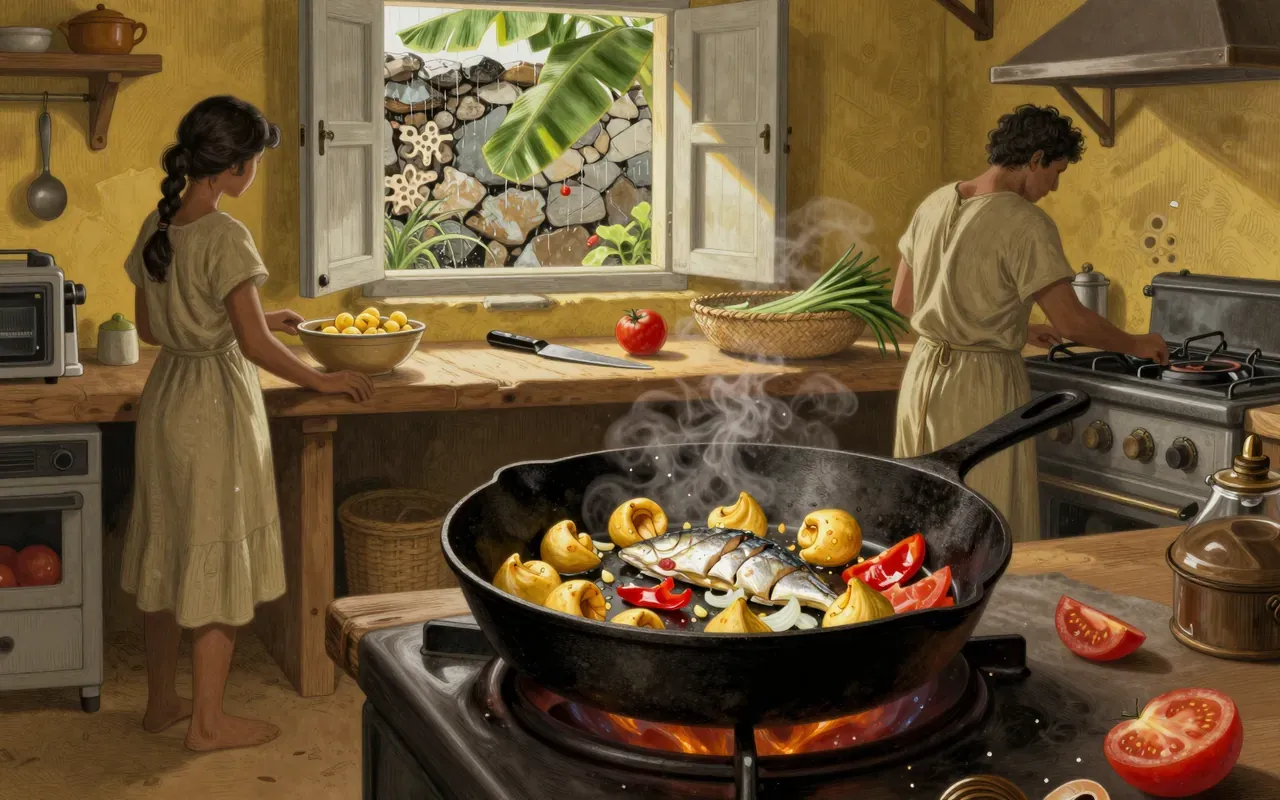
Ackee and saltfishAckee and saltfish is Jamaica’s national dish. It combines ackee—the national fruit, brought from Ghana before 1725—with salted cod introduced for enslaved people as long-lasting protein. It is sautéed, not stewed: boiled ackee meets desalted cod, onions, Scotch bonnet, and tomato. It gets the balance of salt, heat, and creaminess right when timed precisely. It does not reflect West African foodways—where ackee is mostly medicinal—but asserts Jamaican sovereignty over two transplanted staples. Worth your time if you treat it as a technical dish with historical weight, not as folklore.
12:20
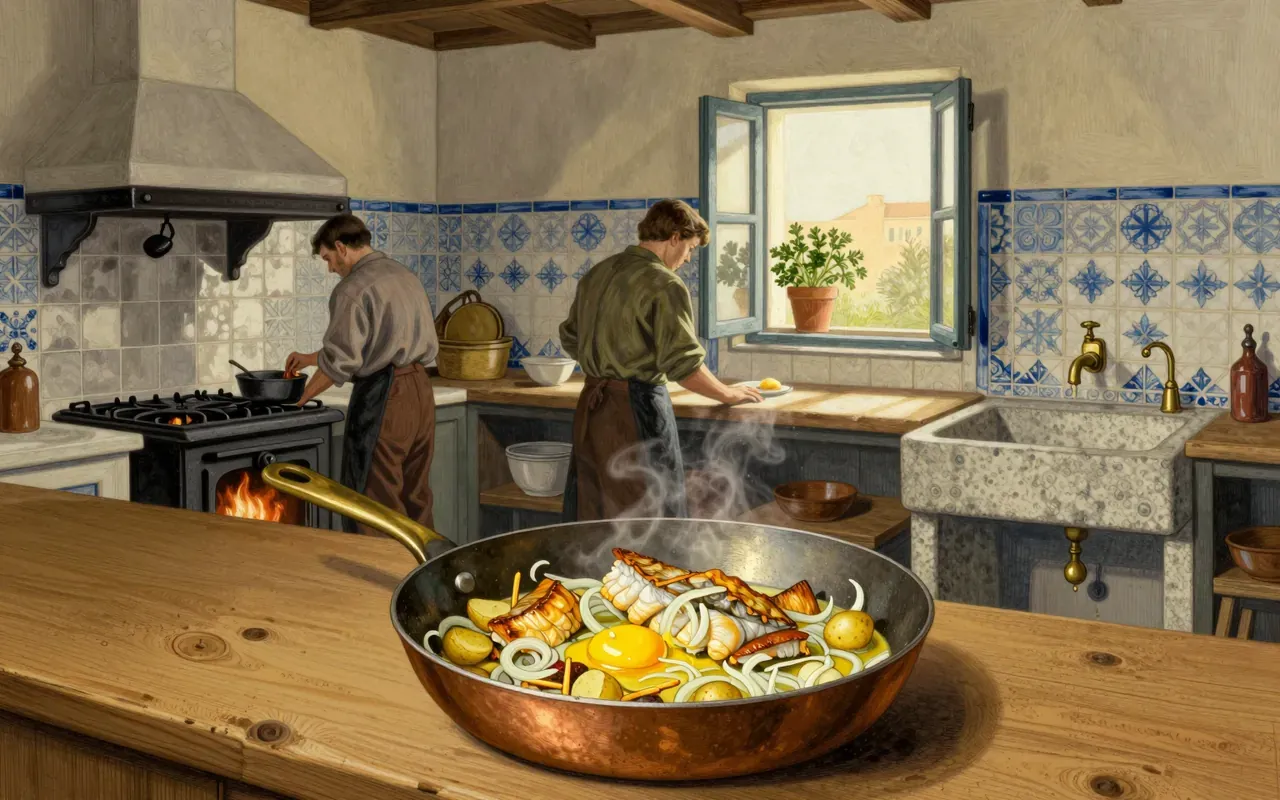
Bacalhau à BrásBacalhau à Brás is a Lisbon dish from the second half of the 19th century. It is shredded salted cod, onions, matchstick-sized fried potatoes, and eggs — bound, not scrambled — and finished with black olives and fresh flat-leaf parsley.
8:56
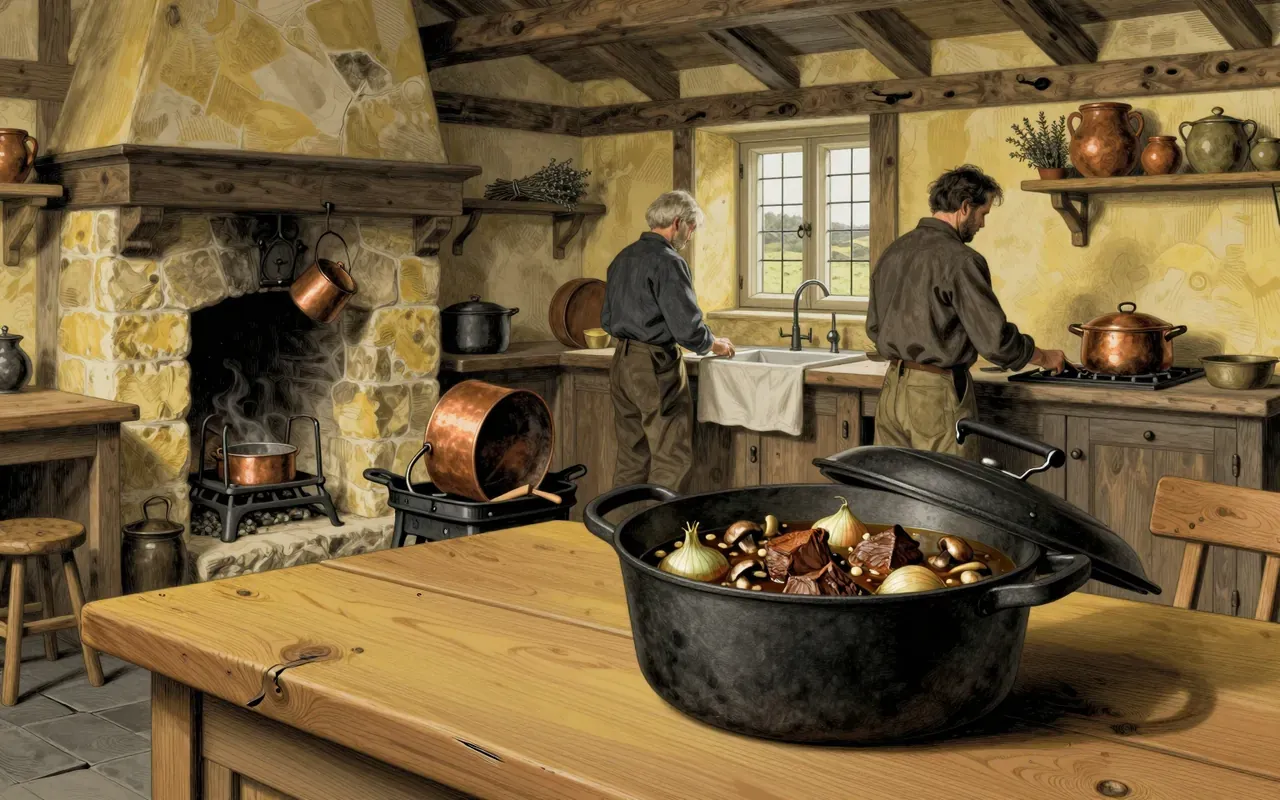
Beef bourguignonBeef bourguignon is a French stew of beef braised in red wine and beef stock, with carrots, onions, garlic, bouquet garni, pearl onions, and mushrooms. It was first documented in 1867. Though associated with Burgundy, it is probably not regional to that area.
11:15
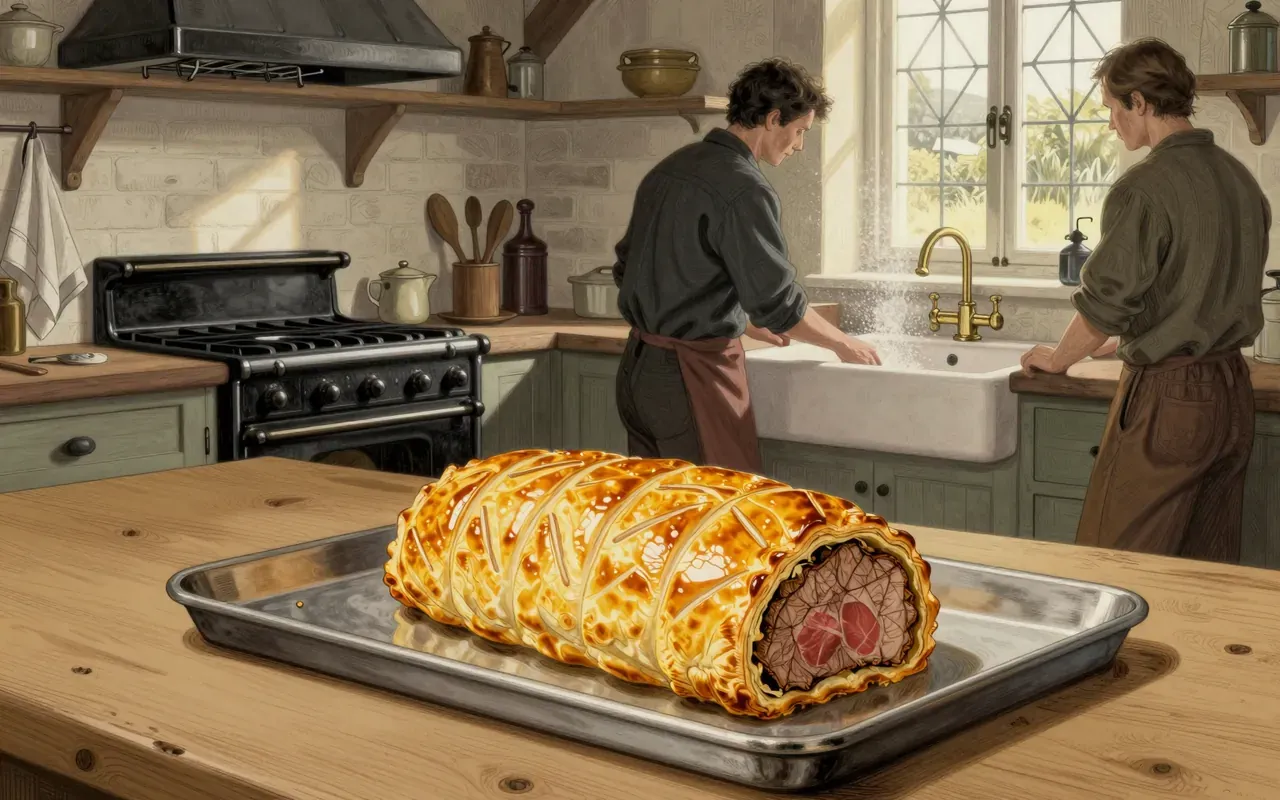
Beef WellingtonBeef Wellington is a baked dish of beef fillet and duxelles wrapped in puff pastry. It appeared in an 1891 Austrian cookbook as Filet à la Wellington, in an 1899 Hamburg-America line menu, and in the US in 1899. Its name is presumed to reference Arthur Wellesley, 1st Duke of Wellington, but the connection is unknown.
Up next in Food

Bacalhau à Brás

· 12:20

A salt-and-egg binding trick from 19th-century Lisbon that turns three cheap things into something urgent and complete.

12:20