8:28in productionCh. 1 · National status/ 8:28 · ceiling 15 min
Dishes
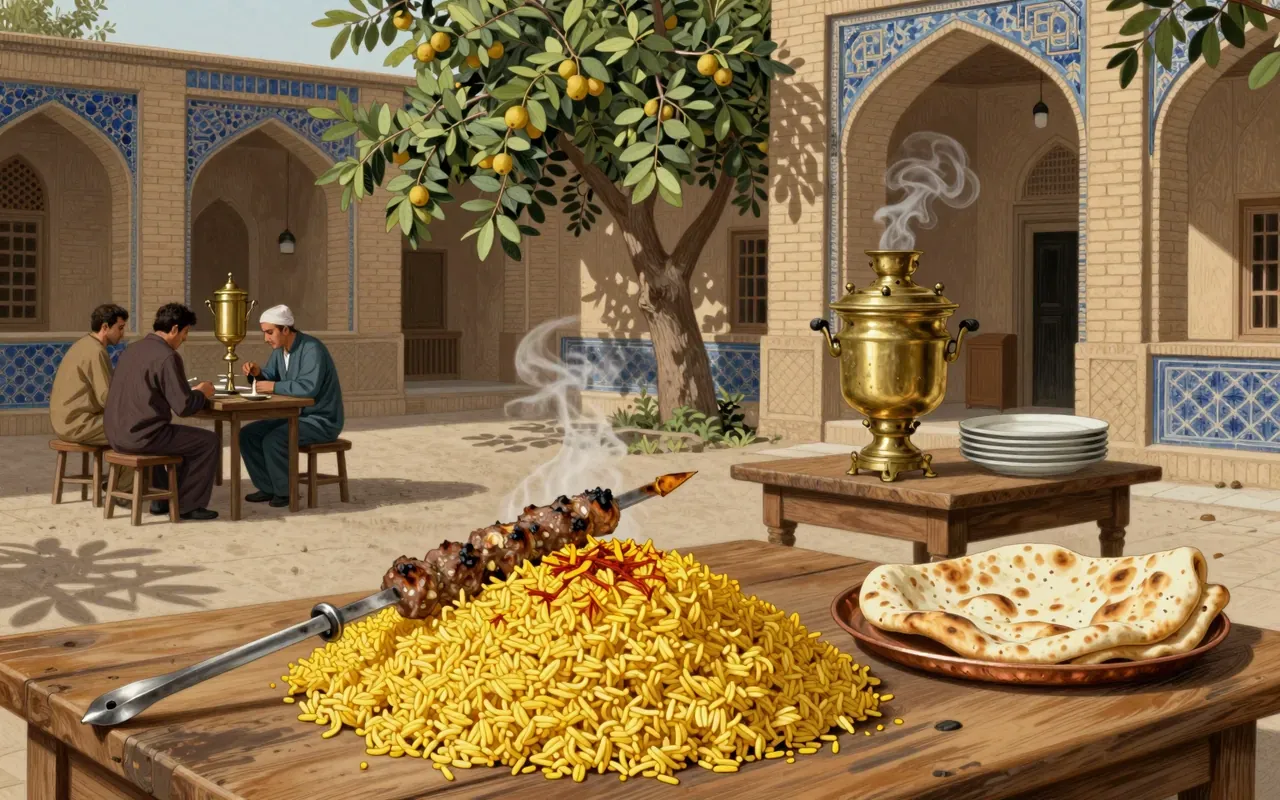
Chelow kabab
A national dish that treats the skewer like a chisel — it carves presence out of rice.
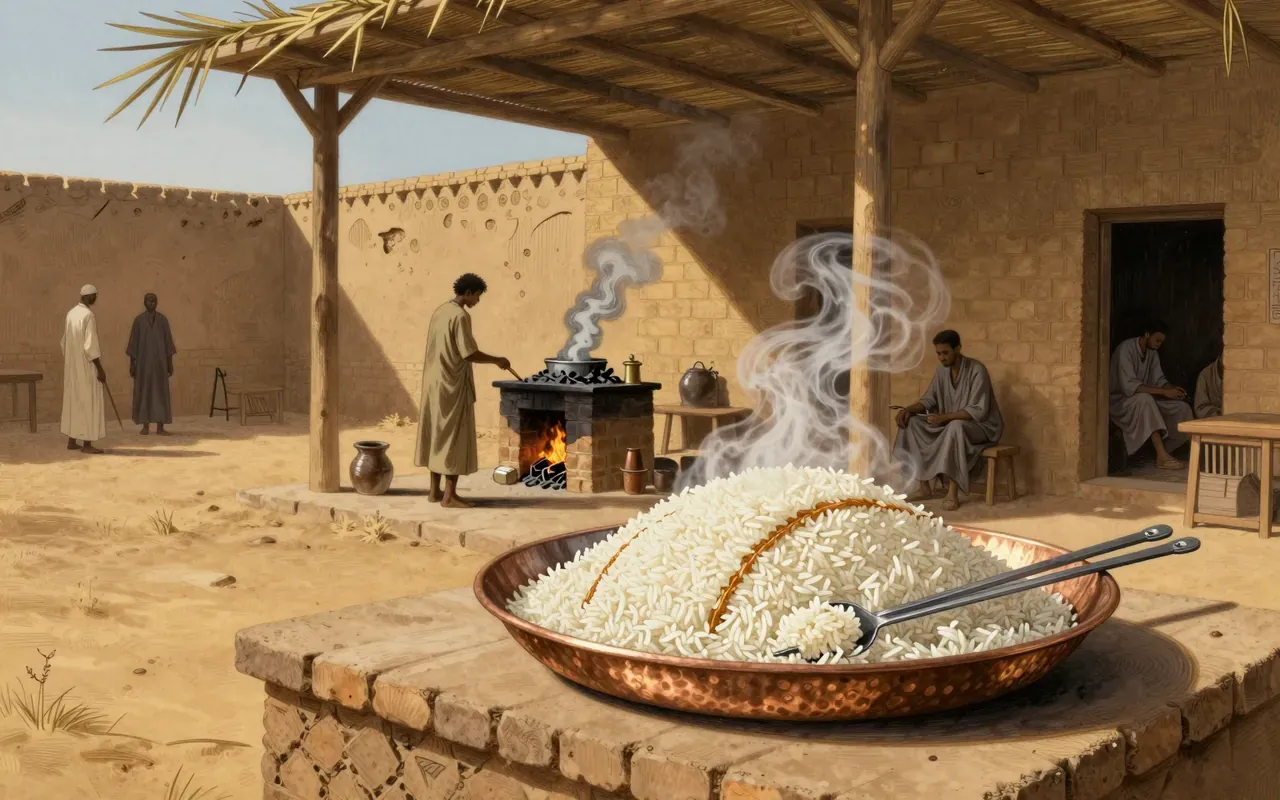
Chelow kabab is Iran’s national dish. It likely began in the Qajar dynasty. It is steamed rice and skewered kabab, served with flat bread. The skewer is placed onto rice, then pulled out while holding the kabab down with bread. Its ritual is precise, its ingredients few, its authority absolute.
It is Iran’s national dish — not aspirational, not regional, but definitive.
2:02
Qajar origins
Its roots lie in the Qajar dynasty — a period of courtly refinement, not peasant origin.
3:33
The skewer ritual
The skewer is removed live, with bread holding the kabab — a single decisive motion defines the plate.
5:14
Ritual and sides
It is never eaten alone. Accompaniments and sequence are part of the dish’s grammar.
Worth your time?
Yes. Cook the whole thing.
4.5/ 5
What works
It establishes hierarchy: rice as canvas, kabab as hero, bread as implement.
The steam from rice softens the kabab’s crust just enough.
The skewer removal leaves clean, upright portions.
What does not
It does not disguise its simplicity.
It offers no sauce, no slow braise, no layered spice paste.
It relies entirely on meat quality, rice texture and timing.
Cook it if
It is for eaters who value precision of gesture and clarity of ingredient.
It is not for those who need narrative, fusion, or explanation.
Skip it if
It is not for those who need narrative, fusion, or explanation.
The written brief1 min read
What the dish is and where it came from
Chelow kabab is Iran’s national dish. It likely originated during the Qajar dynasty. It consists of steamed rice and grilled skewered kabab, served with flat bread and traditional accompaniments.
How it works, in terms someone would actually use
Chelow kabab is steamed rice topped with skewered Iranian kebab. The skewer is placed directly onto the rice, then pulled out while holding the kabab down with flat bread — typically lavash.
What it gets right
It establishes hierarchy: rice as canvas, kabab as hero, bread as implement. The steam from rice softens the kabab’s crust just enough. The skewer removal leaves clean, upright portions.
What it does not
It does not disguise its simplicity. It offers no sauce, no slow braise, no layered spice paste. It relies entirely on meat quality, rice texture and timing.
What it changed
It codified a national presentation standard: kabab served hot onto rice, skewer removed in one motion, bread as tool not garnish.
Who it is for, and who it is not
It is for eaters who value precision of gesture and clarity of ingredient. It is not for those who need narrative, fusion, or explanation.
Is it worth your time
Yes, if you want a dish defined by ritual, contrast and immediacy. No, if you expect complexity beyond texture, smoke and grain.