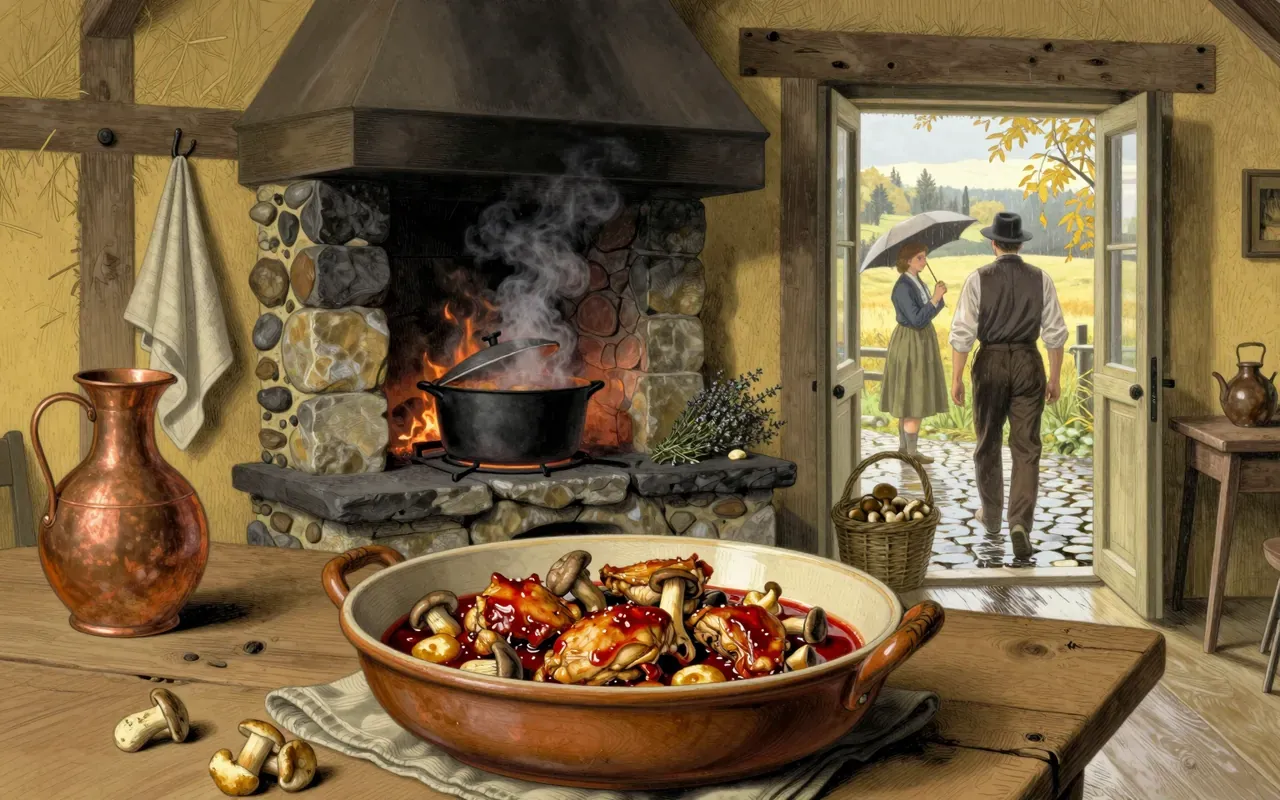
What the dish is and where it came from
Coq au vin is a French braised poultry dish. It originates in France. Regional variants exist across France, using local wines like vin jaune, riesling, or Champagne. It existed as a rustic preparation before being documented in the early 20th century.
How it works, in terms someone would actually use
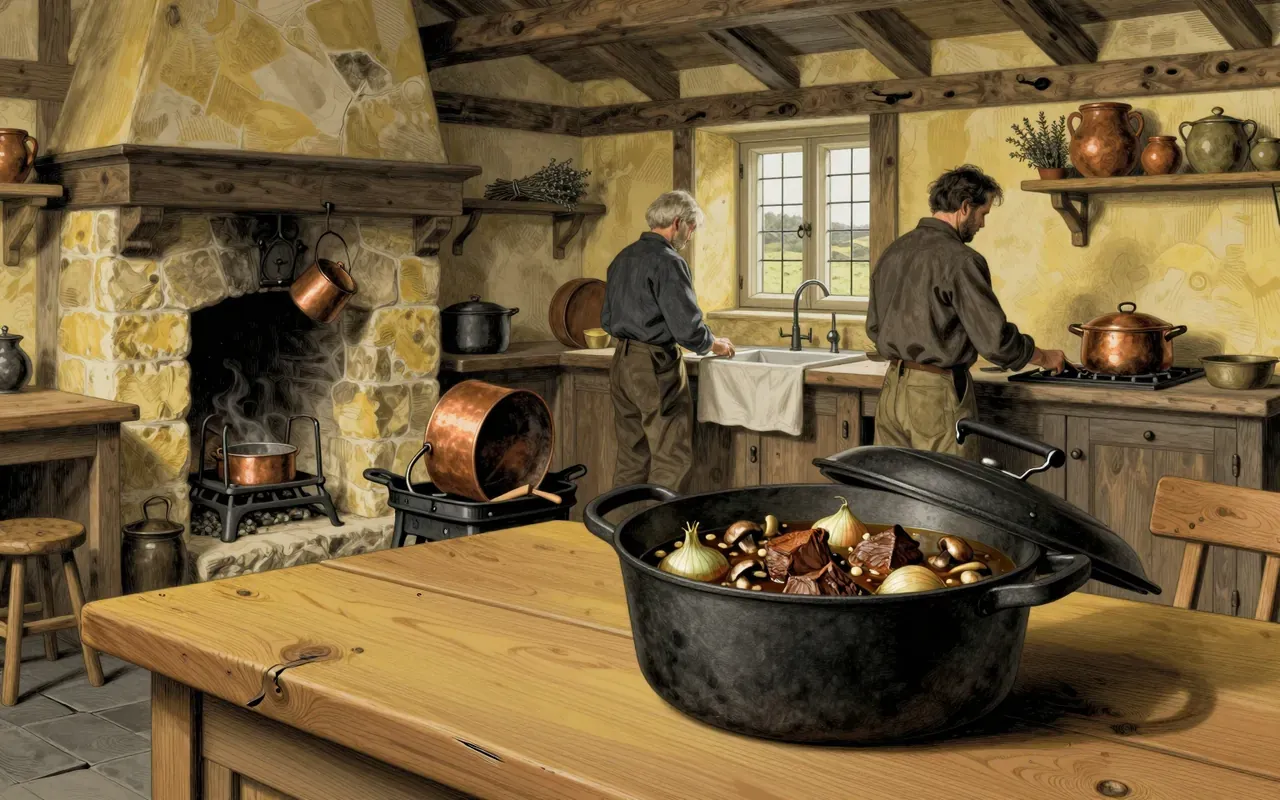
The chicken is seared in fat, then slowly simmered in red wine until tender. Lardons, mushrooms, and garlic are added. Seasoning comes from a bouquet garni of thyme, parsley, and bay leaf. The sauce is thickened either with a roux or by adding blood at the end.
What it gets right
It uses wine as both solvent and seasoning—softening connective tissue while layering acidity and tannin. Searing first builds fond; slow simmering dissolves collagen. The bouquet garni gives clean herbal lift without competing with wine or meat.
What it does not
It does not require rooster. It does not mandate Burgundy. It does not rely on a single thickening method. It is not bound to one region or era of documentation.
What it changed
It shifted rustic poultry preservation into a structured, wine-led braise—elevating tough rooster into a dish defined by regional wine identity rather than mere necessity.
Who it is for, and who it is not
It is for cooks who understand that wine is an active ingredient—not just liquid—and who respect the difference between simmering and boiling. It is not for those seeking speed, minimal equipment, or neutral flavours.
Is it worth your time
Yes—if you want a deeply flavoured, wine-infused braise that rewards patience and precise heat control. It demands attention during searing and simmering, but delivers consistent richness when executed well.