What the thing is
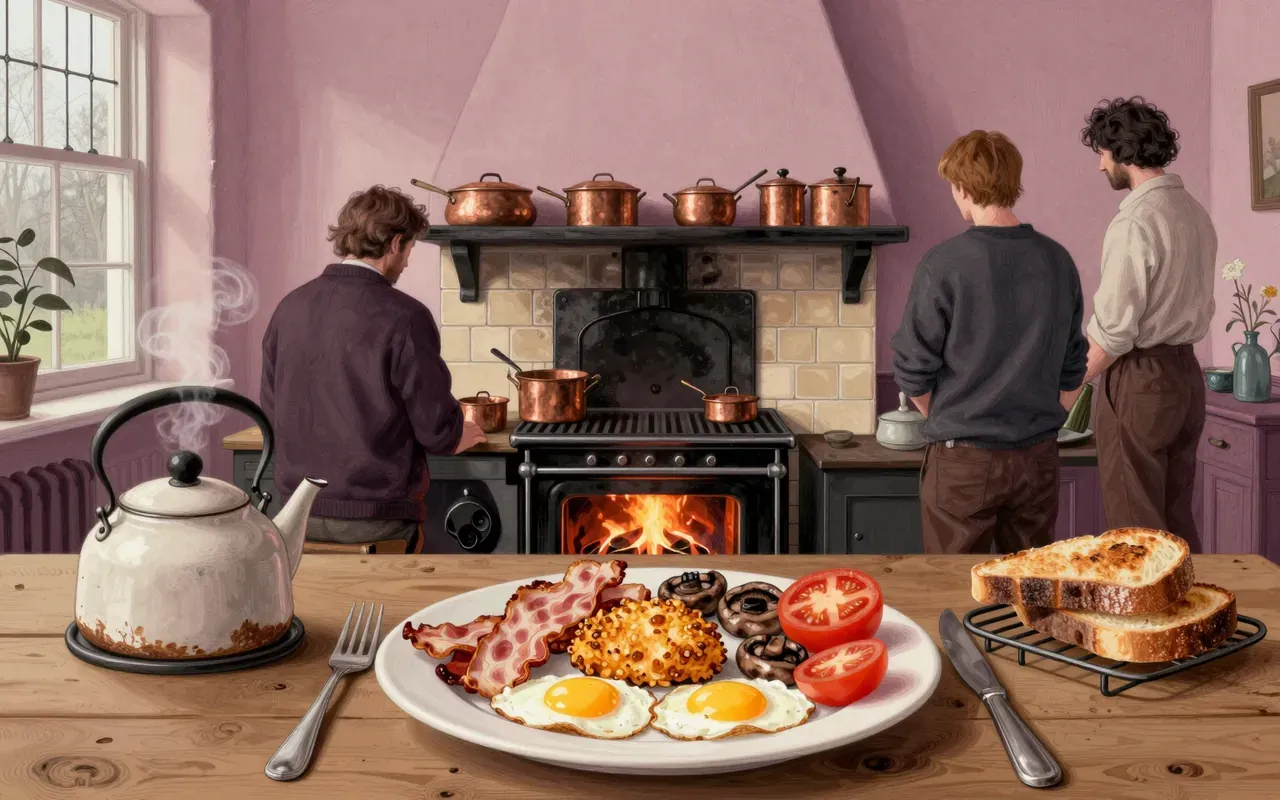
A cooked breakfast of fried bacon, sausage, eggs, beans, mushrooms, tomatoes, toast or fried bread—and often hash browns—standardised in 1861 and regionalised since.
Where it came from
It emerged suddenly in Victorian Britain as a pared-down version of aristocratic country breakfasts, made affordable and efficient for the middle class.
What it gets right
It delivers dense energy and ritual satisfaction. It codified breakfast as a social contract: fuel for work, shared across classes, anchored in fried protein and starch.
What it gets wrong
It assumes uniform appetite, time and access. Its daily repetition ignores health trade-offs and displaces lighter, faster, cheaper alternatives without justification.
Why it matters now
It is a litmus test for cultural inertia: preserved by tourism, nostalgia and formal societies while daily practice recedes under health and convenience pressures.
Is it worth your time
Yes—if you care about how class, labour and industrial change settle on the plate. No—if you want novelty, nutrition or speed.