8:55in productionCh. 1 · The basket came first/ 8:55 · ceiling 15 min
Dishes · Food history
Xiaolongbao
A steamed bun named after its basket—not its size—is the edible record of China’s dynastic migrations.
Xiaolongbao is a soup-filled tangbao steamed in a small bamboo basket called a xiaolong. It evolved from Kaifeng’s guantangbao during the Northern Song Dynasty. The modern Changzhou form dates to the Qing dynasty. Shanghai-style originated in Nanxiang, then a Jiangsu village absorbed into Shanghai. It delivers soup inside a thin, pleated dough. The bamboo basket steaming method locks in vapour. It honours Jiangnan’s emphasis on delicacy and seasonality. It misleads with its name: 'xiaolong' refers to the basket, not the bun’s size. Calling it 'little basket bun' flattens its technical origin into a marketing trope. Yes—if you care about how regional food traditions encode technique, migration and imperial collapse in a single steamed bun.
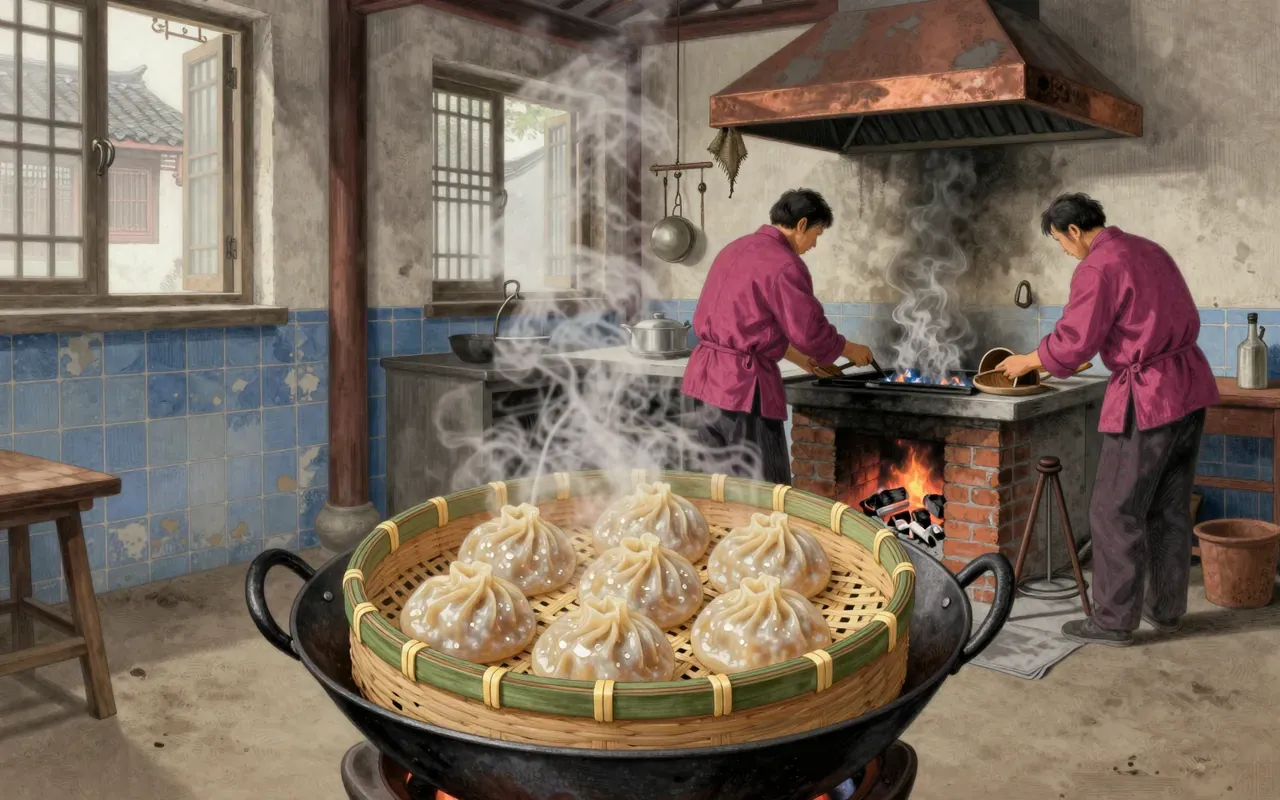
Xiaolongbao is named for the bamboo steaming basket—not the bun.
2:09
Not Shanghai. Not Nanxiang. Changzhou.
Changzhou, Jiangsu is the origin point of the most popular kind—and of xiaolongbao itself.
3:41
Soup buns rode the Song collapse
It began as guantangbao in Kaifeng under the Northern Song—and survived the dynasty’s fall by moving south.
5:24
Two lineages, one dynasty
Nanxiang gave us Shanghai-style; Changzhou gave us the modern form—both during the Qing.
Worth your time?
Yes. Cook the whole thing.
4/ 5
What works
delivers soup reliably
encodes dynastic migration in form
clarifies Jiangnan’s culinary centrality
What does not
iconic
groundbreaking
seminal
timeless
Cook it if
readers who track how food carries political rupture
Skip it if
those seeking culinary novelty or fusion
The written brief1 min read
What the thing is
Xiaolongbao is a soup-filled tangbao steamed in a small bamboo basket called a xiaolong.
Where it came from
It evolved from Kaifeng’s guantangbao during the Northern Song Dynasty. The modern Changzhou form dates to the Qing dynasty. Shanghai-style originated in Nanxiang, then a Jiangsu village absorbed into Shanghai.
What it gets right
It delivers soup inside a thin, pleated dough. The bamboo basket steaming method locks in vapour. It honours Jiangnan’s emphasis on delicacy and seasonality.
What it gets wrong
It misleads with its name: ‘xiaolong’ refers to the basket, not the bun’s size. Calling it ‘little basket bun’ flattens its technical origin into a marketing trope.
Why it matters now
It reveals how Chinese regional cuisines were reshaped by dynastic upheaval—Song refugees carried guantangbao south; Qing-era Changzhou chefs refined it into what we now call xiaolongbao.
Is it worth your time
Yes—if you care about how regional food traditions encode technique, migration and imperial collapse in a single steamed bun.