1:18in productionCh. 1 · What the dish is and where it came from/ 1:18 · ceiling 15 min
Dishes · Culture
Greek salad
A fresh, chopped salad of tomatoes, cucumbers, onion, feta, olives, oregano, lemon juice, and olive oil — traditionally Greek, with regional variations.
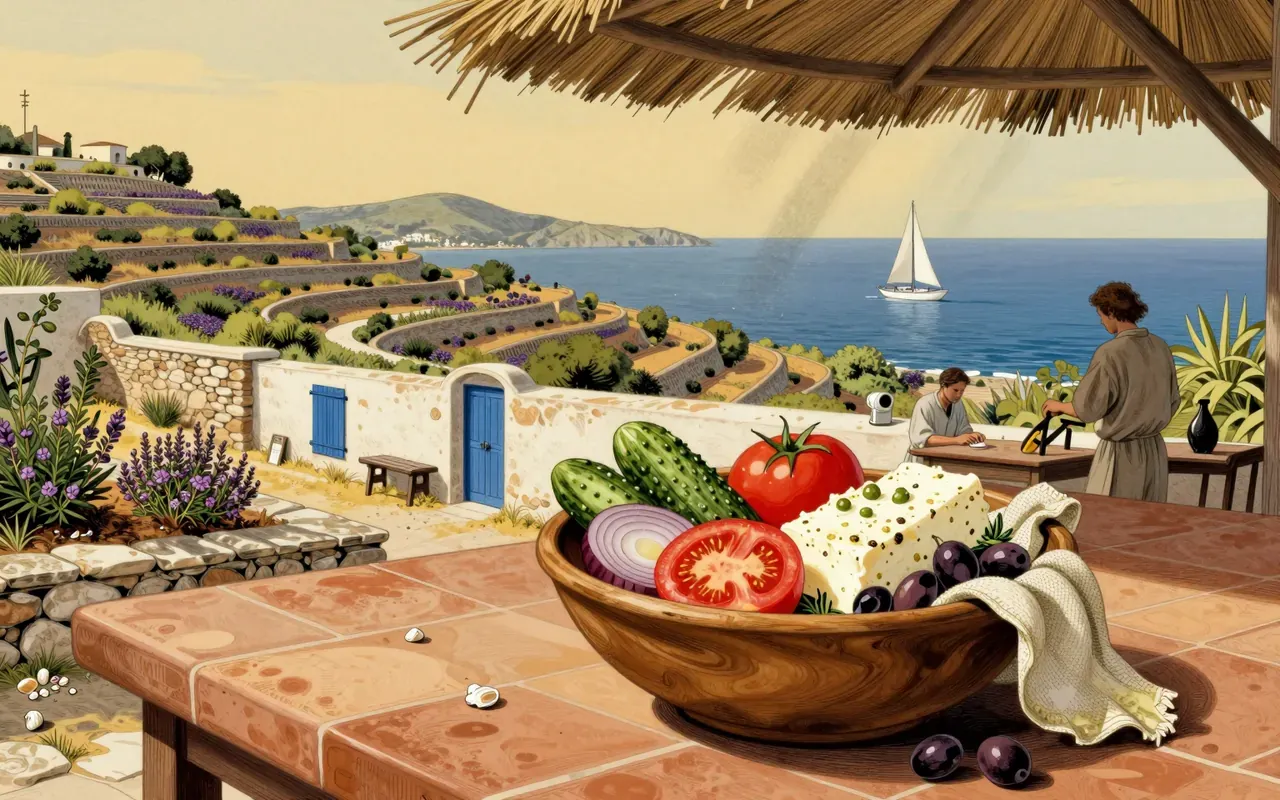
Greek salad, or horiatiki, is a salad in Greek cuisine made with tomatoes, cucumbers, onion, feta cheese, and Kalamata olives, dressed with salt, Greek oregano, lemon juice, and olive oil.
Greek salad, or horiatiki, is a salad in Greek cuisine made with tomatoes, cucumbers, onion, feta cheese, and Kalamata olives, dressed with salt, Greek oregano, lemon juice, and olive oil.
0:12
How it works, in terms someone would actually use
It is assembled by chopping and combining the vegetables and cheese, then dressing with lemon juice, olive oil, salt, and oregano.
0:24
What it gets right
It gets right a simple, ingredient-led format: raw, seasonal produce and briny, creamy, and herbal elements balance without masking each other.
0:36
What it does not
It does not include lettuce in the Greek version.
0:45
What it changed
It changed in American contexts to include lettuce, peperoncini, radishes, dolmades, and anchovies or sardines — expanding beyond the core Greek ingredients.
0:54
Who it is for, and who it is not
It is for people who want a vegetable-forward dish with cheese and olives.
1:06
Is it worth your time
It is worth your time if you enjoy fresh, uncooked vegetables with bold, salty, and herbal notes — especially when made with quality feta, Kalamata olives, and extra-virgin olive oil.
Worth your time?
Selectively. Start with the brief, then cook the parts we point at.
What works
It gets right a simple, ingredient-led format: raw, seasonal produce and briny, creamy, and herbal elements balance without masking each other. Its association with rural self-sufficiency reinforces its straightforward appeal.
What does not
It does not include lettuce in the Greek version. The American-style version adds lettuce and other ingredients not found in the traditional preparation.
Cook it if
Skip it if
The written brief1 min read
What the dish is and where it came from
Greek salad, or horiatiki, is a salad in Greek cuisine made with tomatoes, cucumbers, onion, feta cheese, and Kalamata olives, dressed with salt, Greek oregano, lemon juice, and olive oil.
How it works, in terms someone would actually use
It is assembled by chopping and combining the vegetables and cheese, then dressing with lemon juice, olive oil, salt, and oregano. No cooking or mixing technique beyond that is specified.
What it gets right
It gets right a simple, ingredient-led format: raw, seasonal produce and briny, creamy, and herbal elements balance without masking each other. Its association with rural self-sufficiency reinforces its straightforward appeal.
What it does not
It does not include lettuce in the Greek version. The American-style version adds lettuce and other ingredients not found in the traditional preparation.
What it changed
It changed in American contexts to include lettuce, peperoncini, radishes, dolmades, and anchovies or sardines — expanding beyond the core Greek ingredients.
Who it is for, and who it is not
It is for people who want a vegetable-forward dish with cheese and olives. It is not for people seeking a lettuce-based or cooked salad, or those avoiding dairy or brined foods.
Is it worth your time
It is worth your time if you enjoy fresh, uncooked vegetables with bold, salty, and herbal notes — especially when made with quality feta, Kalamata olives, and extra-virgin olive oil.